Answering the common buyer question: which vinyl protectants give sun protection, prevent fading, and restore look on boat seats? This guide compares top options for boaters, RV enthusiasts, and marine hobbyists seeking durable UV defense and a non-greasy finish. Each pick is evaluated for suitability on vinyl, plastic, rubber, and related marine surfaces. A quick buying table follows to help you compare at a glance.
| Product | Best For | Key Benefit |
|---|---|---|
| 303 Marine Aerospace Protectant (32 oz) | All-around marine vinyl and surfaces | Superior UV protection with a matte finish |
| Meguiar’s Extreme Marine Vinyl & Rubber Protectant (32 oz) | Vacant for vinyl and rubber in one-step care | Long-lasting UV protection and easy application |
| STAR BRITE Ultimate Vinyl Guard (32 oz) | High-visibility, flexible protection | Shine plus barrier against UV and stains |
| Captain Don’s Graphene-Infused UV Vinyl Protectant (32 oz) | Durable, premium protection | Graphene-enhanced durability and UV shielding |
| Marine 31 Vinyl Protectant with Sunblock (20 oz) | Silicone-free, interior/exterior marine use | UV protection without silicone residue |
303 Marine Aerospace Protectant Spray 32 oz
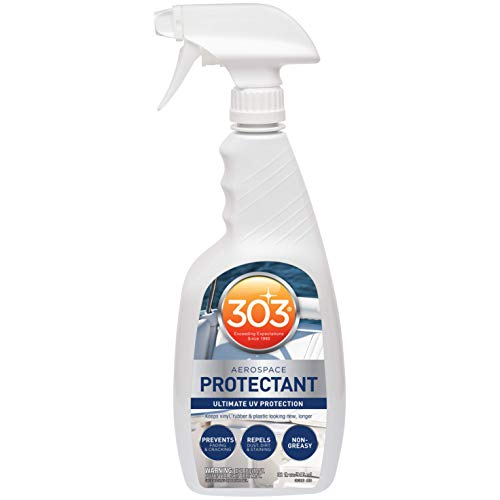
Best for: Boat owners needing comprehensive UV defense with a non-greasy matte finish. Why: This protector offers strong UV resistance, repels dust and staining, and works on vinyl, plastic, rubber, PVC, and more. It dries to a smooth matte surface that blends with most interiors, reducing the risk of oily residues. Limitation: Reapplication every 3–5 weeks is recommended for maximum UV protection, which may require regular maintenance on very sun-exposed decks.
Meguiar’s Extreme Marine Vinyl & Rubber Protectant M180132 32 Oz

Best for: Vessel owners who want a simple, one-step cleaner and protectant. Why: This product combines light cleaning with durable UV protection in one spray, simplifying maintenance for boat vinyl seats and other surfaces. Caution: It’s labeled as an RV/marine vinyl cleaner; avoid over-application on very delicate finishes, and follow usage directions for best results.
303 Marine Aerospace Protectant – 10 Fl. Oz.
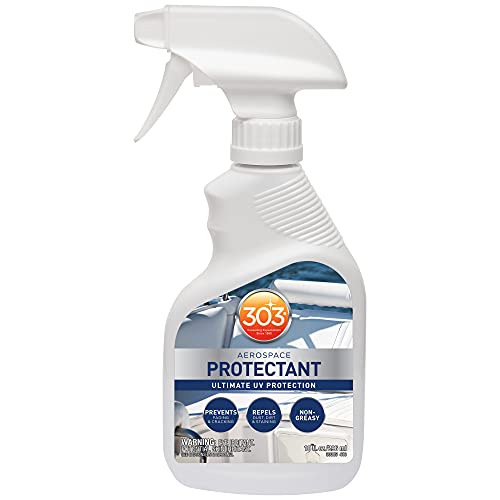
Best for: Small cabins or portable touch-ups where size matters. Why: The 10 oz format delivers the same matte finish and UV protection in a compact bottle for on-the-go maintenance. Limitation: Lower volume means more frequent reordering for larger boats or frequent application schedules.
STAR BRITE Ultimate Vinyl Guard 32 oz

Best for: Boaters seeking a polish-like finish with UV protection. Why: This spray-on formula adds shine and a protective barrier against UV rays and stains, helping keep vinyl supple. Limitation: May leave a noticeable sheen on darker interiors if over-applied; use sparingly on areas that should remain matte.
Captain Don’s Graphene-Infused UV Vinyl Protectant

Best for: Marine-grade enthusiasts who want premium durability and advanced UV shielding. Why: Graphene infusion enhances protection against cracking and fading, suitable for boat seats, car interiors, and patio furniture. Caution: Graphene-enhanced formulas can be more expensive; weigh long-term durability against upfront cost.
Marine 31 Vinyl Protectant with Sunblock

Best for: Vinyl surfaces exposed to sun in exterior or interior settings. Why: Silicone-free formulation avoids slippery residues while offering UV protection, making it suitable for bounce-back on Bimini tops, upholstery, and interior panels. Limitation: Silicone-free products may require more frequent application on very sunny boats to maintain optimal protection.
Buying Guide: Key Purchase Considerations
- Coverage and bottle size: Larger bottles offer longer-term value for big boats; smaller bottles fit tight spaces and travel use.
- Finish preference: Choose matte finishes for a low-reflective look or subtle shine for a refreshed appearance, depending on vinyl color and interior style.
- UV protection strength: Look for products explicitly marketed as UV protectants and note whether they shield against both UVA and UVB.
- Surface compatibility: Ensure the product works on vinyl, plastic, rubber, and any coated surfaces on your boat to avoid unintended damage.
- Silicone content: Silicone-free formulas prevent slippery surfaces and are easier to recoat in tight spaces.
- Maintenance frequency: Some products recommend reapplication every 3–5 weeks in heavy sun; plan your routine accordingly.
- Ease of use: One-step cleaners with protectant capabilities simplify maintenance, especially for casual boaters.
Frequently Asked Questions
- What is the best vinyl protectant for boats? — The best choice depends on your needs: UV protection, finish preference, and maintenance frequency. Products like 303 Marine Aerospace Protectant and STAR BRITE Ultimate Vinyl Guard are widely used for durable UV defense and easy application.
- Can I use these on all vinyl surfaces? — Most are suitable for vinyl, plastic, rubber, and gel coat, but check the label for surface restrictions (e.g., some avoid clear plastics or unfinished leather).
- How often should I reapply protectant? — Reapplication every 3–5 weeks is common in strong sun; adjust based on exposure and boat location.
- Is a silicone-free protectant better for boats? — Silicone-free formulas reduce slipperiness and residue, making them easier to recoat and safer for some materials.
- Should I clean before applying protectant? — Yes. Light cleaning helps remove dust and dirt to maximize adhesion and protection.
- Do protectants restore like-new color? — Some products restore texture and color to a degree, especially those labeled as vinyl restorer or conditioner, though results vary by material and condition.