When choosing a VHF marine radio antenna, you want dependable range, solid build quality, and simple installation. This guide highlights five antennas that balance performance and durability for American boaters. It targets skippers, coastal anglers, and small- to mid-size vessel owners who need clear coastal and open-water communication. Each option is evaluated for best use cases, installation needs, and potential limitations to help you pick the right fit.
| Product | Best For | Key Benefit |
|---|---|---|
| Retevis MA06 | Compact boats and RA27/RM20 users | Fiberglass, waterproof, long coax |
| eifagur Long Range | Mid-range installations with 16.5 ft cable | High compatibility, 2.5 dBi gain |
| HYS 3DBI 43.3″ | Rugged fishing and coastal cruising | 3 dBi gain, strong materials |
| UAYESOK 48″ Base Antenna | Flexible mast-top setups | 3 dBi gain, 7 m cable |
| Tram 46″ Pretuned | All-marine band coverage | 3 dBd gain, robust fiberglass |
Retevis MA06 VHF Marine Antenna

The MA06 is a fiberglass, waterproof VHF antenna with 3.5 dBi gain, designed for small to mid-size boats. It comes with a 23 ft (7 m) RG-58 coaxial feeder and a PL-259 connector, offering flexible mounting options via a ratchet mount. Best for owners who need a reliable, all-weather performance that can be mounted almost anywhere on a boat. It supports a range around 156–163 MHz and is compatible with several popular marine radios, including Uniden and Standard Horizon models.
- Best for: small to medium boats seeking a sturdy, weatherproof option.
- Why selected: fiberglass construction provides waterproofing and long life in harsh marine environments.
- Caution: the 7 m coax length may require tidy routing to avoid impedance issues if the run is excessively long.
Long Range VHF Marine Radio Antenna (16.5 Ft Cable)

This antenna covers 156–163 MHz with a 2.5 dBi gain. It ships with a 16.5 ft low-loss RG-58 cable and a PL259 connector, and is designed for easy installation on a mast or other mounting point. It is well-suited for boats needing a balance of range and ease of setup. It’s compatible with multiple 156–163 MHz radios, providing improved receiving and transmitting performance in open-water and coastal conditions.
- Best for: installations that require a mid-range cable length without compromising signal integrity.
- Why selected: includes a long, low-loss feedline for reliable signal transmission.
- Caution: gain is lower than higher-dBi options, which may affect very long-range requirements.
HYS VHF Marine Antenna 43.3″ With 22.9 ft Cable

HYS offers a 43.3-inch fiberglass antenna with 3.0 dBi gain and a 22.9 ft (7 m) RG58 coaxial cable. It features a built-in nylon ratchet mount for easy attachment and is designed for 156–163 MHz operation with a 50 Ω impedance. This option provides robust performance in rough seas, with a wide horizontal beam and solid vertical profile. It is a good pick for fishing boats and coastal cruisers that need dependable reception and transmission in standard VHF channels.
- Best for: boats needing solid weather resistance and straightforward installation.
- Why selected: higher-than-average build quality with a durable mount system.
- Caution: longer coax may still require care to avoid snagging or wind load during heavy seas.
UAYESOK VHF Marine Base Antenna
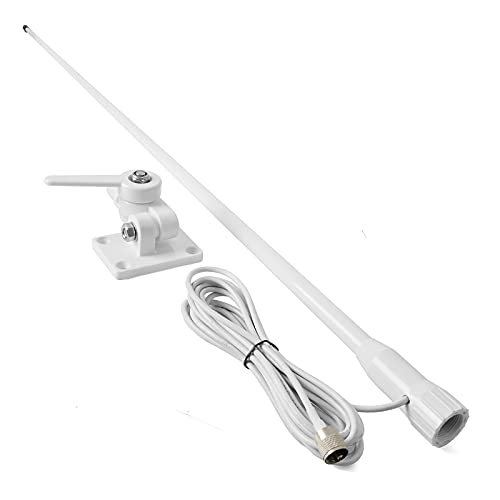
This 48-inch fiberglass base antenna is designed for marine use with a 7 m RG-58U low-loss cable. It offers 3 dBi gain and 50 Ω impedance, with a nominal VSWR around 1.5:1 at 159.5 MHz. The combination of fiberglass construction and anti-corrosion materials makes it suitable for long-term outdoor installation on boats. It is best for those who want a fixed, dependable mast-top solution that’s easy to install with a ratchet mount.
- Best for: mast-top installations on mid-to-large boats needing a stable, fixed setup.
- Why selected: long cable length provides flexible routing and easier mounting options.
- Caution: installation requires a secure mount to withstand marine wind loads on open decks.
Tram Pretuned VHF 46-Inch Antenna

The Tram pretuned 46-inch fiberglass antenna offers all-marine band coverage with a 3 dBd gain. It includes an RG58 cable and a PL-259 adapter, with stainless steel hardware for durability. This option is suited for boat owners who need broad-band VHF coverage and a robust mounting solution. The 46-inch length provides a balanced performance for most mid-range vessels.
- Best for: boats seeking broad band coverage and straightforward installation.
- Why selected: robust fiberglass construction and included hardware simplify mounting.
- Caution: the 3 dBd gain is moderate; very distant transmissions might benefit from a higher-gain design.
HYS Low-Profile VHF Antenna

This low-profile HYS antenna operates in the 156–163 MHz range with a 2 dBi gain and includes a 16.4 ft RG58 coaxial cable. Its compact design makes it ideal for boats with limited space or where a low-profile setup is preferred. It supports up to 50 W of transmit power and is geared toward reliable signal performance for routine coastal communications.
- Best for: boats needing a discreet, space-saving antenna.
- Why selected: compact profile without sacrificing standard VHF functionality.
- Caution: lower gain means shorter-range performance compared to higher-dBi options in open water.
Uniden UM385 Marine VHF Radio
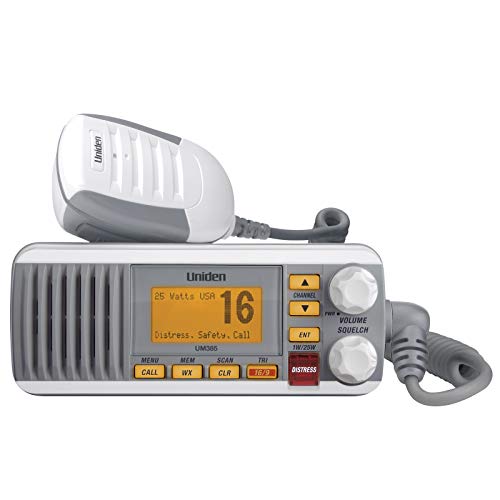
The Uniden UM385 is a 25-watt, fixed-mount VHF radio designed for broad channel access, including international and NOAA weather channels. It emphasizes triple-watch, DSC, and weather alert features for critical on-water decision-making. It is best for boaters seeking a compact, fixed radio system alongside a capable antenna setup for reliable ship-to-ship and coast-wide communication.
- Best for: boats needing a compact fixed radio with comprehensive weather and DSC features.
- Why selected: integrated weather and DSC capabilities provide enhanced safety and readiness.
- Caution: this product focuses on the radio itself; ensure antenna compatibility separately for optimal performance.
FMUSER VM100 VHF Marine Radio Antenna

The FMUSER VM100 presents a 44-inch fiberglass, waterproof antenna with 3.5 dBi gain and a 16 ft RG-58U cable. It emphasizes extended coverage and a clean white aesthetic to blend with your boat’s look. This option is suitable for users who value a balance of reach and a tidy appearance on deck or mast top.
- Best for: boaters who want extra range without a bulky antenna.
- Why selected: higher gain helps maintain clarity in busy maritime channels.
- Caution: ensure the 44-inch height fits your mounting clearance on smaller vessels.
Buying Guide: How To Choose The Right VHF Marine Antenna
- Range vs. Gain: Higher dBi gains extend range but may be physically larger. For tight spaces, consider mid-range gains (2–3 dBi) with flexible mounting options.
- Mounting Location: Mast-top mounts offer best line-of-sight but require sturdy hardware. Fixed base antennas require stable support and cable routing.
- Cable Length: Longer coax improves flexibility but can add signal loss if not low-loss. Match length to your installation while avoiding excess length.
- Material and Build: Fiberglass antennas withstand salt, sun, and rain better than some plastic designs. Look for IP ratings and corrosion-resistant hardware.
- Compatibility: Ensure the antenna matches your radio’s frequency range (156–163 MHz) and connector type (PL-259).
- Power Handling: Most marine radios use up to 50 W at VHF; verify that the antenna can handle your radio’s power output.
- Maintenance: Inspect seals, mounts, and coax connections regularly. Dry out and reseal any compromised joints after exposure to spray and rain.
Frequently Asked Questions
- What is the typical VHF frequency range for marine antennas? – Most marine VHF antennas cover 156–163 MHz, with design variations in gain and impedance to optimize reception and transmission.
- Do I need a high-gain antenna for coastal cruising? – Not always. High-gain antennas extend range but require taller mounts and stronger support. For near-coastal use, mid-gain options are often sufficient.
- Is fiberglass a better material than aluminum for marine antennas? – Fiberglass is highly resistant to saltwater and corrosion, and it can be lighter and easier to mount on some boats, though aluminum can be durable and robust in heavier installations.
- How does coax length affect performance? – Longer coax can introduce more signal loss, especially with low-quality cables. Use the shortest practical length and a low-loss type (like RG-58 or better) to maintain signal quality.
- Can I install any VHF antenna on any boat? – Most antennas are designed to work with common 156–163 MHz radios, but confirm connector compatibility (PL-259) and mounting space on your vessel before purchase.
- What maintenance steps improve antenna longevity? – Regularly inspect mounts, seals, and coax connections; rinse with fresh water after exposure to salt spray; reseal where necessary to prevent water ingress.
By matching your boat size, mounting space, and communication needs with these antennas, you can optimize VHF performance across coastal and inland waterways. The selections above provide a spectrum of gains, mounting styles, and cable lengths to help you tailor a setup that fits your vessel and voyage plans.