Hard antifouling bottom paints offer long-lasting protection and reduced maintenance for hulls in challenging water conditions. This guide highlights five top options, detailing who each product suits best, key benefits, and practical limitations. Ideal buyers include frequent sailors, anglers, and boat owners seeking durable coating with predictable reapplication cycles. Use the comparison notes to choose the coating that aligns with your boat type, water, and maintenance preferences.
Quick Buying Table
| Product | Best For | Key Benefit | Notes |
|---|---|---|---|
| TotalBoat Underdog Marine Antifouling | Frequent saltwater use | Economical single-season protection | Best for varied boat types |
| TotalBoat JD Select Ablative Green | Fiberglass, wood, steel | Self-polishing, low-odor, low-VOC | Nice balance of ease and performance |
| Rust-Oleum Marine Antifouling | Fiberglass, wood, steel | Slow copper release, easy recoat | Budget-friendly option |
| Interlux Fiberglass Bottomkote NT | Fiberglass | Best in class reputation | Color and finish options vary |
| TotalBoat Krypton Copper Free | Aluminum, outdrives, trim tabs | Copper-free formula prevents galvanic issues | Bright colors; limited copper-based protection |
TotalBoat Underdog Marine Antifouling Bottom Paint
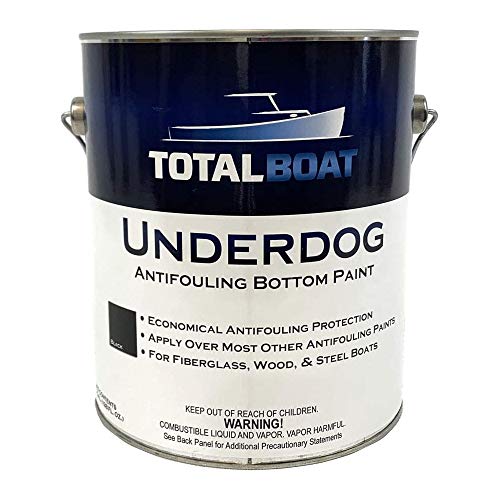
Product overview: An economical single-season antifouling solution designed to keep barnacles and mussels from clinging to hulls in saltwater. It uses a copper biocide and is suitable for fiberglass, wood, and steel bottoms. Best for boats that are used regularly and frequently launched and hauled. The coating is ablative enough to wear away as the boat moves, reducing long-term buildup and simplifying next-season prep.
- Best for boats used often in saltwater conditions.
- Self-renewing biocide helps maintain performance with daily or on-water operation.
- Durable against trailering and beaching compared to some traditional ablatives.
Caution: This coating relies on the biocide to stay effective; ensure proper surface prep for adhesion and reapplication over time. Suitable for properly prepared fiberglass, wood, steel, and iron hull bottoms.
TotalBoat JD Select Ablative Antifouling Bottom Paint — Green, Quart

Product overview: A unique hybrid film with self-polishing properties. The ablative coating wears away gradually as the vessel moves, minimizing paint buildup for easier re-sanding next season. It suits fiberglass, wood, and steel boats in both salt and fresh water. The low-odor, low-VOC formula cleans up with soap and water, making it marina-friendly.
- Better for boats that see seasonal haul-outs and re-application cycles.
- Low odor and low VOC make it practical in restricted marinas.
- Burnishing can improve smoothness for reduced drag and improved speed.
Caution: No maximum dry time is stated before launch; always verify current marina rules before application and launch.
Rust-Oleum 396967 Marine Bottom Antifouling Paint

Product overview: A versatile bottom paint formulated to slowly release copper for antifouling protection on fiberglass, wood, or steel surfaces. This option supports recoat in about 4 hours and launch in around 16 hours, covering up to 110 square feet per gallon. It’s designed for mixed-water usage and is commonly chosen for budget-conscious buyers.
- Best for cost-conscious owners needing a straightforward antifouling layer.
- Cu-based release provides broad protection with a simple recoat plan.
- Recoat and launch windows enable flexible scheduling around maintenance.
Caution: Copper-based formulations can limit use in certain marinas with strict environmental constraints. Ensure proper surface preparation for adhesion.
TotalBoat Krypton Copper Free Antifouling Bottom Paint

Product overview: A copper-free formula designed to prevent galvanic corrosion on aluminum boats, outdrives, and trim tabs. It provides strong antifouling performance in freshwater, saltwater, and brackish conditions and is compatible with fiberglass, wood, steel, iron, and aluminum below the waterline. This option is ideal for aluminum hulls and brass or mixed-metal setups where copper-based paints pose corrosion concerns.
- Best for aluminum boats and mixed-metal configurations.
- Copper-free formulation reduces galvanic risk while maintaining antifouling effectiveness.
- Colors tend to be brighter than copper-containing alternatives, enhancing visibility.
Caution: Copper-free formulas may offer different long-season longevity compared with copper-based options; evaluate your typical boating season length and fouling pressure.
Buying Guide
What type of antifouling coating should I choose?
- Active protection vs. self-polishing: Ablative (self-polishing) coatings slowly wear away, reducing buildup and rework. Non-ablative, hard films stay longer but may require more sanding when reapplying.
- Copper-based vs. copper-free: Copper-based paints provide strong protection but can cause galvanic issues on aluminum and mixed-metal parts. Copper-free formulas avoid galvanic corrosion but may differ in long-season longevity.
- Water type and usage: Saltwater, brackish, and freshwater environments influence performance. Frequent use in saltwater typically benefits from more reactive antifouling options.
- Surface compatibility: Verify the coating supports your hull material (fiberglass, wood, steel, aluminum) and any structural components (outdrives, trim tabs).
- Environmental and marina rules: Low-VOC and low-odor options are preferable in restricted marinas. Check local guidelines before application.
Frequently Asked Questions
- What is the difference between ablative and hard antifouling paints?
Ablative coatings wear away as the boat moves, renewing the antifouling effect and reducing buildup. Hard antifouling coatings dry to a solid film that remains longer but may require more sanding to refresh.
- Can I use copper-free antifouling on aluminum boats?
Yes. Copper-free formulas are designed to avoid galvanic corrosion with aluminum hulls and related components.
- How soon can I launch after applying antifouling paint?
Follow the manufacturer’s guidance. Some products allow launch within 16 hours; others may require longer cure times depending on environmental conditions.
- Is low-VOC coating suitable for marinas?
Yes. Low-VOC paints are often preferred in regulated marinas due to reduced fumes and environmental impact.
- Which coating is best for frequent boat use?
Coatings labeled as self-polishing ablatives or economical single-season options are commonly recommended for boats that are hauled and relaunched often.