Answering the need for reliable boat heating, these solid fuel and related marine heating options are best for compact, self-contained warmth on board. This guide highlights boilers and heaters that suit small to mid-sized vessels, where space is tight and steady heat is essential. Ideal buyers include live-aboard sailors, weekend sailors, and boat owners seeking off-grid warmth or backup heating. Below is a quick comparison of five top picks, followed by a buying guide and FAQs.
| Product | Best For | Key Benefit |
|---|---|---|
| Dickinson Marine Solid Fuel Heater for Newport | Small sailboats needing solid-fuel warmth | Solid-fuel operation with chimney guidance |
| Dickinson Marine Newport Diesel Bulkhead Mount Heater | Mid-sized boats needing flexible fuel | Diesel/kerosene capability and compact install |
| Diesel Heater 8KW (Ecojoy) | Cold climates, RV/boat hybrids | High heating output with remote control |
| HCALORY 8KW Diesel Air Heater | Versatile power setup on boats | All-in-one 110V/12V with altitude mode |
| VEVOR 8KW Diesel Heater | Long runtimes and programmable control | Low noise, large fuel tank, digital display |
Dickinson Marine Solid Fuel Heater for Newport

The Dickinson Solid Fuel Heater for Newport provides a compact, solid-fuel option suitable for boats where a wood or coal-based heat source is preferred. The product notes specify chimney requirements, including a 3-inch diameter chimney and a recommended 6-foot to 8-foot chimney length with a suggestion for a barometric damper for longer runs. Best for small to mid-sized boats that can accommodate a dedicated solid-fuel stove onboard. A key limitation is the strict chimney specification, which can affect installation flexibility and safety compliance on some vessels.
Dickinson Marine Newport Diesel Bulkhead Mount Heater
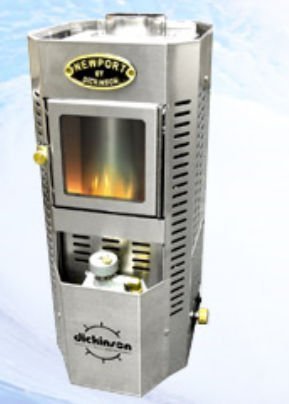
The Newport Bulkhead Mount Heater from Dickinson Marine provides a versatile diesel option for marine installations. It lists a broad heat output range (6,500–16,250 BTU) and accepts diesel, kerosene, or stove oil, with a 12V combustion assist fan. It’s best for boaters who want a compact diesel heating solution that can be mounted on a bulkhead for easy venting and space efficiency. A potential drawback is the need to manage fuel type compatibility and ensure proper venting to prevent fumes on board.
Diesel Heater 12V 8KW with 1.32 Gal Fuel Tank (Ecojoy)

Ecojoy’s 8KW Diesel Heater is designed for quick warmth with a 10-minute heating window, suitable for boats and other small spaces. It includes a 1.32-gallon tank and remote control for convenient operation up to 32 feet away. It is best for boaters seeking rapid heat and remote operability. A limitation is that high-altitude performance claims are generic; verify installation specifics for your vessel’s height and ventilation requirements.
HCALORY 8KW Diesel Air Heater

HCALORY combines 8KW heating with dual power input (110V AC and 12V DC), plus a 5L fuel tank for extended runtimes. The included altitude mode helps maintain performance in higher elevations, making it a practical choice for boats traveling in varied conditions. Choose this if you want a versatile, all-in-one heating solution that can run off both shore power and onboard power. A consideration is ensuring the electrical system can support simultaneous 110V and 12V operation when needed.
VEVOR 8KW Diesel Heater
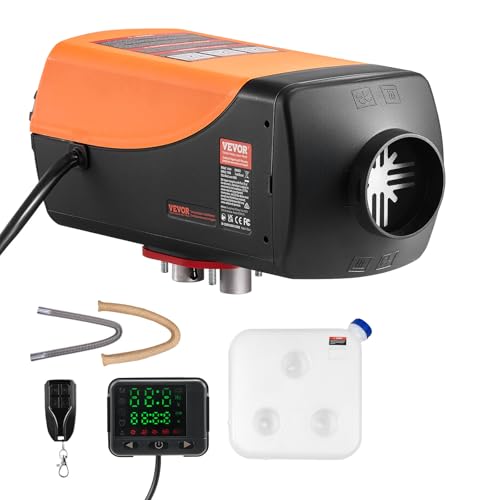
VEVOR’s 8KW Diesel Heater operates from DC 12V-24V with a color digital display and a 10L fuel tank. It emphasizes low noise, safe operation, and digital control, making it a solid option for boaters who value clear readouts and programmable settings. Best for users who want a user-friendly interface and dependable performance for extended voyages. A limit to consider is ensuring installation space for the display and remote components, as well as verifying compatibility with your boat’s electrical system.
Buying Guide
What type of heater fits my boat?
- Solid-fuel heaters are simple and self-contained but require a proper chimney and venting system. Choose these if you already use solid fuel on board or prefer off-grid heating with fewer moving parts.
- Diesel and dual-power heaters offer flexible fuel options and easier integration with onboard fuel systems. They’re suitable for boats with adequate space and electrical capacity.
How do I choose the right heat output?
- Estimate area: larger spaces need higher BTU outputs (e.g., 6,500–16,250 BTU for bulkhead diesel units). For compact cabins, lower BTU units with efficient heat distribution can be preferable.
- Consider insulation: well-insulated cabins retain heat better, allowing smaller units to perform effectively.
What installation considerations matter?
- Ventilation and vent routing: ensure safe exhaust paths and avoid carbon monoxide risk. Follow manufacturer guidelines for chimney length and damper use.
- Electrical compatibility: if choosing 12V/24V or 110V options, confirm boat electrical system capacity and fuse sizing.
Operational considerations
- Fuel availability: diesel- or kerosene-compatible units require regular supply; plan storage and filtering if needed.
- Maintenance access: select installations with accessible service panels and replaceable filters or igniters.
Safety and reliability tips
- Install CO detectors and ensure proper clearance around any heater or vent pipe.
- Use barometric dampers where recommended to moderate draft and maintain stable combustion in varying conditions.
Frequently Asked Questions
- What is the main difference between solid fuel and diesel marine heaters?
Solid fuel heaters burn wood or coal and require chimney systems; diesel heaters run on diesel or kerosene and often offer easier temperature control and remote operation. - How do I size a marine heater for my boat?
Calculate by space (cubic feet or square footage) and insulation. Higher BTU outputs are suitable for larger or poorly insulated cabins; smaller spaces benefit from lower BTU units to avoid overheating. - Do I need a barometric damper on all installations?
Not always, but many setups benefit from dampers to stabilize exhaust flow and improve fuel efficiency on longer vent runs. - Can I operate a diesel heater with shore power?
Some models support both 12V/DC and 110V/AC inputs or remote control; verify the specific unit’s power requirements and available connections. - What maintenance is typical for marine heaters?
Regular inspection of fuel lines, filters, igniters, and exhaust components; ensure venting is clear and free of obstructions. - Is installation best left to professionals?
For safety and compliance with ventilation and fuel systems, professional installation is recommended, especially on critical vessels like sailboats and live-aboard boats.