Answering the need for portable, clean power on board, these solar generators offer off-grid capability, quiet operation, and reliable charging from sun or shore power. They’re best for boaters who want to run essential devices, charge smartphones, or keep small electronics powered during weekend trips or longer voyages. The top picks here balance portability, capacity, and user-friendly features to suit different boats and cruising styles.
| Product | Approx. Capacity (Wh) | Best For |
|---|---|---|
| Jackery Solar Generator 1000 v2 | 1070 | Off-grid living, emergency power, larger boats needing higher loads |
| STARYLINE Solar Generator Kit | 1024 | RV and marine setups needing high surge and solar panel included |
| MARBERO 237Wh with Panel | 237 | Compact boats, day boats, overnight trips with basic needs |
| GRECELL 288Wh with 60W USB-C PD | 288 | Traveling light boats, charging laptops and tablets |
| Apowking 146Wh with 40W Panel | 146 | Emergency backups, small devices, personal electronics |
Jackery Solar Generator 1000 v2 with 200W Solar Panel

The Jackery 1000 v2 combines high output with a long-lasting LiFePO4 battery, suitable for boats that need to run multiple appliances. It delivers 1,500W continuous AC with a 3,000W surge and a 1,070Wh capacity, making it suitable for refrigeration, small AC units, or power tools on deck. The unit emphasizes a fast one-hour charge via emergency charging in the Jackery App, with a practical 10-year lifespan expectation due to robust battery chemistry. Best for boats requiring dependable, heavy-duty power for short to mid-range trips. Avoid this if space is extremely limited or if daily high-draw loads exceed 1.5 kW regularly.
STARYLINE Solar Generator 1800W Kit with 200W Panel
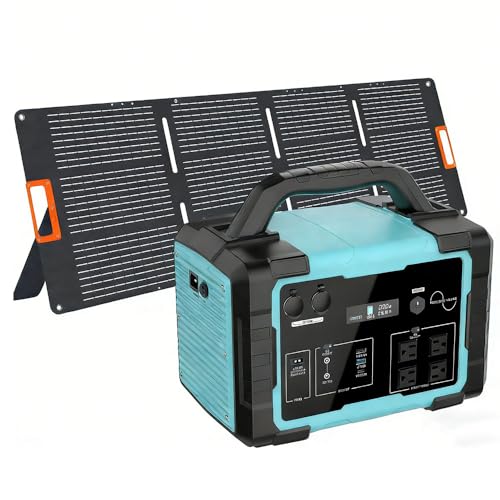
This heavy-duty kit offers true 1800W continuous AC output (3600W surge) and a 1024Wh LiFePO4 battery, making it a robust option for larger boats or longer coastal trips. It includes a 200W foldable solar panel to harvest sun efficiently and a high-output solar charging option with a strong safety profile via LiFePO4 chemistry and a comprehensive BMS. Best for boats that run high-wattage appliances or require rapid recharging after long sails. Choose this if you need substantial AC capacity; avoid if you prioritize ultra-lightweight gear or have very limited deck space.
MARBERO 237Wh Solar Generator With Panel

The MARBERO M823 offers a compact 237Wh capacity with a 60W foldable solar panel, ideal for day boats or as a back-up power source for small devices. It provides two AC outlets (300W rated), multiple USB ports including USB-C, and a bright LED flashlight with SOS modes. Best for boats needing portable, all-in-one charging for phones, tablets, and small electronics. Better for short trips or as a shore-side power companion; avoid if you require to run high-power devices like air conditioners or power tools for extended periods.
GRECELL 288Wh Solar Generator With 60W USB-C PD

The GRECELL unit emphasizes a strong USB-C PD 60W output and USB-A fast charging, making it suitable for laptops, tablets, and phones aboard smaller to mid-sized boats. Its 288Wh capacity sits between compact travel power and mid-range backups, with a clean sine-wave output favorable for sensitive electronics. Best for boats needing reliable daytime USB-C charging and occasional laptop use. Caution: recharge speed depends on panel efficiency and sun exposure; plan accordingly for longer cloudy passages.
Apowking Solar Powered Generator with 40W Panel

The Apowking unit delivers a compact 146Wh capacity with a 40W panel, designed for lightweight, portable power. It features seven outputs, including two 110V AC outlets and multiple USB ports, making it a flexible option for boats needing essential device charging and small appliance use without bulk. Best for emergency kits, personal electronics, and occasional camping on small daysails. Limitation: lower capacity means frequent recharges in longer off-grid periods.
Buying Guide: Key Considerations For Boat Use
What capacity do you actually need on a boat? Balance the daily power load, typical sailing duration, and expected sunshine. For longer trips, aim for a higher watt-hour rating and a robust BMS for longevity. If space is limited, prioritize lighter units with essential outputs and consider modular kits that can be expanded with add-on panels.
How many and what types of outlets are essential? Boats often need multiple AC outlets, USB-C PD, and 12V DC options. Look for a mix of pure sine-wave AC outputs to protect sensitive electronics and sufficient USB ports for phones, tablets, and navigation gear.
What about charging speed and solar panel compatibility? Consider MPPT charging and whether the included panel meets your sun exposure. If you’re frequently off-grid, a kit with a larger solar panel and fast charging is advantageous; for occasional shore power, a smaller panel may suffice.
Safety, maintenance, and durability matter on water. A Battery Management System (BMS) that safeguards against overcharging, short circuits, and overheating is essential. LiFePO4 chemistry often offers longer life cycles and stability in temperature-variation environments that boats face.
Portability and durability are critical for decks and cabins. Look for rugged enclosures, carry handles, and weight that fits your storage space. Foldable panels and compact designs help maximize usable deck and cabin space without sacrificing power.
FAQ
- Can these generators run a fridge onboard? Yes, many models support fridge-size loads, but verify continuous watt rating below the device’s running watt draw.
- Is LiFePO4 battery better for boating? Generally, yes, for longer life cycles and stability in varying temperatures common at sea.
- Do I need a separate solar panel for each generator? Not usually; most kits include a panel or are designed to be expandable with additional panels.
- What is surge power used for? Surge power handles brief high-draw devices like blenders or pumps that spike beyond running watts.
- How should I store these on a boat? Store in a dry, ventilated area away from direct sunlight when not in use; follow the manufacturer’s storage guidance for temperature ranges.