Answer: For personal watercraft safety, choose compact, marine-approved extinguishers that target Class B and C fires and resist corrosion. The top options below are best for boaters, jetski owners, and watersport enthusiasts who need reliable, easy-to-use protection on the water. The list includes models designed for marine use, corrosion resistance, and quick discharge, with notes on ideal users and limitations.
| Product | Best For | Key Benefit |
|---|---|---|
| First Alert FE5R-PWCNA | Mariners needing Coast Guard compliance | UL 711/CAN/ULC-S508 certified, dry chemical for flammable liquids and electrical fires |
| Kidde 5BC Boats | Boaters seeking durable all-metal construction | 12X corrosion resistance, Class B/C fires |
| Kidde Mariner 5 | Boats needing fast discharge | Quick 8–12 second discharge, strong corrosion resistance |
| Leyanny A/B/C/K Home/Boat Extinguisher | Multi-use safety for homes, cars, boats | Versatile A/B/C/K coverage, easy access and operation |
| Compact Water-Based 8-in-1 Extinguisher | Versatile outdoor/indoor protection | Water-based, eco-friendly, multi-type fire suppression |
First Alert Fire Extinguisher for Marine Use
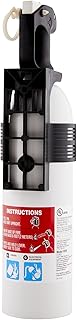
Best for: Boaters who require Coast Guard Size I compliance and certified safety. This extinguisher uses a dry chemical agent to fight flammable liquids and electrical fires, suitable for personal watercraft and small vessels. It is ideal for users who prioritize formal certification and UL classifications in a compact marine unit.
Why Selected: Meets U.S. Coast Guard Size I requirements and is ANSI/UL711 and CAN/ULC-S508 certified. Its sodium bicarbonate dry chemical formulation targets typical marine fire risks such as fuel spills and electrical faults.
Caution: Ensure correct mounting and regular maintenance checks to maintain certification status and accessibility on the water.
Kidde Fire Extinguisher for Boats, Single-Use 5BC

Best for: Boat owners needing durable, corrosion-resistant components for routine marine fire protection. This unit targets Class B and Class C fires and emphasizes all-metal construction.
Why Selected: Engineered with durable aluminum and stainless steel components for improved corrosion resistance, plus a metal valve assembly and stainless-steel lever for reliability in salt air and spray. Suitable for use on boats and dockside storage.
Caution: This is a single-use extinguisher; plan for replacement after discharge or upon expiration to maintain protection.
Kidde Mariner 5 Fire Extinguisher for Boats

Best for: Boat owners needing fast discharge times and strong corrosion resistance. This model is designed for common marine fires with reliable discharge within 8–12 seconds and a 4–6 feet range.
Why Selected: Combats Class B and C fires with robust aluminum and stainless steel construction for marine environments. Its discharge performance supports rapid response during a fire emergency.
Caution: Limited to single-use operation; plan for timely replacement after use or expiration.
Leyanny Multi-Use Fire Extinguisher (A/B/C/K)

Best for: Homeowners and multi-scenario users who want one extinguisher for home, vehicle, and boat usage. It covers multiple fire types with a single unit and offers general, easy handling.
Why Selected: Promotes versatility with A, B, C, and K coverage, plus a broad operating temperature range and user-friendly operation. Mounting hardware is included for accessible placement.
Caution: Check whether K-class coverage is needed for kitchen grease or cooking oils in your jurisdiction; fire class coverage should match your primary risk profile.
Compact Water-Based 8-in-1 Extinguisher

Best for: Environments requiring a water-based, eco-friendly option with broad fire-type coverage and easy handling. Suitable for kitchens, homes, boats, and cars.
Why Selected: Provides 8-in-1 fire suppression with water-based ingredients, reducing residue and cleanup. The product emphasizes safety in cold climates and simple operation for all users.
Caution: Water-based extinguishers are less effective on energized electrical fires if the power source is not de-energized; verify appropriate use for on-water equipment and electrical exposure.
Buying Guide
- What fire class coverage do you need? For personal watercraft, prioritize Class B (flammable liquids) and Class C (electrical) protection.
- Is corrosion resistance important? Marine environments demand materials like aluminum and stainless steel to resist sea air and splashes.
- Single-use vs. refillable? Many boating extinguishers are single-use; plan for replacement after discharge and check expiration dates.
- Certifications matter. Look for UL, ANSI, and Coast Guard approvals to ensure reliability on the water.
- Weight and mounting. Choose a unit that’s easy to reach from typical seating positions and easy to mount with included hardware.
FAQ
- Q: What class fires are most common on personal watercraft? A: Class B (flammable liquids) and Class C (electrical) fires are common concerns on boats and jetskis.
- Q: How often should marine extinguishers be inspected? A: Regular visual inspections and annual maintenance per manufacturer guidelines are recommended; replace if damaged or after discharge.
- Q: Do I need a Coast Guard-certified extinguisher for a personal watercraft? A: Certification helps ensure compliance with safety standards and is beneficial for marine use.
- Q: Can I use a home extinguisher on a boat emergency? A: Only if it meets marine safety standards and is rated for appropriate fire types; dedicated marine extinguishers are preferred.
- Q: How do I mount a fire extinguisher on a watercraft? A: Use the provided mounting brackets and secure it in a location that’s easy to access from your usual seating position.