Direct answer: choose a stainless steel or corrosion-resistant vent with proper hose size (5/8″ ID) and a design that prevents water ingress while allowing air to vent. This guide highlights five top options best for different boaters—from casual day cruisers to serious saltwater anglers. It explains why each fits particular needs, plus practical cautions to avoid common venting pitfalls.
| Product | Best For | Key Benefit |
|---|---|---|
| Seachoice Fuel Tank Vent Chrome | Everyday boaters | Corrosion-resistant chrome with flame arrestor screen |
| Attwood 66419-3 Composite 90° P-Trap | Saltwater boats needing anti-water entry | Prevents water ingress; ABYC standard compliant |
| Universal 90° Keehui Vent 316 Stainless | Premium stainless installs | 316 stainless, strong, durable, 5/8″ hose |
| Attwood 1670-3 90-Degree P-Trap | Vessels requiring reliable air venting | Prevents water entry; anti-siphon advantages |
| NRC&XRC 316 Stainless Vent | High-corrosion environments | 316 stainless, polished finish, mounting gasket included |
Seachoice Fuel Tank Vent Chrome 5/8 in.

Best for: Casual boaters who want corrosion resistance and visible venting. This chrome-plated zinc vent includes a stainless-steel flame arresting screen to block contaminants while helping maintain proper fuel flow during filling. Use this when a chrome finish fits your deck hardware and you prioritize a simple, low-maintenance vent. Caution: chrome plating can show wear over time in harsh environments.
Attwood 66419-3 Composite 90 Degree P-Trap

Best for: Boats needing reliable water-blocking while keeping air flowing, especially in rough seas. This 5/8″ I.D. hose vent meets ABYC standards and helps prevent water entry during spray or washdowns. It eliminates the need for an anti-siphon loop in the vent hose. Caution: composite material may be less resilient in extreme heat compared to metal vents in some installations.
Universal 90° Keehui Vent 316 Stainless

Best for: Installers seeking premium corrosion resistance in demanding environments. Made from 316 stainless steel, this vent is designed for a 1 3/8-inch mounting hole and connects with 5/8″ interior diameter hoses. It’s a solid choice for saltwater boats or high-moisture docks. Caution: ensure the mounting hole size and hose compatibility match your tank setup to avoid fit issues.
Attwood 1670-3 90-Degree P-Trap Fuel Tank Vent

Best for: Vessels where air needs to vent freely while water entry is minimized. This standard-mount vent with 5/8″ interior diameter hose design reduces the need for an anti-siphon loop and maintains venting during normal sea conditions. Caution: verify that the 5/8″ hose is compatible with your existing venting hoses and clamps.
Attwood Straight Marine Fuel Tank Vent

Best for: Installations requiring straightforward vertical or horizontal venting with 5/8″ hose compatibility. The straight design concentrates airflow to prevent pressure buildup during fueling and is made from splash-resistant polypropylene for durability in marine environments. Caution: straight vents may be less forgiving in tight deck spaces where a 90-degree path is needed.
NRC&XRC 316 Stainless Steel Vent
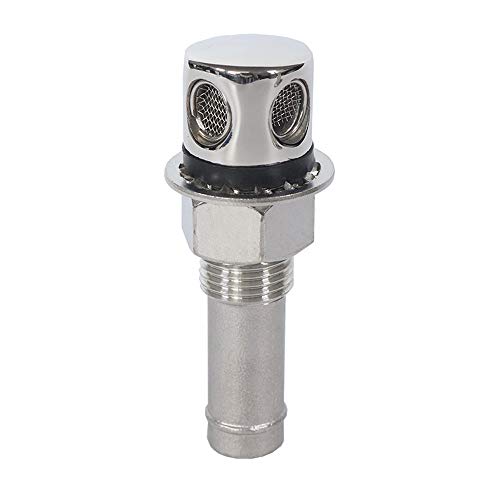
Best for: Boats operating in harsh marine environments requiring superior corrosion resistance. This 316 stainless vent includes a mounting gasket and is designed for a 1 3/8-inch hole with a 5/8″ hose connection. Caution: heavier stainless units may require more precise mounting alignment to seal effectively.
Keehui 316 Stainless 90° Fuel Vent

Best for: Premium installations where space or routing demands a 90-degree angle and high durability. Made of 316 stainless, it supports 5/8″ hoses and requires about a 1 3/8-inch mounting hole. Caution: verify that your fuel system hose routing accommodates the 90-degree bend without kinking the hose.
Buying Guide: Key Considerations For Boat Fuel Tank Breathers
- Material durability: Stainless steel (316) resists corrosion from saltwater and humidity. Chrome-plated options offer aesthetic match but may require more care in harsh conditions.
- Hose compatibility: Most vents fit 5/8″ ID hoses. Confirm interior diameter and matching fittings to prevent leaks or venting restrictions.
- Venting path: 90-degree vents are useful where space is limited or routing is complex. Straight vents are simpler but may not fit every installation.
- Water ingress protection: Vents with flame arresting screens or integrated anti-water features help prevent water from entering the tank during washdowns or spray.
- Installation hole size: Common mounting holes are around 1 3/8 inches. Measure your deck or tank opening to ensure a clean fit and seal.
- ABYC standards: When possible, select vents that meet ABYC guidelines for marine fuel systems to ensure compliance and safer venting.
- Maintenance and accessibility: Choose vents that are easy to access for inspection and cleaning, especially on boats with frequent fueling.
Frequently Asked Questions
- What is the purpose of a boat fuel tank breather?
– It allows air to vent from the fuel tank during fueling and temperature changes, helping prevent vapor buildup and fuel pushback. - What size hose should I look for in a vent?
– Most marine vents are designed for 5/8 inch interior diameter hoses. - Do all vents prevent water entry?
– Many vents offer features like anti-water entries or flame arrestor screens; always check the product details for water-blocking design elements. - Is stainless steel preferable to chrome for marine vents?
– Stainless steel (especially 316 stainless) provides better corrosion resistance in saltwater environments, though chrome vents can be suitable in less harsh settings. - Can I reuse an existing mounting hole for a new vent?
– Reusing a hole is possible if the new vent matches or slightly expands the hole; ensure a proper seal to avoid leaks. - Do vents require ABYC compliance?
– ABYC-compliant vents ensure adherence to recognized marine safety standards, which is recommended for many installations.