When choosing an outboard fuel tank and line, look for durability, compatibility, and safety features that match your boat type and engine. This guide highlights five solid options for anglers, weekend boaters, and small craft operators. Each product is chosen for reliable construction, appropriate capacity, and hose compatibility with common outboard fittings. Use the summary table to compare at a glance and then read detailed sections to see who each tank is best for and why.
| Product | Capacity | Best For | Why It Stands Out |
|---|---|---|---|
| VEVOR Boat Fuel Tank, 3.17-Gallon | 3.17 gal | Compact boats, deck boats, anglers | Durable HDPE, included long hose, Yamaha connector compatibility |
| AloneGoer 3 Gallon Portable Tank | 3 gal | Spare tank on board, small craft | Multi-layer barrier tech reduces evaporation, UV and salt spray resistant |
| DEF Portable Boat Fuel Tank, 6 gal | 6.3 gal | Medium-sized boats, frequent fueling | Two sealing modes, fuel level indicator, built-in filter |
| PeakPursuit Marine Tank, 3 Gallon | 3 gal | Portable fueling on rivers and lakes | Ergonomic handle, fuel level indicator, built-in filter |
| VEVOR Marine Tank, 6.34-Gallon | 6.34 gal | Mid-size vessels, longer trips | Gauge, 9.8 ft hose, durable HDPE construction |
VEVOR Boat Fuel Tank, 3.17-Gallon

Best for small fishing boats and deck boats needing a compact, portable fuel transfer tank. This model includes a 9.8 ft/3 m hose with a 0.24″/6 mm inner diameter, compatible with Yamaha connectors, simplifying refueling on smaller craft. The 3.17-gallon capacity reduces refueling stops on short trips. Constructed from high-density polyethylene, it resists aging, impact, and corrosion for longer service life. A key limitation is exposure to direct sunlight; prolonged sun can accelerate aging and expansion.
- Best for: Anglers and deck boat owners with Yamaha-compatible fittings
- Why selected: Lightweight, portable, and built to handle routine outboard fueling
- Caution: Avoid extended sunlight exposure to prevent aging
AloneGoer 3 Gallon Portable Tank
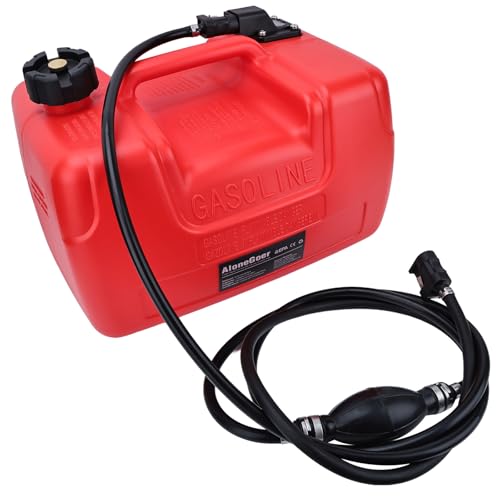
This 12L/3 gallon tank is designed for outboards, inflatable boats, and motorboats, offering a compact fueling option. It uses multi-layer barrier technology (HDPE-EVOH-HDPE) to reduce fuel evaporation by up to 98%. UV stabilization and salt spray resistance make it suitable for marine environments. The replacement hose matches Yamaha connectors, and the tank is optimized for high-humidity conditions. A limitation is that the data does not specify a built-in gauge, so refills require external monitoring.
- Best for: Boats needing a spare, compact fuel source
- Why selected: Superior evaporation reduction and durable construction
- Caution: May require separate fuel level tracking
DEF Portable Boat Fuel Tank, 6gal

The 6.3-gallon DEF tank emphasizes durability with high-density polyethylene, offering anti-aging, impact resistance, and corrosion resistance. It features two sealing modes for the cap—sealed and vented—plus a venting mechanism to prevent pressure build-up and ensure smooth fuel flow. An integrated oil volume indicator helps track remaining fuel. A built-in filter at the air inlet ensures cleaner fuel. This model is best for boaters who need a mid-sized, reliable tank with clear refueling visibility. Limitations include a lack of explicit hose compatibility details beyond standard fittings.
- Best for: Medium-sized boats needing reliable mid-size capacity
- Why selected: Dual sealing options and fuel level indicator improve usability
- Caution: Check hose compatibility with your engine before use
PeakPursuit Marine Tank, 3 Gallon

Selected for portability and ease of use, this 3-gallon tank features an ergonomic I-shaped handle and a clear fuel level indicator. A built-in in-tank air inlet filter helps keep fuel clean, while the compact size makes it ideal for smaller vessels or as a ready-to-use second tank. Best for: boaters needing a highly portable fueling option for short trips. Limitation: Smaller capacity means more frequent refueling on longer outings.
- Best for: Portable fueling on small to mid-sized boats
- Why selected: Easy transport and clear fuel monitoring
- Caution: Limited capacity for long trips
VEVOR Marine Tank, 6.34-Gallon

This larger tank provides 24 liters of capacity with a gauge and a long hose (9.8 ft/3 m). The 0.3″/8 mm inner diameter hose supports wide compatibility with many marine interfaces. Built from high-density polyethylene, it resists aging, impact, and corrosion. It is best for longer trips and boats that require steady fueling without frequent top-offs. A consideration is the need to manage vapor and evaporation with larger volumes in sunny conditions.
- Best for: Mid-size vessels on longer excursions
- Why selected: Integrated gauge and long hose for easier fueling from dock to boat
- Caution: Avoid prolonged direct sunlight to minimize aging
Buying Guide: Key Considerations For Outboard Fuel Tanks And Lines
Capacity and compatibility: Choose a tank size that matches your typical trip length and engine size. Ensure hose length and connector compatibility with your outboard model.
Durability and materials: Look for UV-stable, impact-resistant HDPE or multi-layer barrier designs to reduce evaporation and corrosion in saltwater environments.
Sealing and venting: Tanks with adjustable caps or built-in venting help prevent vapor buildup and leaks. A built-in filter and clear fuel indicators aid maintenance and refueling accuracy.
Portability and storage: Ergonomic handles and compact footprints assist with transport and under-seat storage. Consider under-deck or bench fit if space is limited.
Maintenance and safety: Check for ethanol-resistance, ease of cleaning, and compatibility with common marine fittings. Ensure a stable base to prevent tipping when refueling on a moving boat.
Frequently Asked Questions
- What capacity fuel tank should I choose for a small outboard boat?
Answer: For short trips or day use, 3–6 gallon tanks are common; for longer outings, 6–12 gallon options reduce refueling frequency. - Are these tanks compatible with standard Yamaha fittings?
Answer: Many tanks feature hoses or adapters designed for Yamaha connectors; verify the exact connector size before purchase. - Is evaporation a concern with plastic tanks?
Answer: Yes, especially in direct sunlight. Look for multi-layer barrier designs and UV stabilization to minimize evaporation. - What is the benefit of a fuel level indicator on a portable tank?
Answer: It helps plan refueling accurately, avoiding both overfilling and running dry mid-trip. - Should I choose a tank with a vented cap?
Answer: Vented caps help prevent pressure build-up and ensure smooth fuel flow, but sealed caps reduce odors and evaporation when not in use. - Is a longer hose always better?
Answer: A longer hose offers flexibility but adds potential points of leakage; ensure hoses are rated for marine use and are ethanol-resistant.