Answering the common question: what is the best oil for a jet ski depends on your engine type and operating conditions. This guide highlights five reliable oils that suit common personal watercraft (PWC) engines, including two-stroke and four-stroke options. It targets riders who want optimal protection, easy starting, and minimal wear in salt or freshwater. The top picks come from reputable brands and are suitable for riders who want simple maintenance with proven performance. Below is a quick summary table to compare the featured products and their best use cases.
| Product | Best For | Engine Type |
|---|---|---|
| Klotz SkiCraft PWC 2-stroke Pre-mix/Injector Synthetic Oil (KL-307) | Two-stroke PWCs requiring premix or injection oil | 2-stroke |
| Kawasaki OEM Performance 2-Stroke Jet Ski Oil | Genuine Kawasaki lubricant for OEM-specified engines | 2-stroke |
| Ski-Doo 9779127 Can-Am XPS 2-Stroke Full Synthetic Oil | Rotax DI/RFI engines needing full synthetic protection | 2-stroke |
| KPO Jet Ski Watercraft 4-Stroke Oil 10W-40 | Four-stroke PWCs requiring high-temp, high-load oil | 4-stroke |
| Edwards Oil Change Kit with Kawasaki KPO 10W-40 | Complete oil change kit for Kawasaki 4-stroke PWCs | 4-stroke |
Klotz SkiCraft PWC 2-stroke Oil (KL-307)

Brand: Klotz. Features include TC-W3 certification, improved throttle response, easier starting, and increased RPMs. It supports premix or oil injection and blends with gasoline, with a distinctive Klotz scent. Best for two-stroke PWCs needing reliable premix or injector oil. Choose this if you want a traditional, well-known two-stroke oil that’s easy to mix and compatible with common injection systems. Caution: verify compatibility with your engine’s approved oil specification before use.
Kawasaki OEM Performance 2-Stroke Jet Ski Oil

Brand: Kawasaki. This is a Genuine OEM part, designed for Kawasaki jet skis. Best for riders seeking factory-approved lubrication with guaranteed compatibility for Kawasaki two-stroke engines. It’s a straightforward fit for OEM-maintained machines and helps preserve warranty intent. Limitation: may not be ideal for non-Kawasaki engines or older models not specified by the OEM.
Ski-Doo Can-Am XPS 2-Stroke Full Synthetic Oil

Brand: BRP. Specifically engineered for Rotax DI and RFI engines, offering maximum protection against wear. It uses an advanced additive package to keep parts lubricated and clean, with a low smoke and low odor formula for better engine performance. Best for Rotax-powered jets or engines requiring this synthetic blend. Limitation: more suitable for Rotax engines; check compatibility with other non-Rotax PWCs.
KPO Jet Ski Watercraft 4-Stroke Oil 10W-40
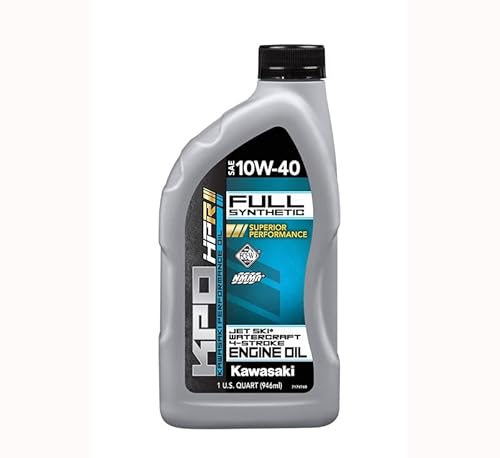
Brand: Generic. Full Synthetic 10W-40 oil formulated for Jet Ski and personal watercraft applications. Best for four-stroke PWCs requiring high-temperature, high-load protection with stable viscosity. Choose this if you want a strong all-around synthetic with rust and corrosion protection. Limitation: as a generic brand, verify engine compatibility and official approvals for your specific model.
Edwards Oil Kit For Kawasaki 4-Stroke PWCs

Brand: THE EDWARDS MOTORSPORTS & RVS COMPANY. This kit includes 5 quarts Kawasaki KPO 10W-40 full synthetic oil, plus a funnel, towel, and gloves. Best for Kawasaki four-stroke PWCs wanting a complete oil-change package with essential accessories. Limitation: the kit is Kawasaki-specific; may not be ideal for other brands without similar kits or different oil specifications.
Buying Guide
What engine type do you own? Two-stroke PWCs often rely on premix or injector oil, while four-stroke engines use dedicated 4-stroke motor oils. For Rotax engines, a synthetic oil designed for DI/RFI systems can maximize protection and cleanliness. If you plan long, salty-sailing sessions, an oil with robust corrosion resistance and high-temperature stability is beneficial. OEM-grade oils are typically the safest choice for warranty alignment, while full synthetic options may offer higher protection and better cold-start performance.
Key considerations for choosing jet ski oil:
- Engine compatibility: Confirm the oil type (2-stroke premix/injection vs. 4-stroke) and the manufacturer’s recommended specification.
- Viscosity and climate: Thicker oils hold up better at high temperatures; lighter oils improve cold starts in cooler water.
- Hybrid or full synthetic: Full synthetic provides superior protection and deposit control but may cost more.
- OEM vs. aftermarket: OEM oils guarantee compatibility with warranty requirements; aftermarket options can offer comparable protection at potentially lower cost.
- Maintenance practicality: Kits with filters and accessories simplify scheduled oil changes and reduce setup time.
FAQ
- Q: Do I need to mix oil with fuel for two-stroke PWCs?
A: Yes, most two-stroke PWCs require premix or oil-injection lubrication, depending on the engine design. - Q: Can I use four-stroke oil in a two-stroke engine?
A: No. Use oil specifically formulated for two-stroke or the manufacturer’s recommended mix to avoid fouling and performance issues. - Q: What is the benefit of OEM oil versus aftermarket?
- Q: Is low-smoke oil important for my engine?
A: Low-smoke formulas reduce exhaust residues and deposits, which can help keep the engine cleaner and improve performance. - Q: Should I use a oil kit instead of buying items separately?
- Q: How often should I change jet ski oil?
A: OEM oils are designed to meet the engine’s exact specifications and warranty requirements, while aftermarket options can provide similar protection with potential cost savings.
A: If you prefer convenience and a complete package, a kit with oil plus filters and accessories can simplify maintenance and ensure compatibility.
A: Follow the manufacturer’s recommended intervals based on usage, water conditions, and engine hours. When in doubt, perform an early change after break-in and at the start of each riding season.