Finding the right fuel lines and fittings is essential for safe, efficient marine operation. This guide highlights five top options covering common Honda/Yamaha/Jonhson style engines, universal hoses, and fittings. The selections prioritize ethanol resistance, compatibility with standard marine hose sizes, and dependable primer bulbs. Best for casual anglers, weekend enthusiasts, and professional skippers alike, each product is evaluated for its best-use scenario and potential limitations.
| Product | Best For | Key Benefit |
|---|---|---|
| iFJF Outboard Fuel Line Kit | Mid-range boaters needing replacement kit | All-in-one line with primer bulb and female connector |
| Attwood 93806MUS7 Kit | Recreational boats seeking sprayless connection | Low-permeation hose with durable connections |
| ALLWIN 5/16″ ID 10ft Fuel Line | Budget-conscious users | High-PSI, ethanol-ready fuel line |
| Attwood 93806ELP7 Tank & Engine Kit | EPA/CARB-conscious boaters | EPA compliant with ethanol-resistant materials |
| TIHOOD 6ft Fuel Line Assembly | General marine use with primer bulb | Primer bulb included; versatile 3/8″ line |
iFJF Outboard Fuel Line Kit 5/16″ 10 Ft

This kit is designed for a broad range of outboard engines from 4 hp to 200 hp and compatible Yamaha, Mercury, Johnson, and OMC models. Best for boaters needing an all-in-one fuel line with a primer bulb and a female connector for quick installation. The setup references multiple compatible part numbers, improving replacement compatibility. Use this if you want a single kit with a familiar 5/16″ ID hose size and a built-in primer bulb. Limitations include potential incompatibility with newer models above 60 hp that lack external fuel tanks.
What makes it suitable
- Standard 5/16″ ID hose compatible with many common engines
- Includes primer bulb and quick female connector
- Cross-reference compatibility helps with older and mid-range models
Who should avoid
- Owners of newer high-horsepower models that do not support external tanks
- Those needing a tank-side fitting not included in this kit
Attwood 8889LP6 Acetal 3/8-Inch Barb Fuel Hose Fittings

These fittings are designed to mate with 3/8-inch I.D. hoses used on Johnson, Evinrude, and OMC systems. Best for owners who need solid barbed connections and easy installation, with clamps purchased separately. A practical choice when you already have a 3/8″ hose and want reliable Johnson/OMC compatibility. Limitation: fittings alone do not include a hose or primer bulb.
Attwood 93806MUS7 Marine Fuel Line Kit

This kit features Attwood’s sprayless connector to reduce fuel sprays when connecting and disconnecting a pressurized line. It includes a multi-layer, low-permeation primer bulb offering improved fuel output, and a 3/8-inch low-permeation hose designed to resist kinking and hardening. Best for boaters prioritizing safety and reduced fuel evaporation. Limitation: kit may require separate purchase of hose clamps and tank fittings, depending on installation needs.
Attwood 93806ELP7 EPA-Compliant Fuel Line Kit

Designed for EPA and CARB compliance, this assembly emphasizes ethanol-resistant durability and low-permeation materials. It is assembled in the USA and aims to minimize fuel odors and evaporation. Best for environmentally conscious boaters who want compliant components. Limitation: does not always include tank-side fittings; confirm compatibility with your fuel tank setup.
TIHOOD 6FT Fuel Line Assembly
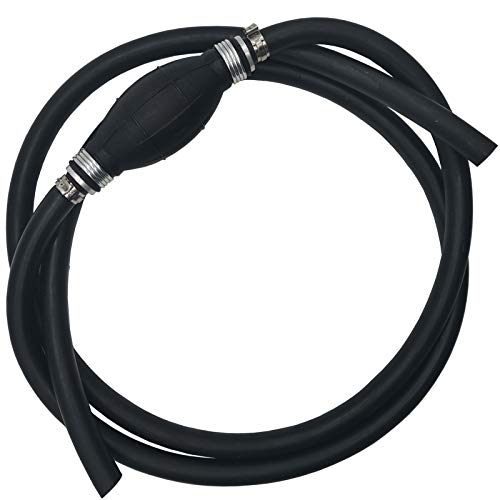
This 6-foot assembly uses a 3/8″ inner diameter, 5/8″ outer diameter hose with a primer bulb. It is versatile for boats, RVs, tractors, and caravans, and features dual check valves for flexible priming orientation. Best for users needing a longer run with a reliable primer bulb. Limitation: universal fittings may require additional adapters for some engines.
Buying Guide: Key Factors To Consider
- Size compatibility: Match the hose ID and hose clamps to your engine’s fuel intake. Common marine sizes are 3/8″ and 5/16″.
- Hose material and longevity: Look for ethanol-resistant hoses (low-permeation) to reduce fuel evaporation and odor.
- Primer bulb quality: A robust primer bulb improves fuel delivery, especially during cranking in cold weather or after storage.
- Safety features: Prefer sprayless connectors and EPA/CARB-compliant components to minimize hazards and emissions.
- Complete kits vs. fittings: Some listings include hoses, bulbs, and fittings; others are fittings only. Choose based on your current setup.
- Installation considerations: Confirm tank-side fittings, hose clamps, and compatibility with your tank and engine brand.
Inline Comparison: Quick Buyer’s Snapshot
- Best all-in-one kit: iFJF Outboard Fuel Line Kit for broad engine compatibility.
- Best safety feature: Attwood 93806MUS7 with sprayless connection.
- Best EPA-compliant choice: Attwood 93806ELP7 for CARB compliance.
- Best budget option: ALLWIN 5/16″ ID 10ft Fuel Line for cost-conscious buyers.
- Best fittings-focused: Attwood 8889LP6 for 3/8″ hose fittings on Johnson/Evinrude/OMC engines.
Frequently Asked Questions
- What hose size should I use for most outboards?
Most common marine fuel lines are 3/8″ or 5/16″ inside diameter. Check your engine’s fuel inlet size and matching hoses.
- Why choose low-permeation/ethanol-resistant hoses?
They reduce fuel evaporation, preserve fuel quality, and protect fittings from ethanol-related degradation.
- Do I need a sprayless connector?
If your system uses a pressurized line, a sprayless connector improves safety during connection and disconnection.
- Are EPA or CARB compliant components necessary?
EPA/CARB compliant parts help minimize fuel evaporation and odors and may be required in some jurisdictions.
- Can I mix brands in a single fuel line kit?
Mixing is possible if sizes and fittings match; verify compatibility with all components before installation.
- What should I inspect before replacing fuel lines?
Check hose aging, cracks, hardening, swelling, and any leaks at fittings. Replace lines that show wear.