Looking for high performance propellers to improve speed, acceleration, and fuel efficiency on outboard boats? This guide highlights five top options designed for power, durability, and better boat handling. The right propeller depends on engine horsepower, shaft size, and sailing conditions. Below you’ll find concise buyer-focused notes to help you choose the best propeller for your setup, with clear pros, cons, and who each option is best for.
| Product | Best For | Key Benefit |
|---|---|---|
| DEDC 3-Vanes Black High Strength Nylon Propeller | Tohatsu, Nissan 2.5/3.5HP, Mercury outboards | Durable nylon with corrosion resistance and fast performance |
| Meruzue Flo-Torq SSR Hub Kit | Mercury 1.25″ shaft engines | Sacrificial hub system reduces drivetrain stress |
| 13 1/4×17-K Aluminum Propeller (Yamaha) | Yamaha 60-130HP | OEM-style blade geometry for better top speed and acceleration |
| 10 3/8 x 13 OEM Aluminum Propeller | Mercury 9.9—25HP | Durable aluminum with improved speed and efficiency |
| Young Marine OEM Aluminum Propeller (13 Spline) | Mercury 30—70HP | OEM-grade aluminum with reliable performance |
Note: The table provides quick reference points. For detailed product specifics, each section below links to Amazon and explains who should consider each propeller and why it’s selected for particular engine setups.
DEDC 3-Vanes Black High Strength Nylon Propeller

Best for compact, lightweight outboards where corrosion resistance and quick responsiveness are priorities. This 7.4″ diameter, 5.7″ pitch nylon propeller is designed for durability in saltwater and freshwater use, with a 12mm shaft bore. It emphasizes stability and long service life, making it suitable for small engines in recreational boating or light-duty workboats.
Who this is best for: casual boaters using Tohatsu, Nissan 2.5/3.5HP, or Mercury outboards who want a rugged, long-lasting propeller with strong speed characteristics without heavier materials.
Caution: Nylon props can wear faster than aluminum under heavy impact or frequent grounding; ensure compatibility with your engine’s recommended RPM and load.
Meruzue Flo-Torq SSR Hub Kit for Mercury

Best for Mercury outboards with 1.25″ prop shafts where smooth shifting and gear protection are a priority. The SSR hub absorbs shift shocks and includes a sacrificial hub to guard the gearbox and propeller against impacts, which is particularly useful during rough water or reef encounters.
Who this is best for: engines like Verado and Pro XS where preserving drivetrain integrity is important, and owners want a hub system that reduces shock during shifting.
Caution: This hub kit is a accessory component; ensure your existing propeller matches the 1.25″ shaft and spline requirements before purchasing.
13 1/4×17-K Aluminum Propeller for Yamaha

Best for Yamaha engines in the 60–130HP range needing OEM-style blade geometry for improved bow lift and acceleration. It uses aluminum construction with a 15-tooth spline and a right-hand rotation, designed to mimic OEM performance with a balance of top speed and bite.
Who this is best for: Yamaha boaters seeking a close OEM substitute that preserves handling characteristics and overall efficiency at mid-range horsepower.
Caution: Ensure the propeller’s spline count and shaft compatibility align with your exact Yamaha model and horsepower rating to avoid binding or RPM mismatch.
10 3/8 x 13 Aluminum Propeller (Mercury 9.9—25HP)

Best for Mercury 9.9–25HP engines needing a durable, affordable aluminum solution. This 10-3/8″ diameter and 13″ pitch prop improves top end speed and acceleration while maintaining engine efficiency and reducing wear through solid aluminum construction.
Who this is best for: anglers or small boat operators who want an economical upgrade without sacrificing performance or reliability on mid-range Mercury motors.
Caution: For higher horsepower or heavy loads, this size may not provide the ideal bite; verify your engine’s recommended RPM and load range before swapping.
Young Marine OEM Aluminum Propeller (13 Spline)
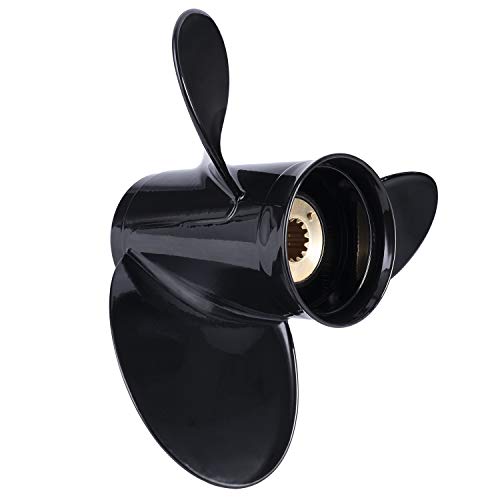
Best for Mercury engines in the 30–70HP range needing a reliable OEM-grade aluminum prop. It is designed to match original dimensions and spline count closely, offering predictable performance and durability for mid-tier boats and frequent use.
Who this is best for: boaters seeking an affordable, OEM-compatible aluminum propeller that mirrors original performance characteristics for Mercury motors.
Caution: This propeller is aftermarket; verify exact spline count and gear ratio compatibility with your model to avoid misfit or performance issues.
Buying Guide: Key Purchase Considerations
- Engine compatibility: Confirm shaft diameter, spline count, and rotation (left vs. right) required by your outboard.
- Material choice: Aluminum is affordable and light; nylon offers corrosion resistance and durability in saltwater but may wear faster under heavy use.
- Pitch and diameter: Higher pitch improves top speed but can reduce acceleration; diameter impacts stern lift and stability. Match to horsepower and boat weight for optimal performance.
- Hub protection: SSR or sacrificial hub systems help protect gearcases from impacts, a valuable feature in chop or rocky waters.
- OEM vs aftermarket: OEM-style props preserve original performance, while aftermarket options can offer cost savings and specific performance tweaks.
Frequently Asked Questions
- What does pitch mean on an outboard propeller? Pitch is how far the propeller would move in one revolution if it travelled through solid material; higher pitch can increase top speed but requires more power for acceleration.
- How do I know which propeller fits my engine? Check your engine’s shaft size, spline count, rotation (R or LH), and the manufacturer’s recommended propeller specifications for your model.
- Is a sacrificial hub worth it? Yes, for boats operating in rocky or debris-prone waters, a sacrificial hub reduces damage to the gearcase and propeller when impact occurs.
- Can I mix propellers across brands? It’s best to match propeller geometry with your engine and boat setup. Incompatible splines or diameters can cause binding or insufficient RPMs.
- Which material lasts longer in saltwater? Aluminum propellers are durable and affordable, while high-strength nylon can offer superior corrosion resistance but may wear faster under heavy loads.
- Should I choose OEM or aftermarket? OEM props preserve intended performance. Aftermarket options can provide cost-effective alternatives with similar blade geometry and better availability.