Answering the buyer’s question, these marine antifouling paints help reduce barnacles, weeds, and slime on hulls for a full season. They’re best for boaters who want easier maintenance, improved performance, and fewer sanding sessions at season’s end. The top picks below are suited for fiberglass, wood, steel, or iron bottoms and cover saltwater and freshwater use. The quick-reference table summarizes each product’s key points to help with fast comparisons.
| Product | Best For | Coating Type | Notes |
|---|---|---|---|
| TotalBoat Underdog Marine Antifouling Bottom Paint (Blue, Gallon) | Sailboats and powerboats in frequent-use saltwater conditions | Ablative | Economical, single-season protection; easy scraping next season |
| TotalBoat JD Select Ablative Antifouling Bottom Paint (Black, Quart) | Boats in mixed-use environments (salt & freshwater) | Ablative | Low odor, low VOCs; easy cleanup with soap and water |
| TotalBoat JD Select Ablative Antifouling Bottom Paint (Black, Gallon) | Mid- to large-size boats requiring longer protection | Ablative | Durable finish; burnishable for smoothness and speed |
| TotalBoat Outdrive AF Aerosol (Black, 12 oz) | Underwater metals protection for propellers and drives | Coating/Topcoat aerosol | Fast-drying; includes zinc pyrithione to inhibit corrosion |
| Interlux Trilux 33 Aerosol Antifouling Paint (Gray, 16 oz) | General antifouling needs with strong class performance | Aerosol coating | Best-in-class option in aerosol format |
TotalBoat Underdog Marine Antifouling Bottom Paint (Blue, Gallon)
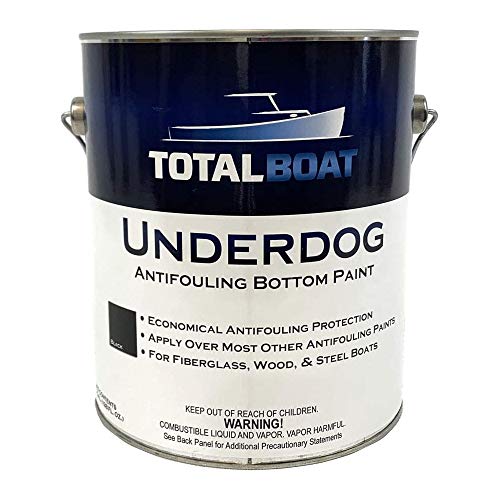
Best For: Sailboats and power boats in frequent-use saltwater conditions. Why selected: Economical antifouling with copper biocide helps prevent barnacle and mussel attachment and releases fresh biocide as water flows under the hull. Suitable for properly prepared fiberglass, wood, steel, and iron bottoms. Limitation: Ablative coatings wear away during the season, so reapplication will be needed annually.
TotalBoat JD Select Ablative Antifouling Bottom Paint (Black, Quart)

Best For: Boats in both saltwater and freshwater environments seeking low odor and easy cleanup. Why selected: The hybrid film is self-polishing, reducing bottom paint buildup and aiding sanding reduction next season. Limitation: Quart size is better for smaller vessels or touch-ups; larger boats may prefer a gallon.
TotalBoat JD Select Ablative Antifouling Bottom Paint (Black, Gallon)

Best For: Medium to larger boats that require longer protection across seasons. Why selected: Self-polishing coating wears away as the boat moves, reducing future sanding needs and supporting smoother operation. Limitation: Requires proper surface prep for optimal performance.
TotalBoat Outdrive AF Aerosol for Underwater Metals (Black, 12 oz)

Best For: Propellers, outdrives, shafts, and other underwater metal surfaces. Why selected: Contains approximately 1.5% zinc pyrithione to keep metal surfaces smooth in service, with a fast-drying formula. Limitation: Aerosol format requires multiple coats for robust single-season protection.
Interlux Trilux 33 Aerosol Antifouling Paint (Gray, 16 oz)
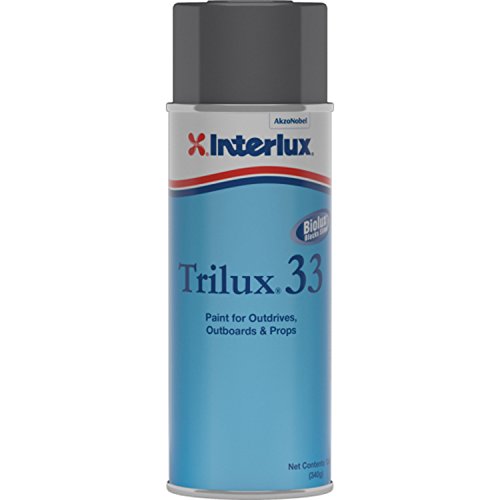
Best For: General antifouling needs with a top-tier aerosol option. Why selected: Described as best-in-class and ideal for quick spray applications with consistent coverage. Limitation: Aerosol formats may require careful masking and multiple coats for large surfaces.
Buying Guide: Choosing the Right Marine Antifouling Paint
- Boat type and material: Fiberglass, wood, steel, and iron bottoms respond differently to ablative versus hard, non-ablative films. Choose an ablative option for frequent-use boats to minimize buildup over the season.
- Water conditions: Saltwater boats benefit from coatings designed for barnacle and weed control, while mixed water environments may favor gentle ablations or low-VOC formulas.
- Environmental considerations: Low-VOC and low-odor formulas are preferable in marinas with environmental restrictions. Water-based paints offer easier cleanup.
- Application format: Quarts and gallons suit different boat sizes. Aerosol sprays provide quick coverage but may require more coats for robust protection on large hulls.
- Reapplication cycle: Ablative coatings wear away with use, reducing buildup but necessitating annual reapplication data. Plan for re-coating ahead of the next season.
- Surface prep: Proper prep of fiberglass, wood, or metal hulls is essential for performance. Follow manufacturer recommendations for sanding, priming, and curing times.
FAQ: Marine Antifouling Paint
- What is antifouling paint used for?
To prevent barnacles, weeds, and slime from attaching to the hull, maintaining speed and reducing fuel use.
- Is ablative paint better than hard antifouling coatings?
Ablative paints wear away gradually with use, reducing buildup. Hard coatings stay on longer but may require more sanding.
- Do I need to remove old paint before applying new antifouling paint?
Yes. Proper surface preparation typically includes removing old coatings, cleaning, and sanding to ensure adhesion.
- Are low-VOC paints less effective?
Not necessarily. Many low-VOC formulas offer comparable protection with easier cleanup and reduced environmental impact.
- Can I use antifouling paint in marinas with environmental restrictions?
Yes, choose a low-VOC or water-based formula and follow marina guidelines for application and curing times.