Looking for an electric outboard motor for a dinghy? This guide explains top electric models that balance quiet operation, efficiency, and ease of maintenance. It highlights suitable buyers for each option and helps you compare performance, range, and handling. The picks below focus on electric propulsion ideal for small boats, dinghies, kayaks, and inflatable craft in salt or freshwater. Use the buying guide to choose the best fit for fishing, recreational cruising, or tender duties.
| Product | Best For | Key Benefit |
|---|---|---|
| Newport NT300 Electric Outboard Motor | Saltwater and freshwater adventures | High thrust with long range and quiet operation |
| Newport NV-Series 62lb Thrust | Larger boats and heavier loads | Strong push and reliable control in tough conditions |
| Newport NV-Series 36lb Thrust | Kayaks, canoes, small boats | Lightweight, battery-efficient propulsion |
| Newport NV-Series 55lb Thrust | Trolling on boats with longer trips | Balanced power, LEDs, and adjustable mounting |
| Newport Kayak Series 55lb Thrust | Kayak and small craft on saltwater | Saltwater-ready, versatile shaft and control |
Newport NT300 Electric Outboard Motor

The Newport NT300 is a 3HP-equivalent electric outboard designed for both saltwater and freshwater use. With 110 lb of thrust and a 66-mile range, it emphasizes quiet, emissions-free propulsion for long outings. It’s best for anglers or recreational boaters seeking extended runtimes without noise or fumes. The digital throttle with LCD readout helps monitor performance, while a 24.6″ shaft and 9.8″ two-blade propeller fit mid-size dinghies and small craft. It offers multiple trim/tilt angles for adaptable handling in varying water conditions.
Best for: boaters needing substantial range and quiet operation on mid-size dinghies or small boats. Choose this if you value a digital throttle, clear display, and practical range in mixed water conditions. Limitation: runtime depends on boat weight and conditions; real-world distance may vary from the stated 66 miles.
Newport NV-Series 62lb Thrust Trolling Motor

This 62-pound thrust trolling motor is built for larger boats and heavier loads. It suits saltwater and freshwater trolling, offering robust thrust and durable construction. The large 3-blade prop provides strong push and improved handling in challenging conditions. This model is best for anglers on bigger jon boats or bass boats who need dependable, continuous power. Limitation: higher thrust comes with more weight and battery drain, so plan for a larger battery setup if extended trips are planned.
Newport NV-Series 36lb Thrust Trolling Motor
This 36-pound thrust trolling motor targets lighter craft like kayaks, canoes, inflatables, and small boats. It’s designed for quiet, efficient propulsion with an emphasis on battery life. The corrosion-resistant build makes it suitable for saltwater use while preserving performance in freshwater. Best for: paddlers or small-boat enthusiasts who prioritize portability and runtime over raw pushing power. Limitation: less thrust for heavier loads or windy conditions.
Newport NV-Series 55lb Thrust Saltwater Trolling Motor
The 55-pound thrust model delivers solid power with eight speed settings, including five forward and three reverse. It features a 30″ shaft and an LED battery meter, with a 3-blade propeller for strong low-end torque. It’s a good middle-ground option for trolling on mid-to-large boats in saltwater or mixed conditions. Best for: long day trolling with steady battery monitoring. Limitation: speed ceiling around 4 mph, varies with boat type and environmental factors.
Newport Kayak Series 55lb Thrust
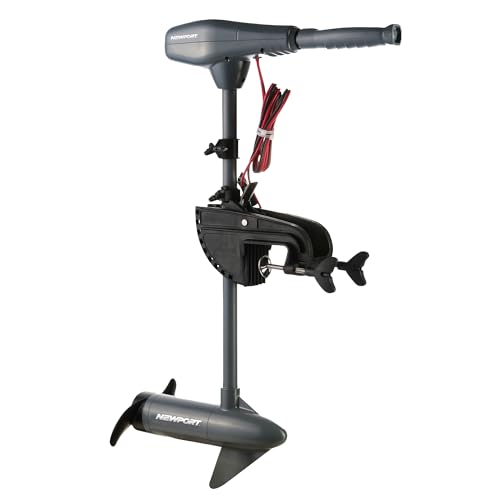
This kayak-series trolling motor provides 55 lb thrust with a 24″ fiberglass shaft for flexible depth placement. It’s designed for saltwater use with corrosion-resistant hardware. Eight-speed control (five forward, three reverse) lets you tailor propulsion to current and wind. Best for: kayak and small craft users who need saltwater reliability and adjustable depth. Limitation: higher cost relative to smaller, lighter motors; ensure your craft can accommodate mounting and shaft length.
Buying Guide: Electric Outboard Motors For Dinghies
Power, range, and compatibility are the core considerations when choosing an electric outboard for a dinghy. Batteries, shaft length, and mounting compatibility should match the vessel and typical use. For longer trips on mid-sized dinghies, aim for models with higher thrust and longer runtimes. For kayaks and smaller inflatables, lighter motors that maximize battery life are preferred. Consider saltwater corrosion resistance for coastal use and ensure the propeller size aligns with your boat’s weight and hull design.
What should you prioritize?
- Thrust vs. boat weight: Heavier craft need more thrust to maintain speed and control.
- Battery capacity: Larger batteries extend range but add weight; balance with buoyancy and handling.
- Saltwater vs freshwater: Saltwater-rated motors resist corrosion better over time.
- Mounting compatibility: Shaft length and transom fit affect installation and performance.
- Control interface: Digital throttles and LCD displays help monitor battery and speed in real-time.
How to compare models quickly?
- Best for long trips: NT300 with 66-mile range.
- Best for bigger boats: 62lb NV-series.
- Best for light vessels: 36lb NV-series and Kayak Series.
- Best all-around balance: 55lb NV-series with LED meter.
Maintenance and safety tips
- Rinse with fresh water after saltwater use to reduce corrosion.
- Inspect propeller and shaft for debris and damage after trips.
- Store batteries and motors in a dry, ventilated area away from direct heat.
- Follow manufacturer guidelines for mounting and tilt/trim operations.
Frequently asked questions
- What is the typical runtime of electric outboards on a dinghy? — Runtime varies by boat weight, battery size, and water conditions; ranges from a few hours to over a day with larger packs.
- Are electric outboards suitable for saltwater? — Yes, many models are saltwater-rated and designed to resist corrosion.
- How do I choose the right shaft length? — Pick a shaft length that places the propeller below the hull’s bottom for efficient propulsion without hitting the hull.
- Can I retrofit an electric motor to a gas dinghy? — Retrofit feasibility depends on transom strength, mounting, and electrical compatibility; consult the manufacturer.
- Do electric outboards require special batteries? — Most use specific 12V or 24V packs; ensure battery type matches the motor’s requirements.
- Is maintenance cheaper with electric motors? — Generally lower maintenance since there are fewer mechanical parts and no fuel mixture to manage, but battery care adds ongoing costs.