Answering the question every boat owner asks: which fuel stabilizer is best for outboard motors? This guide highlights five reliable options that help prevent ethanol-related problems, corrosion, and fuel degradation. Each pick targets different needs, from long storage to in-season maintenance. The top choices are ideal for anglers, casual boaters, and seasonal users who want smoother starts and reliable performance. Read on to compare features, recommended usage, and languages that help with quick decisions.
| Product | ||
|---|---|---|
| STA-BIL 360 Marine Ethanol Treatment and Fuel Stabilizer (8 fl. oz.) | In-season maintenance | Fuel system cleaning and corrosion protection |
| Yamaha Yamalube Outboard Fuel Stabilizer & Conditioner Plus (12 oz) | E10 fuels and long storage | Alcohol-free formula with metal protection |
| Quicksilver Quickstor Fuel Treatment and Stabilizer (12 oz) | Long-term storage | Stabilizes fuel for up to two years |
| STA-BIL 360 Marine Fuel System Treatment (32 oz) | Heavy-duty fuel system care | Cleans fuel system and prevents water-related issues |
| Mercury Quickare Fuel Treatment Additive (12 oz) | Fuel freshness between fills | Helps prevent varnish and gum buildup |
STA-BIL 360 Marine Ethanol Treatment and Fuel Stabilizer

Best for: Boat owners performing regular in-season maintenance. This 8-ounce bottle targets marine engines and fuel systems. It cleans fuel lines, injectors, and pumps with PEA additives, while removing water, gum, and varnish. The formula also provides corrosion protection for internal components, supporting longer engine life and smoother operation during the boating season.
Why selected: It combines fuel system cleaning with corrosion protection, which is essential for outboard motors exposed to ethanol-rich fuels. The stabilizer helps optimize combustion and engine performance over time.
Caution: For large fuel tanks, consider multiple treatments according to capacity to ensure full system coverage.
Yamaha Yamalube Outboard Fuel Stabilizer & Conditioner Plus (12 Ounce)

Best for: Yamaha outboards and owners using E10 fuels seeking long-term storage protection. The alcohol-free formula helps prevent fuel oxidation and ethanol-related phase separation, helping keep fuel fresh for up to a year when stored. It also includes metal protection for steel and aluminum components.
Why selected: Its alcohol-free composition minimizes drying and potential fuel degradation, making it a solid choice for Yamaha engines and boats stored seasonally or with infrequent use.
Caution: Verify model compatibility if you own a non-Yamaha engine; some listings emphasize specific models or fitments.
Quicksilver Quickstor Fuel Treatment and Stabilizer (12 Oz)

Best for: Boats, generators, and powersports equipment needing long-term storage. Quickstor stabilizes regular and ethanol-blended fuels for up to two years with a simple ratio (1 oz treats 5 gallons). It helps prevent varnish, gum, and corrosion, keeping systems ready after storage or slow-season periods.
Why selected: Its long-term storage capability provides a clear advantage for boats left idle for months, while still being effective for routine maintenance.
Caution: Frequent, active usage directions are preferable if you operate in climates with extreme heat or variable fuel quality.
Mercury Quickare Fuel Treatment Additive (12 oz)
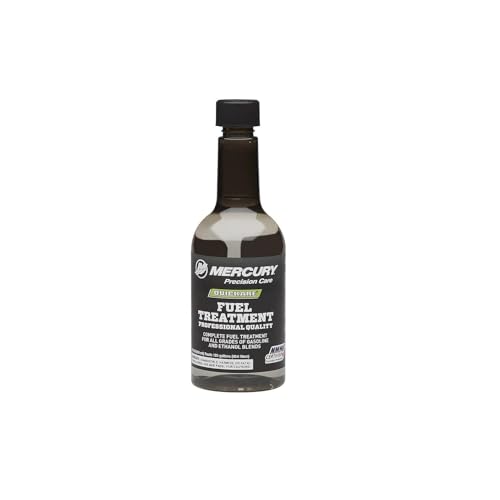
Best for: Outboards and EFI engines needing fuel freshness between fills. Quickare helps prevent varnish and gum buildup in fuel lines, tanks, carburetors, injectors, intake valves, and spark plugs. It also addresses phase separation tied to ethanol blends and helps manage corrosion.
Why selected: It offers comprehensive protection against common ethanol-related issues that can affect outboard performance, especially in mid-season usage where fuel quality fluctuates.
Caution: Results depend on fuel storage conditions; extended storage may require additional stabilization steps beyond a single dose.
Buying Guide
What to consider when choosing a fuel stabilizer for outboard motors
Storage duration, engine type, and fuel quality are key factors. Short-season boaters may prioritize in-season cleaning and corrosion protection, while seasonal users will value long-term stabilization and hazard prevention.
Fuel compatibility and additives
Check for ethanol compatibility and whether the formula targets varnish, gum, and water separation. Alcohol-free options can be preferable for certain engines and fuel types to minimize potential fuel drying.
Storage and usage guidelines
Most stabilizers specify dose per gallon or per tank size. For extended storage, use products that claim multi-year stability and corrosion protection. Always follow manufacturer directions for dosage and tank capacity.
Engine and boat type considerations
Inboard, outboard, and stern-drive engines may respond differently to stabilizers. Marine-specific formulas often provide better corrosion protection for saltwater or humid environments.
Performance expectations
Look for cleaners that address fuel injectors, lines, pumps, and oxygen sensors where applicable. A good stabilizer should help maintain fuel economy, smoother starts, and reduced engine strain during transitions between fills.
FAQ
- Do I need a fuel stabilizer for every trip? If you store your boat for more than a month or rely on ethanol-containing gasoline, stabilizers help prevent degradation and varnish buildup.
- Can stabilizers be used with ethanol-free fuels? Yes, most stabilizers are effective with both ethanol-containing and ethanol-free fuels, but check label guidance for best results.
- Is alcohol-free better for outboards? Alcohol-free formulas reduce potential water absorption and fuel drying in some engines, making them preferable for long-term storage.
- How long can stabilized fuel remain usable? Storage durations vary by product, but some stabilizers claim effectiveness for up to two years or more under proper conditions.
- Should I use one stabilizer for all my equipment? If you have multiple boats or engines, a single marine-specific stabilizer with broad coverage can simplify maintenance, but verify compatibility with each engine.
- Can I mix different brands? Mixing stabilizers is generally not recommended because formulations differ; use a single product per storage cycle for consistency.