Find the right wireless foot control trolling motor to enjoy hands-free operation, precise speed control, and effortless steering on the water. This guide focuses on five top options that suit different boat sizes, water conditions, and fishing styles. Best for: anglers who want cable-free control, quick speed adjustments, and reliable response from a pedal system.
| Product | Best For | Why It Stands Out |
|---|---|---|
| MotorGuide Xi Series Wireless Foot Pedal | Lively control on mid-sized boats | 2.4GHz wireless control with heel-toe steering and a dedicated speed dial for smooth transitions. |
| Garmin Foot Pedal for Force Trolling Motor | Seamless wireless feel with cable-like response | Intuitive steering and instant control blends wireless convenience with familiar pedal feel. |
| Minn Kota Ulterra Foot Pedal | Advanced GPS-enabled trolling | Dual-mode operation, Spot-Lock readiness, and waterproof low-profile design for all-day use. |
| AQUOS Haswing CaymanB Electric Bow Mount | Versatile bow-mount setups | Wireless remote plus wireless foot control with long-range operation and easy pairing. |
| AQUOS Haswing CaymanT Transom Trolling Motor | Saltwater and freshwater versatility | 2.4G wireless foot control alongside remote for flexible, hands-free operation. |
MotorGuide Xi Series Wireless Foot Pedal

The MotorGuide Xi Series wireless pedal operates on a 2.4GHz frequency for cable-free motor control from anywhere on the boat. It features a heel-toe design for precise left/right turns and a dedicated speed dial for smooth speed transitions. Best for: boaters who want flexible foot control with intuitive steering and easy speed adjustments. Limitation: Dependence on wireless connectivity means occasional signal interference could affect responsiveness in challenging environments.
Minn Kota Ulterra Foot Pedal

This foot pedal supports dual-mode operation for AutoStow/Deploy, power trim, steering, speed, and prop on/off control. The low-profile, waterproof design offers heel-toe pedal use and left/right steering options, with a Spot-Lock activation feature and an 18-foot cable for secure connections. Best for: anglers needing GPS-ready precision and a robust, all-day pedal experience. Caution: The feature set assumes compatibility with Ulterra trolling motors; verify motor model before purchase.
Garmin Foot Pedal for Force Trolling Motor

A wireless foot pedal designed for the Garmin Force trolling motor, delivering instant control and a cable-like steering experience. The design aims to mimic the feel of a traditional pedal while offering wireless convenience. Best for: users who value rapid response and seamless integration with Garmin Force systems. Limitation: Confirm compatibility with your specific Force motor model to ensure full feature support.
AQUOS Haswing CaymanB Electric Bow Mount
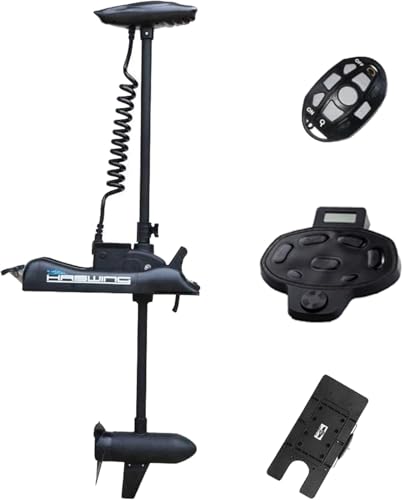
The CaymanB combines a 2.4G wireless foot control with a long-range remote and quick-release bracket, designed for bow-mount setups. It emphasizes quiet operation, variable speed for precise control, and compatibility with boats up to 2,750 lbs. Best for: anglers who want hands-free operation at the bow with reliable wireless control. Caution: Always verify the motor model and mounting compatibility before purchase.
AQUOS Haswing CaymanT Transom Trolling Motor

The CaymanT model includes wireless remote and wireless foot control for a transom-mount setup, featuring 55 lbs thrust, a 39-inch shaft, and versatile control. Best for: anglers needing flexible control for shorter shafts and compact setups. Limitation: Not GPS-enabled, so advanced stabilization features may differ from other systems.
Buying Guide
What to consider when choosing a wireless foot control trolling motor:
- Power and thrust: Match motor weight and boat size to avoid underpowered performance.
- Control range: Look for 164 ft or more for comfortable operation from anywhere on the boat.
- Compatibility: Confirm the pedal works with your specific trolling motor model and mounting arrangement.
- Controls layout: Heel-toe pedals offer intuitive steering; consider dual-mode or two-button options for preferred control style.
- Waterproofing and durability: Choose a low-profile, waterproof pedal designed for marine environments.
- Pairing and setup: Some models require pairing sequences; ensure you can easily pair wireless remotes and foot controls with your motor.
- Battery and power use: Wireless systems should minimize battery drain; verify any impact on runtime at your typical speeds.
Practical buying considerations
- Remote vs. foot control balance: If you rely heavily on hands-free operation, favor models that combine a robust foot pedal with a reliable remote option.
- Brand ecosystem: Sticking to a single brand for motor and pedal can simplify compatibility and future maintenance.
- Repairability and parts availability: Check whether replacement parts (pads, cables, remotes) are readily available.
FAQ
- Q: Do wireless foot pedals work with all trolling motors? A: Not universally. Verify model compatibility and the required frequency (2.4GHz vs 433Hz) for your motor.
- Q: Is wireless latency an issue? A: Modern systems are designed to minimize latency, but some environments may introduce brief delays.
- Q: Can I use the wireless pedal with the remote simultaneously? A: In many cases, yes, but pairing steps vary by brand; follow the manufacturer’s instructions.
- Q: What maintenance is needed? A: Regularly inspect connectors, clean dust from pedal contacts, and ensure battery health for remotes and pedals.
- Q: Are these pedals waterproof? A: Most are designed for marine use with waterproof seals; confirm IP rating in product specs.
- Q: Do wireless pedals affect battery life? A: They use modest power; battery life depends on usage and radio frequency.