If you’re shopping for a rugged waterproof video camera for boating, you’re aiming for reliability, buoyancy, and clear footage in bright sun or choppy waves. The top picks below are designed for saltwater or freshwater boats, snorkeling decks, and dockside adventures. They suit anglers, sailors, and outdoor enthusiasts who want hands-free recording or selfie-ready footage on the water. Each option is evaluated for depth rating, autofocus, and image quality to help you choose the right camera for your sea or lake trips.
| Product | Best For |
|---|---|
| 4K Underwater Camera — 64MP, Floatable | Active boaters who want high-res video and easy recovery if dropped |
| AKASO EK7000 4K30FPS | Budget-friendly, stable 4K footage with remote and EIS |
| Eyoyo Underwater Fishing Camera — 7″ LCD | Anglers who want a real-time underwater view from a boat |
| 5K Underwater Digital Camera — 64MP | Extreme image quality with dual-screen selfie capability |
| 4K Underwater Camera — 33FT, 64MP | Vessel crews needing depth, zoom, and robust build |
4K Underwater Camera, 64MP Floatable with IPS Screen

Best for: boaters who want ultra-high-resolution footage without worrying about sinking. The camera records in UHD 4K with 64MP stills and a 16-foot depth rating, plus a floatable buoyant design for easy recovery if dropped overboard. Autofocus helps lock onto moving subjects in bright outdoor light. The IPS HD screen preserves accurate colors for on-deck framing while under water or on the surface.
Why selected: It combines 4K video, high-resolution photography, and buoyancy for practical water use. The 16X digital zoom expands shooting options on distant hulls or waves, and the fill light assists in low-light conditions near dawn or dusk on the water.
Caution: While buoyant, it is not rated for deep-sea depths beyond 16 feet, so plan use around shallow harbor or lake environments. The camera’s advanced features rely on adequate lighting for best results.
AKASO EK7000 4K30FPS Action Cam

Best for: boaters seeking a budget-friendly option with reliable 4K video and simple stabilization. This camera records 4K30Fps and 2.7K30Fps with 20MP photos, backed by built-in Electronic Image Stabilization (EIS) for smoother footage when the boat rocks. Its waterproof case guarantees protection up to 131 feet, making it versatile for on-boat and water activities.
Why selected: The EK7000 offers strong value, solid 4K capture, and stability features without breaking the bank. It is well-suited for recreational boat trips, fishing from decks, and shore excursions where quick setup matters.
Caution: While water-rated, always use the supplied waterproof housing at deeper depths and follow mounting guidelines to avoid motion blur in rough seas.
Eyoyo Underwater Fishing Camera with 7″ LCD

Best for: anglers who want a real-time underwater view from a boat or ice fishing setup. This unit includes a 7-inch display, 1000TVL HD lens, and 12 infrared lights for low-light clarity, providing a direct look at fish and underwater structure. It’s designed for plug-and-play use with straightforward setup and long runtime on a single battery charge.
Why selected: The combination of a large onboard display and infrared lighting makes it a standout for precise underwater viewing, especially when you need to see fish behavior and terrain without guesswork.
Caution: The integrated monitor makes the device bulkier; for small cockpit spaces, consider mounting options and visibility angles to avoid obstructing cockpit controls.
5K Underwater Digital Camera with Dual-Screen

Best for: water explorers who demand ultra-high-resolution video and dual-screen framing for selfies or group shots. This camera offers 5K UHD video and 64MP photos, plus a 2.88″ main screen and a 2″ front screen for instant on-camera previews. Its IP68 rating supports use around boats, pools, and shorelines.
Why selected: The higher-resolution video and dual-screen design make it a powerful choice for travelers who want impressive, ready-to-share footage with visible framing from the waterline or deck.
Caution: The higher-resolution files require ample storage and processing power; ensure cards and devices can handle 5K workflows on the go.
4K Underwater Camera — 16FT, Dual-Screen

Best for: divers and boat crews who want a balance of 4K capture, autofocus, and a longer single-charge runtime. The camera features 4K UHD video, 64MP photos, autofocus, and a 16FT waterproof rating with a dual-screen display for easy underwater selfies and framing.
Why selected: It combines practical underwater autofocus and longer depth capability with a compact, floatable design—helpful when moving between a deck and the water for surface filming and nearshore clips.
Caution: While durable, avoid aggressive handling around sharp hull edges; use protective housings if engaging in rough seas or docking maneuvers.
4K Underwater Camera with 33FT Depth
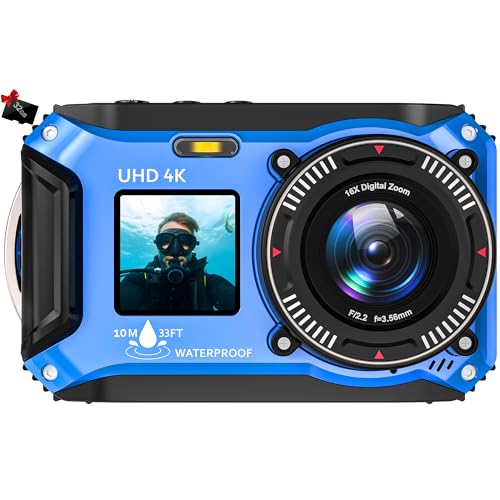
Best for: boat crews needing deeper waterproofing and high-quality footage during snorkeling or coastal dives. This camera records 4K UHD with 64MP stills, features 3.97″ autofocus focusing, and up to 16X digital zoom. It also includes a dual-screen setup and is designed for portability and ease of use.
Why selected: The 33FT depth rating enables more adventurous water footage, while the autofocus macro shooting helps highlight underwater details. The built-in zoom widens shooting options on a moving boat.
Caution: The 33FT rating is good for near-surface water, but avoid deep-sea depths beyond the rating; ensure you maintain a secure mounting to prevent loss overboard.
Buying Guide: Choosing the Right Waterproof Video Camera for Boats
What depth rating do you need?
Waterproof depth ratings indicate how far underwater the camera can operate. For boating and casual snorkeling, 16 feet is often sufficient. If you plan longer dives or deeper shoreline exploration, a camera rated 33 feet or more provides added safety and flexibility.
Do you prefer a touchscreen or external monitor?
On-deck shooting benefits from a clear display. Cameras with IPS or dual screens help frame shots on the water, while a larger external monitor can be advantageous for real-time viewing in bright sunlight.
What about autofocus and stabilization?
Autofocus ensures sharp images when your subject moves quickly, such as wildlife or waves. Built-in Electronic Image Stabilization (EIS) reduces shake when filming from a moving boat, resulting in smoother footage.
How important is buoyancy?
Bouyant or floatable cameras are easier to recover after a splash or drop. This is a practical feature for open-water recordings and poolside use, reducing the risk of losing the device in water.
What about accessories and compatibility?
Consider included housings, mounts for boats, selfie sticks, and charging options. Some cameras accept external microphones or WiFi transfer to phones, which can be useful for quick sharing after a voyage.
Storage and battery life considerations
Higher-resolution video (4K or 5K) consumes more storage. Ensure you have ample memory cards and know the expected battery life under typical boat-shooting conditions. A spare battery can be valuable for full-day outings.
Maintenance and durability
Saltwater exposure requires proper sealing and rinsing after use. Look for robust build quality, anti-dust features, and reliable seals to withstand splash and spray typical on boats.
Frequently Asked Questions
- What is the best camera for boating beginners? A budget-friendly 4K camera with a waterproof case and simple controls is ideal for newcomers who want reliable footage without complexity.
- Should I choose a camera with a floating design? Yes. A floatable camera helps prevent loss if accidentally dropped overboard and makes retrieval easier.
- Can I use these cameras for night fishing? Some models include infrared lighting or perform well in low-light settings, but check if the camera supports night modes or external lighting for deeper night use.
- Do these cameras work well in bright sunlight? Yes, cameras with IPS displays and good color processing perform best in sunny conditions, though glare can affect visibility; use shade or anti-glare screens when possible.
- Is external audio important for boat videos? If you plan to record narration or on-deck conversations, choose models that support external microphones or have good built-in mics in wind-resistant designs.
- What should I consider for long boat trips? Prioritize longer battery life, higher storage capacity, rugged housings, and mounts that keep the camera secure on active decks or railings.