Answer: When choosing a water pump for a boat, prioritize a model with automatic or manual bilge removal, appropriate flow rates, and durable marine construction. This guide highlights five well-suited options for different boat sizes and needs, from compact hand pumps to automatic electric models. Ideal buyers include weekend boaters needing quick bilge removal, kayak and small-boat owners seeking lightweight reliability, and owners who want auto-operated protection for unattended sessions.
The table below summarizes how each selected pump fits common boating scenarios. Use it as a quick reference to compare purpose, best use case, and notable strengths.
| Product | Best For | ||
|---|---|---|---|
| Better Boat Manual Bilge Pump | Small boats, kayaks, dinghies | High 20 GPM, 39″ hose | Manual effort required |
| SEAFLO 06 Series Automatic Bilge Pump | Medium boats needing auto protection | 4-year warranty, automatic float | Higher price than manual |
| SeaSense Hand Bilge Pump | Compact spaces, emergency kit | Ergonomic grip, removable hose | Manual operation |
| MAXZONE Submersible 1100 GPH (Automatic) | Runabouts, yachts needing auto | 1100 GPH, built-in float | May run frequently in large volumes |
| Subtoy 1100GPH 12V Kit | Auto bilge on larger boats | All-in-one kit with float switch | Requires 12V power |
Better Boat Manual Bilge Pump For Boats
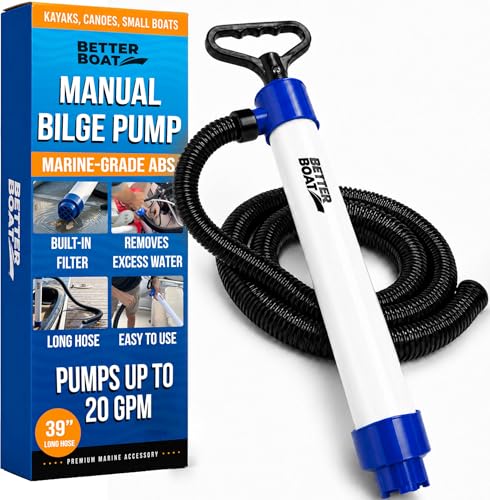
Best for: small boats, kayaks, dinghies, and places where a compact, portable hand pump is ideal. The pump moves up to 20 gallons per minute, with each stroke equaling 115 cubic inches of water. Its 39-inch discharge hose directs water away from the gunwale, window wells, or into a bucket, reducing splashback and keeping the working area dry. The built-in filter and suction spacers help the pump prime even with dirty water, which is useful in shallow bilges or after rain.
Why selected: This model emphasizes fast manual removal with a simple, durable design. The long discharge hose and debris-filtering intake make it versatile for several on-board water scenarios. It’s a strong pick for boaters who want a reliable, non-electrical option that can be used in emergencies or as a primary bilge helper.
Caution: Manual operation requires physical effort; in very large bilges or heavy rainfall, multiple cycles may be needed to remove all water.
SEAFLO 06 Series Automatic Bilge Pump

Best for: boats that require unattended, automatic bilge protection with a compact footprint. This 12V pump handles up to 750 GPH and includes a built-in float switch, eliminating manual checks. The 3/4″ outlet matches common bilge fittings, and a 4-year warranty signals long-term reliability. It also features a 3-foot power lead for flexible installation.
Why selected: The combination of automatic operation and a long-standing warranty makes this pump reliable for owners who want steady bilge drainage without constant monitoring. It’s well-suited for mid-sized boats and yachts where automatic protection is prioritized over manual pumping.
Caution: Automatic systems can still fail if electrical connections are compromised; ensure proper wiring and clean bilges to maintain optimal cycling.
SeaSense Hand Bilge Pump
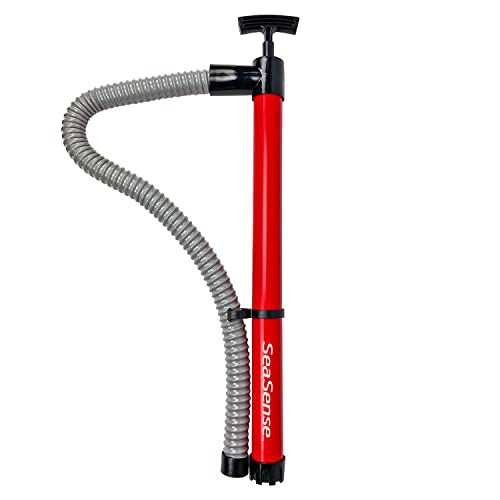
Best for: emergencies and compact spaces where a spare manual pump is beneficial. It’s self-priming and designed for small boats, canoes, kayaks, and bilges where space is tight. The grip and ergonomic handle reduce fatigue, and a removable hose aids storage. A robust, corrosion-resistant plastic build supports longevity in marine environments.
Why selected: This pump combines portability with practical engineering for quick, one-handed operation. It is ideal as a lightweight, ready-to-use option in a compact boat or as a back-up pump in a larger craft.
Caution: It is a manual pump; in larger vessels or significant water inflows, it may not match the speed of electric units.
MAXZONE Submersible 1100 GPH Bilge Pump (Automatic)
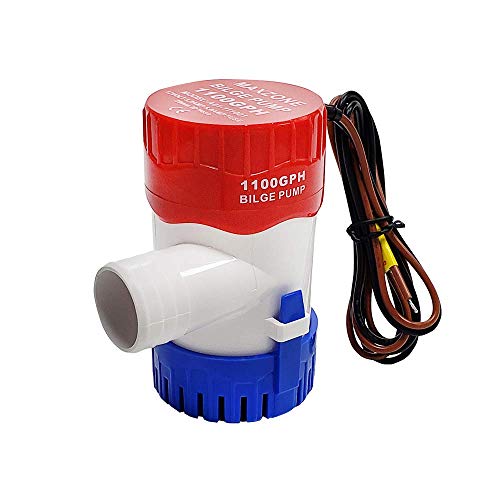
Best for: larger boats or yachts that require higher flow with automatic operation. This 12V submersible model offers about 1100 GPH, suitable for faster bilge removal. It uses a built-in float switch to cycle on and off around water levels, helping conserve battery power and keep bilges dry during rough conditions.
Why selected: The high flow rate supports quicker water removal, and the integrated float switch provides dependable automatic control. It’s a solid pick for boats where reliable, unattended bilge function is essential.
Caution: Larger flow may increase power draw; verify battery capacity for extended use on longer trips.
Subtoy 12V Automatic Bilge Pump Kit
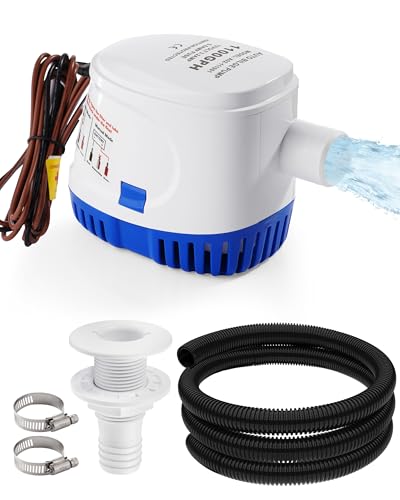
Best for: boaters who want an all-in-one automatic bilge kit with built-in float switch. The kit includes a 1-1/8″ outlet and is designed for continuous use in medium to larger boats. The auto-on/off feature helps maintain dryness without manual intervention. A compact submersible design supports flexible installation in tight bilges.
Why selected: The kit approach streamlines installation and ensures automatic bilge removal with a reliable float switch. It’s a practical choice for boat owners upgrading to automated bilge protection or equipping a new vessel.
Caution: Requires 12V power supply; ensure wiring and fuse sizing meet marine electrical standards.
MAXZONE Automatic 1100GPH Submersible Bilge Pump

Best for: boats that require an automatic 1100 GPH bilge pump with a compact footprint. It features a built-in float switch and 1-1/8″ outlet, with a simple installation and reliable cycling. The unit is suitable for mid-sized vessels needing robust automatic bilge removal.
Why selected: The combination of a strong flow rate and integrated float switch makes it a dependable choice for boats where consistent dry bilge conditions are critical for safety and navigation readiness.
Caution: Ensure proper venting and placement to prevent air locks and ensure efficient priming in all bilge configurations.
WASSERMANN 12V RV Water Pump

Best for: RVs, campers, and boats that need a reliable 12V water pump with steady 4.0 GPM pressure up to 45 PSI. The complete kit includes hoses, debris filter, and adapters, making it suitable for versatile on-board water systems, including marine and camping applications.
Why selected: A capable 12V pump with a practical kit enhances ease of use for portable or multi-use setups where a robust water supply is needed beyond the bilge context.
Caution: Designed for RV and camping use; verify compatibility with marine wiring standards and ensure proper mounting to prevent vibration wear.
ECO-WORTHY 33-Series 110V Diaphragm Pump
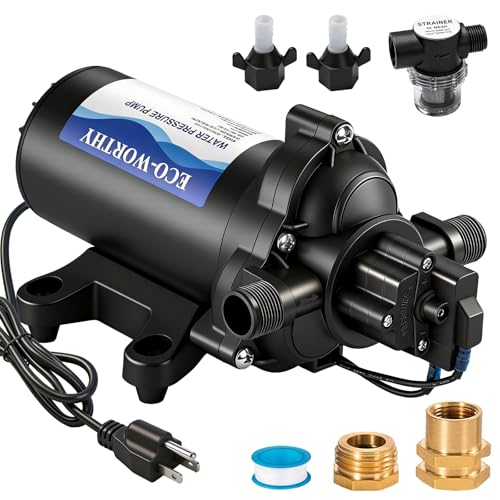
Best for: stationary installations on larger boats or shore-side setups where 110V AC power is readily available. This diaphragm pump delivers 4.0 GPM and 50 PSI with smart pressure control. It can adjust with a desired pressure range and includes garden hose adapters for flexible use.
Why selected: The 110V option eliminates battery reliance and provides reliable flow control for fixed locations like engine rooms, deck wash systems, or dockside water supply connections on bigger vessels.
Caution: Requires access to AC power and safe electrical installation; marine-grade protection and proper enclosure are essential to prevent moisture intrusion.
Buying Guide: Key Purchase Considerations For A Boat Water Pump
What pump type fits your boat size and water needs?
Manual pumps are lightweight and reliable for small boats or emergency kits. Automatic bilge pumps are preferred for larger vessels or unattended use, delivering consistent removal without manual effort. Submersible pumps offer flexible installation in tight bilges, while diaphragm pumps suit fixed installations requiring steady pressure.
What flow rate do you need?
Higher GPH supports faster water removal but increases power or effort. For small boats, 20–750 GPH manual or automatic units are common. Larger boats may require 1100 GPH or more, with automatic cycling to optimize power use.
What power source matters?
12V DC pumps suit most boats with standard electrical systems, including runabouts and kayaks with optional battery power. 110V AC pumps work where shore power is available, offering steady performance for fixed installations. Consider battery capacity and charging ability for continuous use.
What installation considerations are important?
Look for compatible outlet sizes (commonly 1/2″, 3/4″, or 1-1/8″), built-in float switches for auto pumps, and corrosion-resistant housings. Hose length and fittings influence reach and ease of use. Ensure secure mounting to withstand motion and spray.
What maintenance improves reliability?
Regularly inspect filters and screens, check for leaks, and verify that auto pumps cycle on/off as intended. Keep bilges clean to prevent impeller or valve clogging, and test pumps before trips to confirm readiness.
Safety and reliability considerations
Choose pumps with marine-grade construction, appropriate certifications, and warranties when available. Ensure electrical connections are waterproof and corrosion-resistant. For unattended use, select models with reliable float switches and automatic shutoffs to protect electrical systems.
At-a-glance buying tips
- Small boats and kits: manual pumps with long hoses and debris filters are ideal.
- Medium boats: automatic bilge pumps with float switches balance performance and convenience.
- Larger boats/yachts: higher-flow, auto-capable pumps with robust housings support continuous dry bilges.
- Fixed installations: consider 110V diaphragm or pump kits for steady shore-powered setups.
Frequently Asked Questions
- What is the difference between a bilge pump and a water pump for a boat?
- How do I know what GPH rating I need?
- Can I install an automatic bilge pump myself?
- What maintenance do bilge pumps require?
- Is a 12V pump suitable for all boats?
- When should I upgrade to a higher-flow pump?
Answers: A bilge pump removes water from the bilge, while other water pumps may supply onboard systems. GPH needs depend on boat size and expected water intrusion. Many installations are DIY-friendly, but follow wiring and mounting guidelines. Regular inspection and cleaning extend life, and 12V pumps suit most boats, while larger boats may benefit from higher-flow or AC-powered options for fixed setups.