Direct answer: For reviving vinyl boat seats, choose sprays that flex with vinyl, dry quickly, and resist water and sun exposure. This list highlights paints formulated for marine vinyl and related surfaces, helping you decide who each product is best for—whether you want a quick touch-up, a marine-grade coating, or a durable upholstery finish. The top picks cover a range from general vinyl coatings to color-matched marine formulas, with practical notes on application and limitations.
| Product | Best For | Key Benefit |
|---|---|---|
| Rust-Oleum 1911830 | General vinyl boat seats, dashboards | Flexible vinyl resin formula, quick-dry |
| SEM M25083 Carver White Marine Vinyl Coat | Marine-grade coats | Specialized marine vinyl finish |
| SEM M25103 Marine Ray Alabaster | Color-matched repairs | Vinyl coat color guide |
| Dupli-Color HVP105 | Interior fabric and vinyl accents | Flexible, self-priming formula |
| Rust-Oleum 1911830-6PK | Bulk projects or multiple seats | Same formulation in six-pack |
Note: Always test on a small, inconspicuous area first and ensure proper ventilation during spraying. Follow can directions for curing times and recoat windows to maximize durability in marine environments.
Rust-Oleum 1911830 Specialty Vinyl Spray Paint

Best for: General vinyl boat seats, dashboards, and upholstery where a flexible finish is needed. The product uses vinyl paint resins designed to move with the vinyl, reducing cracking risks on curved surfaces. Dries to the touch in about 10 minutes and covers up to 7 sq ft per can.
Why selected: This is a widely available, flexible vinyl paint suitable for marine applications, with quick-dry properties ideal for DIY repairs on boat interiors.
Caution: Not a heavy-duty marine sealant; prolonged exposure to harsh salt spray may require spot touch-ups and periodic maintenance.
SEM M25083 Carver White Marine Vinyl Coat

Best for: Marine-grade vinyl coatings where performance in boating environments matters. The Carver White finish is tailored for marine vinyl applications, offering a durable protective layer with adhesive properties suited for boat interiors.
Why selected: SEM specializes in marine vinyl coatings, ensuring better compatibility with vinyl boat seats and dashboards compared with general-purpose sprays.
Caution: Availability may vary by region; color matching may require additional coats for a uniform look across large areas.
SEM M25103 Marine Ray Alabaster Vinyl Coat
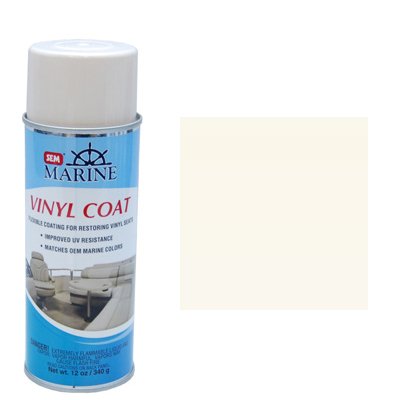
Best for: Repair or color-up of marine vinyl with a light alabaster tone. The Vinyl Coat Color Guide helps match or restore lighter vinyl colors on boat seats and trim.
Why selected: This option is geared toward color restoration and coordinating with existing pale vinyl tones on boats, reducing the need for full repainting.
Caution: Color matching on weathered surfaces may require multiple coats and blending techniques to achieve uniformity.
Dupli-Color HVP105 Vinyl and Fabric Coating Spray

Best for: Interior fabric and vinyl accents on boats where a flexible finish and quick handling are desired. The gloss white provides a clean, bright look for upholstery panels and seats.
Why selected: Dupli-Color offers a professional-grade, self-priming formula with good adhesion to vinyl and fabric, suitable for smaller restoration projects on boats.
Caution: While durable, the finish may not be as UV-resistant as some marine-specific coatings; consider UV protectant afterward for longevity.
Rust-Oleum 1911830-6PK Specialty Vinyl Spray Paint

Best for: Bulk projects or multiple seats on a boat where a consistent vinyl finish is required across several areas. The six-pack provides consistency in color and finish.
Why selected: The same flexible vinyl resin formula supports uniform results across multiple components, helping avoid shade variations between parts.
Caution: Bulk packaging can lead to fewer opportunities for practice; test Spray technique and coat layering on a small test area before broader use.
Buying Guide: Key Considerations For Vinyl Boat Seat Sprays
- Surface compatibility: Choose products labeled for vinyl, leather-like upholstery, or marine vinyl to ensure proper adhesion and flexibility in marine conditions.
- Flexibility and adhesion: Look for vinyl resin-based formulas that stay flexible when dry to prevent cracking on curved or seated surfaces.
- Finish and appearance: Consider gloss vs. satin vs. matte finishes. Lighter shades can fade in sun exposure; color-matching aids restoration projects.
- Drying and curing times: Quick-dry sprays help with faster projects, but allow full cure before heavy use or exposure to sun and water.
- UV resistance: Marine environments require UV stability to prevent fading and cracking; some products include UV protection as a feature.
- Application method: Aerosol sprays are common for boat interiors; ensure proper ventilation and protective gear for safe use.
- Multiple seats or large areas: If coating several sections, a bulk pack may ensure color consistency across parts.
- Maintenance and longevity: After painting, consider a protectant or sealant designed for vinyl to extend the finish life in harsh marine conditions.
FAQ: Vinyl Boat Seat Spray Paint
- Q: Can I spray vinyl seats on a fiberglass boat? A: Yes, if the product states vinyl-friendly and is compatible with plastic or fiberglass substrates; prepare and prime if required by the manufacturer.
- Q: Will spray paint crack on seams and curved areas? A: Choose flexible vinyl coatings; apply light, even coats and allow full cure between layers to minimize cracking.
- Q: How long should I wait before exposing painted seats to water? A: Follow the product’s cure time; typically several hours to days depending on the formula and climate.
- Q: Do I need a primer for vinyl sprays on boat seats? A: Some formulations are self-priming; others may require a compatible vinyl primer for best adhesion in harsh environments.
- Q: Is color matching important for boat interiors? A: Yes, for a cohesive look across seats, panels, and trims; refer to color guides or test swatches where available.
- Q: Can I apply these products over existing paint? A: Generally you should remove peeling coatings and ensure the surface is clean before applying a vinyl-specific finish.