Answering common buyer questions: these products provide protection for underwater and below-waterline surfaces, prevent fouling, and help extend the life of hulls and submerged metals. This guide highlights five options suited for different boat types and environments. Choose based on surface material, submersion duration, and whether you need anti-fouling properties, barrier protection, or propeller/metal corrosion control. Below, a quick table helps compare key points, followed by in-depth product sections and a practical buying guide.
| Product | Best For | Notes |
|---|---|---|
| TotalBoat TotalProtect Epoxy Barrier Coat System (White, Quart) | Gelcoat blister-prone fiberglass and mixed underwater metals | Two-part epoxy barrier for above/below waterline |
| Rust-Oleum 396967 Marine Flat Boat Bottom Antifouling Paint, Quart, Black | Fiberglass, wood, or steel surfaces needing fouling prevention | Copper-release antifouling formula |
| TotalBoat Outdrive AF Aerosol Spray Paint for Propellers & Underwater Metals | Propellers, outdrives, shafts, and other underwater metals | Contains zinc-based corrosion inhibitor |
| Boat Paint 35 Oz Gloss Marine Boat Topside Bottom Enamel Paint | Topside, bottom, waterline on multiple substrates | High-gloss polyurethane enamel with multi-surface adhesion |
| Rust-Oleum 396959 Marine Coatings Topside Paint, Quart, White | Fiberglass, wood, or metal above waterline | Oil-based with easy leveling |
TotalBoat TotalProtect Epoxy Barrier Coat System
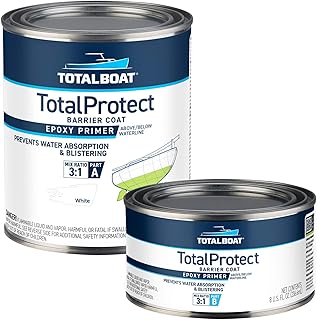
This high-build two-part epoxy primer acts as a barrier coat for both above- and below-waterline surfaces. It is well-suited for gelcoat blister prevention on fiberglass boats and provides strong protection on underwater metals. Best for hulls needing robust barrier protection and blister resistance.
Best for: Fiberglass hulls with blister-prone gelcoat and mixed underwater metal surfaces.
Why selected: Comprehensive barrier performance with proven blister prevention potential when properly applied.
Limitation: Requires correct mixing and surface prep; not a one-coat fix for all conditions.
Rust-Oleum Marine Flat Bottom Antifouling Paint

Antifouling paint designed to prevent fouling on fiberglass, wood, or steel surfaces below the waterline. Formulated to slowly release copper to deter organism growth. Best for boats that spend time in the water and require ongoing antifouling protection.
Best for: Bottom coatings on mixed-material hulls needing long-lasting fouling resistance.
Why selected: Simple, practical antifouling solution with straightforward recoat timing.
Limitation: Copper release can affect non-target ecosystems if not used as directed; best for typical freshwater or coastal environments.
TotalBoat Outdrive AF Aerosol Spray Paint for Propellers & Underwater Metals

This aerosol coating inhibits corrosion on underwater metals like propellers, outdrives, and shafts. It includes approximately 1.5% zinc pyrithione to keep metal surfaces smooth in service. Best for spot protection and easy re-coats in hard-to-reach areas.
Best for: Localized protection on propellers, shafts, and other submerged metal parts.
Why selected: Quick-drying and convenient for hard-to-reach spots with effective anti-corrosion benefits.
Limitation: Aerosol format may require ventilation and careful handling; ensure multiple coats for full-season protection.
SENVEN Boat Paint Gloss Marine Enamel
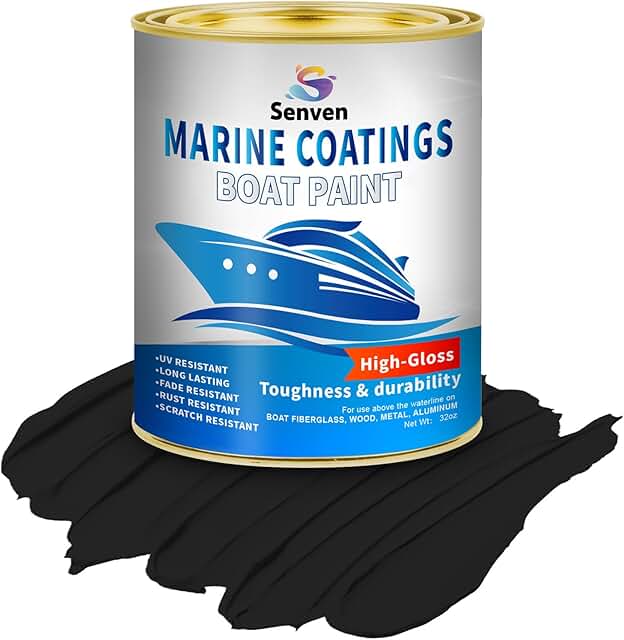
This all-in-one boat paint provides top-side, bottom, and waterline coverage. It adheres to marine fiberglass, wood, metal, and previously painted surfaces with a high-gloss, abrasion-resistant polyurethane finish. Best for versatile hull coatings and high-gloss aesthetics.
Best for: Multi-surface marine projects needing a durable, glossy finish.
Why selected: Flexible adhesion and strong surface compatibility across common boat substrates.
Limitation: Not recommended for continuous submersion on boat bottoms that stay underwater for more than 72 hours.
Rust-Oleum Marine Coatings Topside Paint

This oil-based topside paint is ideal for fiberglass, wood, or metal surfaces above the waterline. It applies easily, levels well, and dries quickly, making it a practical choice for fresh coatings and touch-ups on exposed sections of the hull.
Best for: Above-waterline surfaces needing a smooth, durable, easy-to-apply finish.
Why selected: Reliable option for quick topcoat jobs with strong leveling properties.
Limitation: Not suitable for below-waterline application or prolonged submersion.
Buying Guide
Key considerations when choosing underwater boat paints and coatings:
- Submersion duration: Choose antifouling or barrier-coat products if hulls stay submerged for long periods; use topside or enamel paints for above-waterline areas.
- Hull material: Fiberglass, wood, steel, and aluminum each respond differently to coatings. Check adhesion, flexibility, and drying times for your substrate.
- Environmental impact: Some antifouling paints release copper or biocides. Follow local regulations and environmental guidelines.
- Application and maintenance: Consider curing times, recoating windows, and whether spot-repair options exist for maintenance between full repaints.
- Surface condition: Bare metal, gelcoat, or previously painted surfaces require proper prep, including cleaning, sanding, and possibly primers or conditioners.
FAQ
- Q: Do I need a barrier coat if I already have antifouling paint on my hull? A: A barrier coat can protect bare metal and fiberglass from blistering and may improve adhesion of antifouling layers in some cases.
- Q: Can I apply topside paint below the waterline? A: No, topside paints are designed for above-waterline surfaces and may wear quickly if submerged.
- Q: How soon can I launch after applying antifouling paint? A: Follow product instructions for drying and curing times; many antifoulants require a full cure before immersion.
- Q: Is aerosol spray better than brush-on for underwater coatings? A: Aerosol coatings are convenient for hard-to-reach areas but may require multiple coats and proper ventilation.
- Q: Can I mix different brands on the same hull? A: Mixing products is generally not recommended due to potential adhesion and performance issues. Use compatible systems when possible.
- Q: Are these products suitable for coastal or freshwater environments? A: Most are versatile, but check label specifics for recommended usage areas and saltwater tolerance.