Direct answer: a trickle charger for a boat battery keeps your 12V or 6V marine batteries topped off safely, reducing sulfation and extending life. The right unit varies by battery type, installation needs, and whether you want portability or a fixed onboard charger. Below are five top options chosen for reliability, compatibility with common marine lead-acid and LiFePO4 batteries, and clear guidance on who each is best for. Use this quick table to compare at a glance:
| Product | Best For | |
|---|---|---|
| NOCO GENIUS1 | Small boats and seasonal docks | Compact, versatile 1A charger/maintainer with desulfator |
| NOCO GENIUS2D | Under-dash or engine-compartment installs | Direct-mount 2A onboard maintenance |
| Unocho 6V/12V Maintainer | Budget-friendly 6V/12V charging | Five-stage smart charging with solid protections |
| MOTOPOWER MP00205A | All-weather, multi-battery setups | Desulfator and spark-free operation |
| POWOXI Solar Trickle Charger | Off-grid boats and sun-rich marinas | Solar option with protection and efficiency |
Buyer profile notes: this guide targets boat owners who store batteries during off-season, frequent travelers needing dependable standby power, and those seeking low-maintenance, safe charging. Each choice balances ease of use, safety features, and compatibility with common marine battery chemistries.
NOCO GENIUS1: 1A 6V/12V Smart Battery Charger

Best for compact boats and seasonal docks, the NOCO GENIUS1 is a versatile all-in-one charger, maintainer, trickle charger, and desulfator with overcharge protection and temperature compensation. It supports 6V and 12V lead-acid batteries (AGM, Gel, SLA, VRLA) and LiFePO4 cells, including flooded and maintenance-free variants. Its integrated thermal sensor adjusts charge based on ambient temperature, preventing overcharge in heat and undercharge in cold weather. This makes it a solid choice for smaller craft and boats with limited space.
Who it’s best for: owners needing a compact, automatic solution that handles both lead-acid and LiFePO4 in tight spaces. Why selected: broad battery compatibility, temperature-compensated charging, and a small footprint that fits aboard small runabouts or cruisers.
Caution: the 1A output means slower charging for large batteries or deep cycles; consider a higher-amperage model for rapid replenishment on larger battery banks.
NOCO GENIUS2D: 2A 12V Onboard Charger
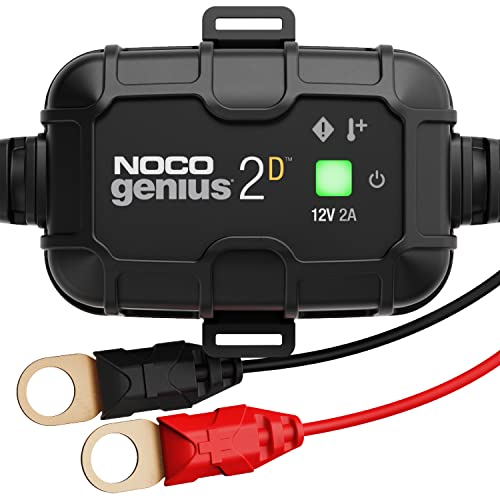
Best for boats where an onboard, direct-m mount charger is preferred, the GENIUS2D provides a 2A, 12V charging solution that doubles as a maintainer and desulfator. It’s designed for lead-acid batteries (AGM, Gel, SLA, VRLA), including flooded and deep-cycle varieties used in marine applications. The direct-mount design allows a secure, semi-permanent installation near the battery, offering a clean, hassle-free setup for boat compartments or built-in battery bays.
Who it’s best for: boat owners seeking a dedicated onboard charger that integrates neatly into cockpit or engine-room battery setups. Why selected: direct-mount capability, 2A output for regular maintenance, plus desulfation and temperature compensation features to optimize battery health.
Caution: installation requires a suitable mounting surface and mounting hardware; verify compatibility with your vessel’s enclosure before purchase.
Unocho 6V/12V Battery Charger Maintainer

Best for a versatile, mid-range option, the Unocho 6V/12V maintains and charges 6V and 12V lead-acid batteries, including SLA, AGM, GEL, VRLA, and deep-cycle varieties. It features five-stage smart charging—battery detection, soft start, bulk, absorption, and float maintenance—keeping batteries ready for daily use or seasonal storage. It includes robust safety protections such as reverse polarity, short circuit, over-voltage, over-current, overload, and thermal safeguards, plus a 72-hour safety timer and inline fuse.
Who it’s best for: boat owners who want a flexible, feature-rich charger that can handle multiple battery types and weather conditions without needing separate units. Why selected: strong protection profile and multi-stage charging that supports long-term battery health.
Caution: the 1.5A rating means slower charging on larger banks; consider pairing with a higher-amperage unit for fast replenishment if you have multiple batteries aboard.
MOTOPOWER MP00205A 12V 800mA

Best for all-weather setups, the MOTOPOWER MP00205A combines charging, maintenance, trickle charging, and desulfation for 12V lead-acid batteries, including flooded and sealed maintenance-free variants (AGM and gel). It is ETL Listed for safety and uses automatic desulfation and optimization to improve battery performance during charging. The unit emphasizes low standby drain and spark-free operation, making it a practical choice for boats exposed to variable conditions.
Who it’s best for: mariners who need a reliable all-weather unit that can restore sulfated batteries while maintaining readiness. Why selected: built-in desulfation, safety listing, and spark-free connections enhance marine reliability.
Caution: keep in mind the 800mA rate is modest for large or heavily discharged batteries; plan for longer charging cycles if your bank is large.
POWOXI Upgraded Solar Trickle Charger for 12V
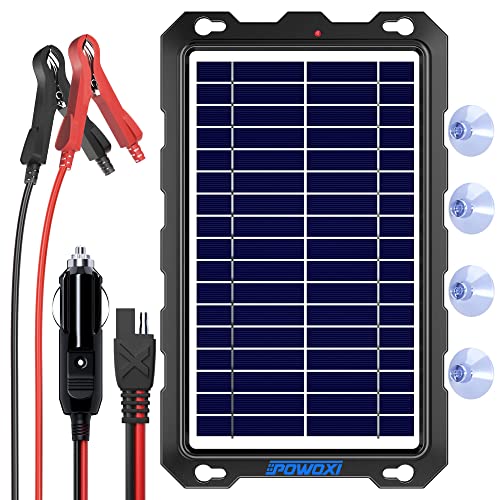
Best for sun-rich marinas and off-grid boats, the POWOXI solar trickle charger uses an upgraded 7.5W panel with a smart internal protection system. It supports 12V charging for automotive, marine, RV, and trailer batteries, with blocking diode structure to prevent overvoltage and short circuits. The unit features a durable, high-transparency glass panel and low-maintenance operation in wet or exposed environments.
Who it’s best for: sailors and boaters who want a solar-only or supplemental charging option that reduces the need for mains power. Why selected: efficient MPPT-like performance in a compact solar package, plus built-in protections for marine use.
Caution: solar charging effectiveness depends on sunlight; it may not maintain a deeply discharged battery by itself in low light conditions.
Buying Guide: Key Considerations for Trickle Charging on Boats
- Battery type compatibility: Most marine chargers support lead-acid variants (AGM, Gel, SLA) and some support LiFePO4. Confirm battery chemistry before selecting a charger.
- Ampere rating and charging speed: For small boats, 1A–2A units are common and sufficient for regular maintenance. Larger vessels with bigger banks may need 4A or higher.
- Onboard versus portable: Onboard chargers stay mounted near the battery, offering convenience; portable units work well for boats that share batteries or require seasonal storage flexibility.
- Safety features: Look for reverse polarity protection, short-circuit protection, over-voltage protection, thermal management, and spark-free connections for marine environments.
- Desulfation and battery health: Desulfation features can help revive aged lead-acid batteries but are not a substitute for replacement when capacity is severely degraded.
- Temperature compensation: Chargers with temperature sensing prevent overcharge in heat and undercharge in cold, which is important on exposed decks or engine rooms.
- Installation considerations: If choosing an onboard model, ensure the mounting surface is suitable and that wiring meets marine electrical standards.
- Maintenance vs. bulk charging: Trickle and float modes are ideal for seasonal boats; for ready-to-use systems, factor in float maintenance as part of regular battery care.
Frequently Asked Questions
- What is the difference between a trickle charger and a maintainer?
Answer: A trickle charger provides a steady, small charge to a discharged battery, while a maintainer continuously monitors and adjusts charging to keep the battery at full capacity without overcharging. - Can I use a 12V trickle charger on a 6V boat battery?
Answer: No. Use a charger rated for the specific battery voltage (6V or 12V) to avoid undercharging or overcharging. - Do marine chargers work with LiFePO4 batteries?
Answer: Some models support LiFePO4; verify compatibility in the product specs to ensure safe charging. - Is onboard installation safer than portable chargers?
Answer: Onboard units reduce the risk of misplacement and offer continuous maintenance, but require proper mounting and marine wiring practices. - Will a desulfator really extend battery life?
Answer: Desulfation can help restore some capacity in sulfated lead-acid batteries, but effectiveness varies with battery condition. - How do I know when to replace a marine battery?
Answer: If a battery holds significantly less charge, shows high internal resistance, or cannot sustain cycles, replacement may be necessary.