Buying the right towing bridle for a dinghy ensures steady, even pulls and reduces the risk of capsizing or yawing. This guide highlights five top bridles best suited for inflatable boats and small dinghies, with clear comparisons to help decide which is best for your setup. Ideal buyers include sailors upgrading from single-line tow methods, boat owners prioritizing buoyant, high-visibility gear, and crews seeking durable, long-term options.
| Product | Best for | Key Benefit | Material |
|---|---|---|---|
| C-Level, Inc 3 Point Dinghy Towing Bridle | American-made quality seekers | Adjustable middle leg for even pulling | Stainless steel hardware, 3-point system |
| FEIJAZUM 3 Point Dinghy Towing Bridle with Float | Long-range coastal use | Uniform force distribution with buoyant float | 1″ high-strength polyester, yellow buoyant module |
| Marine Part Depot Dinghy Towing Bridle with Float | Budget-conscious buyers | Float keeps line on surface | Polyester with floating design |
| FEIJAZUM 2 Point Dinghy Towing Bridle with Float | Inflatable boats needing simplicity | Floating design for visibility and safety | 1″ polyester webbing, yellow float |
| C- Level Towing Bridle | Inflatables with two towing rings | Two-ring stability and shock absorption | 3800 lb test red nylon, yellow float |
Note: The table above compares five top options commonly used for dinghies. Each product section below provides practical usage notes, suitability, and potential limitations to consider.
C-Level, Inc 3 Point Dinghy Towing Bridle
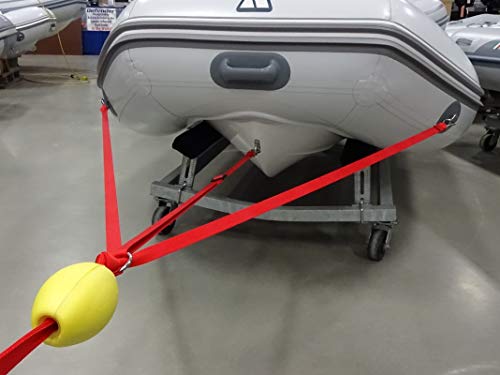
The C-Level three-point system distributes load across two outer legs and a center leg for even towing force. Best for buyers who want American-made hardware and corrosion-resistant components. The included yellow float keeps the bridle buoyant, aiding visibility and reducing sinking risk. Suitable for dinghies and small inflatables requiring balanced pulling. A potential limitation is availability of spare parts or replacement hardware if you frequently tow in saltwater.
FEIJAZUM 3 Point Dinghy Towing Bridle with Float
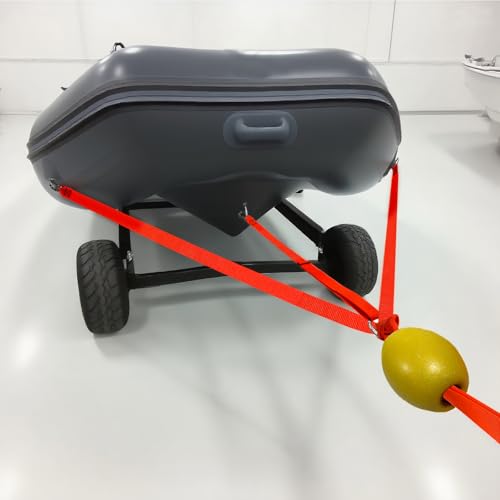
Best for uniform force distribution thanks to an adjustable middle leg that balances traction on both sides. The 1-inch high-strength polyester webbing offers solid durability, and the yellow buoyancy module ensures the line stays on the surface. Choose this if you tow in choppy water or need steady tracking for inflatable boats. A caution: long-term exposure to UV can affect webbing color and flexibility; inspect for wear over time.
Marine Part Depot Dinghy Towing Bridle with Float

This product emphasizes a straightforward float-and-tow setup. The floating design helps keep the line visible and away from propellers, making it a safer option for casual dinghy towing. It’s well-suited for owners who want a simple, reliable bridle without complex adjustability. Limitation: fewer documented advanced load-balancing features than multi-point bridles.
FEIJAZUM 2 Point Dinghy Towing Bridle with Float

Best for inflatable boats needing a simple two-point towing setup with a floating line. The included yellow float improves visibility and reduces snag risks near outboards. Select this if you want a compact, easy-to-use option for smaller dinghies. Caution: not as robust for high-load towing as three-point systems in rough seas.
C- Level Towing Bridle

Designed for inflatables with two towing rings on the bow, this bridle aims to provide more stable towing than a single-line approach. The 3800 lb test red nylon webbing supplies reliable strength, and the yellow float keeps the line buoyant. Choose this if you need two-point stability and a robust, straightforward setup. Limitations include a potentially shorter overall length compared to multi-point bridles.
TGL Tow Bridle (Kinetic Recovery)

Best for recovery scenarios and vehicle-to-boat towing, the TGL bridle features a kinetic rope recovery design with a V-bridle layout and included soft shackles. It distributes pull across two points and can be used with recovery ropes or winches. This option suits off-road or mixed-terrain towing duties. Limitation: not specifically optimized for small dinghies but works when a versatile recovery setup is needed.
SENKEYFE Tow Straps V Bridle

This V-bridle provides a high-capacity recovery option with 16200 lbs breaking capacity and 5400 lbs working load. It includes 8″ short J-hooks and a forged triangle ring for secure attachments. Best for heavy-duty recovery or towing tasks where robust hardware is required. Avoid this if you only need a lightweight, simple dinghy tow.
VEVOR G80 V Bridle Chain

Best for heavy-duty towing with chain bridle capabilities. The G80 standard provides high tensile strength, rust resistance due to galvanization, and a 15,600 lbs load capacity. Choose this for flatbed or heavy-duty recovery scenarios where chain reliability matters. Limitation: heavier and less flexible than fabric bridles for casual dinghy use.
Buying Guide
Key purchase considerations
- Tow load requirements: Match the bridle’s working load limit to your maximum expected tow force. Higher loads suit larger or rougher water conditions.
- Number of attachment points: Three-point bridles distribute load more evenly; two-point models are simpler but may offer less stability in crosswinds or waves.
- Material and buoyancy: Polyester webbing is common for its chemical stability; floats improve visibility and reduce sinking risk. Stainless hardware resists saltwater corrosion.
- Visibility: Bright yellow floats or buoys help keep the line visible to crew and operators, reducing entanglement risks.
- Intended use: Recreational dinghies benefit from simple, buoyant bridles, while recovery or off-road use may require heavier-duty or kinetic-recovery designs.
- Length and adjustability: Consider whether you need fixed-length, adjustable, or middle-leg balancing features to maintain straight tracking.
FAQ
- What is a towing bridle and why use one for a dinghy? A towing bridle distributes pulling forces across multiple lines, improving stability and reducing the risk of capsizing when towing a dinghy.
- Which bridle is best for inflatable boats? For inflatables, 3-point bridles with buoyant floats and balanced middle legs typically offer the best load distribution and visibility.
- Do I need stainless hardware? Stainless hardware resists corrosion in saltwater environments and lasts longer in marine use.
- How important is buoyancy? Buoyant floats keep the line on the surface, preventing drag and reducing propeller entanglement risks.
- When should I choose a two-point versus a three-point bridle? Choose two-point for simple, light-duty towing; three-point is preferred for even load distribution and better tracking in variable conditions.
- Are these bridles suitable for off-road use? Some bridles include recovery features and can be adapted to vehicle recovery setups, but confirm compatibility with your equipment beforehand.