Direct answer: for synthetic lower unit gear oil, choose products that specify high-viscosity blends, corrosion protection, and compatibility with marine gear housings. This guide highlights five top options and why they fit specific boat setups. Best for seasoned saltwater anglers, bass boats, or workboats seeking long-term protection and easier maintenance.
The following table provides quick comparisons for the selected products. Use this as a quick reference when you’re deciding what to buy.
| Product | Brand | Viscosity / Type | Best For |
|---|---|---|---|
| Quicksilver SAE 90 High Performance Gear Lube | Quicksilver | SAE 90, high performance | O utboards and sterndrives above 75hp, demanding protection |
| Lucas Oil 10652 Synthetic SAW 75W-90 | Lucas Oil | Synthetic SAW 75W-90 | Standard marine gear lubrication with broad compatibility |
| Quicksilver 80W-90 Premium Gear Lube | Quicksilver | 80W-90 | Mercury/Mercruiser systems and general marine gear life |
| STAR BRITE Star Tron 80W-90 Lower Gear Lube | STAR BRITE | 80W-90, synthetic blend | Engines over 100 hp that demand long-term protection |
| TRIAX Marine Gear SAE 90 Full Synthetic | Triax | SAE 90, full synthetic | Broad OEM compatibility across stern drives, bow thrusters, and lower units |
Quicksilver SAE 90 High Performance Gear Lube for Outboards and Sterndrives

Best for: Outboard lower units and sterndrives above 75 hp. This gear oil is formulated to protect against corrosion and excessive wear, with extreme pressure synthetic additives that prevent metal-to-metal contact. Use when your setup operates in saltwater or at high sustained loads.
Why it’s selected: It provides a targeted solution for higher-horsepower applications, with a focus on protecting gears in marine environments where moisture and heat are common. It is designed specifically for lower units and sterndrives, supporting longer gear life under stress.
Caution: This product is optimized for higher-horsepower applications; for smaller engines, consider a lighter viscosity to maintain proper oil flow.
Lucas Oil 10652 Synthetic SAW 75W-90 M8 Marine Gear Oil

Best for: General marine gear lubrication with broad OEM compatibility. The synthetic 75W-90 formulation is designed for varied climates and engine sizes, making it a versatile option for mixed fleets or boats with different operating patterns.
Why it’s selected: Lucas Oil emphasizes following the vehicle owner’s manual for best performance, highlighting the importance of matching viscosity and service intervals to your specific engine model.
Caution: Always verify viscosity recommendations in your owner’s manual, as some applications may require a different grade or API specification.
Quicksilver 80W-90 Premium Gear Lube
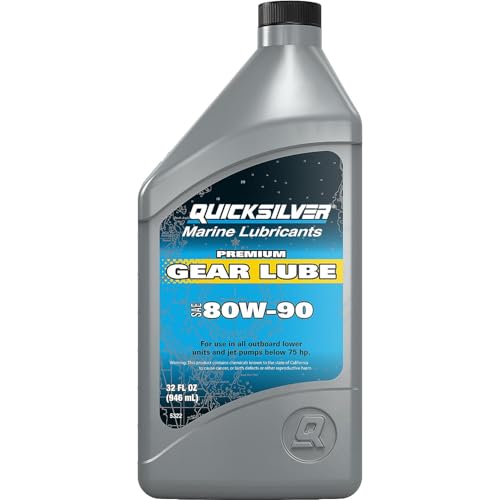
Best for: Mercury Marine engines and sterndrives that specify a heavier 80W-90 formulation. It offers max protection against wear, corrosion, and pitting for extended gear life in marine applications, including water intrusion scenarios.
Why it’s selected: This oil is a direct replacement for common Mercury Marine fluids and includes additives that help protect gears when water enters the gear case. It’s a straightforward choice for those using Mercury/Mercruiser systems.
Caution: This product is optimized for Mercury/Mercruiser systems; if your boat uses different OEM gear units, confirm compatibility before use.
TRIAX Marine Gear SAE 90 Full Synthetic

Best for: All stern drives, bow thrusters, and lower gear units across multiple OEMs. The full synthetic formulation offers strong oxidation stability and corrosion resistance, suitable for storage and high-load operation.
Why it’s selected: TRIAX highlights wide compatibility with many popular makes and models, making it a robust universal option for mixed fleets or when upgrading fluids for long-term storage protection.
Caution: Check your specific gear unit’s viscosity requirements; some older or specialized units may require a non-synthetic or different viscosity grade.
Buying Guide: Key Factors When Choosing Synthetic Lower Unit Gear Oil
Viscosity matters. Select the viscosity grade recommended by your engine’s manufacturer. Heavier grades like SAE 90 or 80W-90 provide robust protection in hot or high-load conditions, while lighter grades may suit cooler climates or smaller engines.
Compatibility is essential. Not all gear oils suit all stern drives or lower units. Always verify that the oil is approved for your OEM’s gear case and that it matches the recommended spec (for example, API GL-5 or MT-1, where applicable).
Corrosion and water protection. Marine environments introduce salt, moisture, and temperature swings. Look for oils that explicitly mention corrosion protection and water-separation capabilities to minimize wear and rust over time.
Additive packages. Extreme-pressure additives, anti-wear agents, and anti-foaming components help maintain gear life under load, heat, and occasional water intrusion. Oils with robust additive systems are preferable for high-performance or salty conditions.
Storage and performance in extremes. If you store boats for long periods or operate in extreme heat, prioritize oils with good oxidation stability and long-term storage performance.
FAQ
- Q: How do I know which viscosity to choose? A: Refer to your owner’s manual for the recommended viscosity grade, then match your climate and typical load. Higher HP and hotter environments often benefit from SAE 90 or 80W-90.
- Q: Can I mix brands? A: Mixing gear oils is not recommended, as different additive packages can interact. Use one product consistently per your engine’s guidance.
- Q: What happens if water enters the gear oil? A: Some formulations include water-protection additives, but water intrusion should be minimized. If water is present, consult maintenance guidelines and replace the oil.
- Q: Is synthetic always better than conventional? A: Synthetic gear oils generally offer better oxidation stability, thermal performance, and lubricity, particularly under high load, heat, or long service intervals.
- Q: How often should I change gear oil? A: Service intervals depend on usage, load, and climate. Follow the engine manufacturer’s recommendations or a professional marine technician’s guidance.
- Q: Are there special considerations for freshwater vs. saltwater boats? A: Saltwater use often benefits from oils with stronger corrosion protection and additives designed to combat salt-induced wear.