Finding the right submersible bilge pump 12V comes down to flow needs, automatic versus manual operation, and the environment you’ll be in. This guide highlights five reliable 12V bilge pumps shaped for boats, RVs, and water-based equipment. They’re chosen for consistent performance, suitability for automatic or manual operation, and compatibility with common 1-1/8″ outlets. Best for boaters who need quick water removal, compact options for tight bilges, or automatic pumps that run unattended when away from the helm.
Summary table of selected products
| Product | Brand | Flow (GPH) | Outlet | Best For |
|---|---|---|---|---|
| SEAFLO 01 Series 2000 GPH | SEAFLO | 2000 | 1-1/8″ | Boats needing rapid bilge evacuation |
| Submersible Boat Bilge Pump 1100GPH (Non-Automatic) | MAXZONE | 1100 | 1-1/8″ | Manual, compact setups |
| Sanuke 1100GPH Bilge Pump 12V | Sanuke | 1100 | 1-1/8″ | Durable, reliable water removal |
| MAXZONE Automatic 1100GPH with Built-in Float | MAXZONE | 1100 | 1-1/8″ | Automatic bilge protection |
| SEAFLO 01 Series 350 GPH | SEAFLO | 350 | 3/4″ | Small bilges or secondary discharge |
SEAFLO 01 Series 2000 GPH Bilge Pump

Model: SFBP1-G2000-01 • Voltage: 12V DC • Flow: 2000 GPH • Outlet: 1-1/8″ • Current: 8.5A • Max Head: 16.4 ft • Wire Lead: 3 ft. This pump includes a 4-year warranty and anti-airlock protection for reliable automatic operation in demanding marine environments. Best for: larger boats with rapid bilge needs or where space allows a higher-capacity pump. Limitation: higher current draw may impact power planning on smaller systems.
MAXZONE Submersible Bilge Water Pump 12V 1100GPH (Non-Automatic)
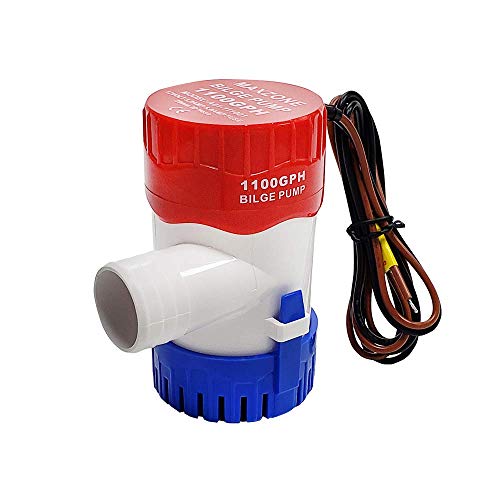
Flow: 1100 GPH (5000 L/hour); Voltage: 12 VDC; Head: 4 meters; Outlet: 1-1/8″ diameter. Best for: users who want a straightforward, non-automatic pump in medium bilges or ponds where manual operation is acceptable. Caution: lacks built-in float switch, so manual monitoring is required.
Sanuke 1100GPH Submersible Bilge Pump 12V

Flow: 1100 GPH; Head: up to 14.8 ft; Outlet: 1-1/8″; Current Draw: 3.0A. Notable feature: anti-airlock technology helps maintain steady water evacuation. Best for: boaters needing robust, reliable performance with good head height. Limitation: non-automatic version requires manual activation unless upgraded.
MAXZONE Automatic 1100GPH Bilge Pump with Built-In Float

Flow: 1100 GPH; Voltage: 12V; Head: 3.0 m; Outlet: 1-1/8″ • Built-in float switch, no separate float needed. Best for: unattended bilge protection on boats where automatic operation is a priority. Limitation: slightly higher current draw at 3.8A compared to some non-automatic models.
FAITIO 12V 80W Submersible Water Transfer Pump

Flow: about 5.3 GPM (318 GPH); Head: up to 16.4 ft; Material: corrosion-resistant aluminum alloy body. Best for: light-duty water transfer, diesel or kerosene compatibility, and compact setups. Caution: not a dedicated bilge pump; suited for transfer tasks and portable use rather than continuous bilge evacuation.
Subtoy 12V Automatic Bilge Pump Kit
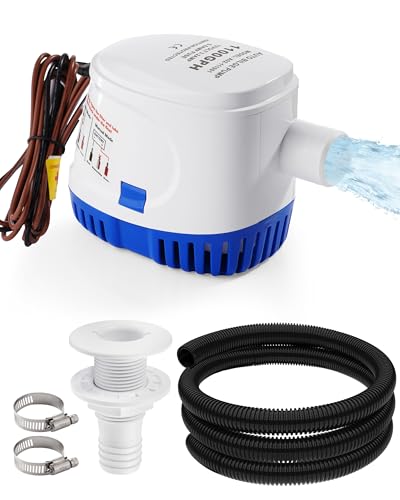
Flow: 1100 GPH; Built-in float switch for automatic on/off; Outlet: 1-1/8″; Includes hose and thru-hull fitting. Best for: boating setups that want an all-in-one automatic kit with easy installation. Limitation: some kits may require additional hardware depending on vessel configuration.
Buying Guide: How to Choose the Right Submersible Bilge Pump 12V
- Flow rate vs. bilge size: Larger boats or heavier bilges benefit from higher GPH (gallons per hour) pumps, such as 2000 GPH, for rapid water removal. Smaller craft can rely on 350–1100 GPH models to maintain a dry bilge without overloading the electrical system.
- Automatic vs. manual: Automatic pumps with built-in float switches simplify operation, especially when boats are unattended. Manual or non-automatic pumps require active control and are often more cost-effective for simple setups.
- Outlet size and hose compatibility: Most 12V bilge pumps use 1-1/8″ outlets. Confirm hose diameter compatibility to avoid leaks and ensure a proper fit with your bilge plumbing.
- Power draw and electrical system: Consider peak current draw (A) to ensure your battery and wiring can handle it. Higher-flow models may draw more current and require heavier gauge wiring.
- Head height and installation area: Head height indicates how high water can be pumped before flow stops. Choose a pump with a head that exceeds your bilge’s maximum water level plus a safety margin.
- Durability and environment: Marine-grade builds with corrosion resistance and anti-airlock protection improve longevity in saltwater environments and rough conditions.
- Warranty and service life: A longer warranty often reflects product reliability. Look for 4-year warranties for marine bilge pumps when available.
Frequently Asked Questions
- What is the typical outlet size for 12V bilge pumps? Most common is 1-1/8 inches (29 mm), which fits standard hoses in many boats.
- Do automatic bilge pumps require a separate float switch? No, some models include a built-in float switch for automatic operation. Others are non-automatic and require manual activation.
- How do I know which GPH to choose? For small bilges and lightweight boats, 350–1100 GPH is usually sufficient. For larger vessels or high bilge water rates, 2000 GPH or more may be necessary.
- Can I use these pumps for water transfer or diesel? Some pumps are designed for water transfer and may handle other fluids. Always check the manufacturer’s guidance for compatible liquids and safety considerations.
- What maintenance is needed for a 12V bilge pump? Regularly inspect the inlet screen or strainer, ensure the float switch (if present) moves freely, and clean any debris from the pump housing to prevent clogs.
- Is a higher head height always better? A higher head enables pumping to higher points, but it can reduce flow. Choose a pump with adequate head for your drainage path and avoid excessive head pressure unless necessary.