Where to start if you want faster, more responsive RC boat performance? This guide highlights five speed-focused propellers that balance strength, thrust, and reliability. Best for racing boats, hydroplanes, or DIY builds, these options prioritize higher thrust, durable materials, and compatible shaft sizes. The buyer’s choice depends on your motor power, boat weight, and whether you need CW or CCW rotation. Below is a quick summary table of the selected products to help you compare at a glance.
| Product | Material | Diameter | Pitch | Shaft | |
|---|---|---|---|---|---|
| RC Speed Boat Propeller CNC Aluminum 46mm LH | 7075 Aluminum | 46 mm | 40–45 mm | 4 mm | CW / CCW |
| uxcell RC Boat CW CCW Propeller 3 Vanes 36mm | Nylon Plastic | 36 mm | 1.4 | 4 mm | CW / CCW |
| uxcell RC Boat CW CCW Propeller 2 Vanes 30mm | Plastic | 30 mm | 1.6 | 3.17 mm | CW / CCW |
| MECCANIXITY 3pcs RC Boat Propeller 2 Blades 35 x 14 mm | Nylon | 35 mm | 40 mm | 4 mm | CW |
| Pro Boat Propeller 1.73 x 1.6 | Not stated | 1.73 in | 1.6 in | 3/16 in | Not specified |
RC Speed Boat Propeller CNC Aluminum 46mm LH

Material: 7075 aluminum alloy; Finish: anodized red. This propeller is designed for RC racing boats, speed boats, hydroplanes, and catamarans. It is CNC-machined for high balance and hardness, which helps maintain stability at high speeds. Best for fast, performance-oriented boats that can handle stronger materials. Choose this if your motor and hull support higher thrust and you need robust, durable aluminum construction. Caution: Aluminum propellers can be harsher on drivetrain components if not matched to motor power and water conditions.
uxcell RC Boat CW CCW Propeller 3 Vanes 36mm

Material: Nylon plastic; Vane count: 3; Diameter: 36 mm; Pitch: 1.4; Shaft: 4 mm. These propellers balance flexibility with impact resistance, offering a good compromise for racing and casual use. Best for models needing a lightweight yet durable propeller with CW or CCW options. Limitations: Nylon propellers may wear faster than metal under extreme thrust, and debris can impact balance.
uxcell RC Boat CW CCW Propeller 2 Vanes 30mm
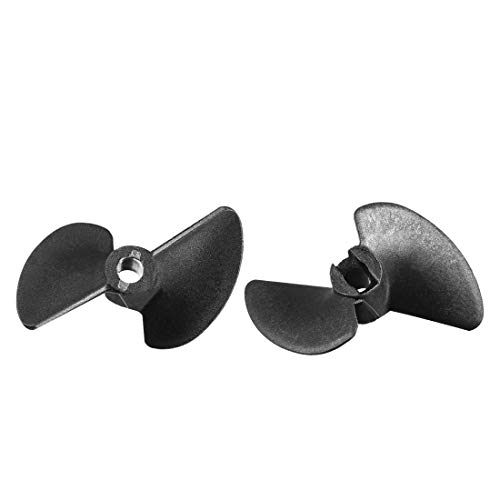
Material: Plastic; Vane number: 2; Diameter: 30 mm; Pitch: 1.6; Shaft: 3.17 mm. Best for smaller, lighter boats seeking quicker response and acceleration. This propeller balances light weight with decent thrust, but its smaller size means it’s best suited for lower-power setups. Caution: May not deliver enough thrust for heavier hulls or high-power motors.
MECCANIXITY 3pcs RC Boat Propeller, 2 Blades

Material: Nylon; Size: 35 x 14 mm (OD x pitch); Mount hole: 4 mm. Two-blade design with CW rotation; sold in a 3-pack for quick replacements. Best for DIY builds or replacements in racing boats that benefit from durable nylon props. Better for models needing flexible resilience against debris. Caution: Not ideal for very high-speed hulls requiring very large pitch props.
Pro Boat Propeller 1.73 x 1.6

Propeller size: 1.73 x 1.6 inches; Shaft compatibility: 3/16 inch. This replacement propeller is designed for Pro Boat models and similar setups. Best for boats that use the standard 3/16 shaft and require a compact, proven propeller for consistent thrust. Limitation: Specific to compatible shafts; verify fit before swapping.
Buying Guide: Key Considerations For Speed Propellers
- Propeller material: Aluminum offers high strength and thrust for speed but can be heavier and harsher on drive systems; nylon is durable and forgiving in impact but may flex under heavy load; plastic varieties balance cost and performance for lighter hulls.
- Diameter and pitch: Larger diameter and higher pitch increase thrust and top speed but require more power and can reduce acceleration. Match to motor KV, battery, and boat weight.
- Vane count: More vanes generally improve thrust stability and efficiency at higher speeds, but add drag. Fewer vanes can improve acceleration for lighter builds.
- Rotation direction: Many kits require CW or CCW props to balance thrust and steering; ensure you have the correct rotation for your drive train to avoid steering issues.
- Shaft compatibility: Confirm shaft diameter and nut compatibility (e.g., 3.17 mm, 4 mm, 3/16 inch) with your motor mount and prop nut.
- Durability and debris resistance: Nylon and plastic props absorb impacts better than brittle plastics; metal props handle higher loads but may cause more vibration if not balanced.
- Maintenance: Check for balance and inspect for nicks after use; unbalanced props can cause vibration and wear on the motor and drivetrain.
Frequently Asked Questions
- What kind of propeller should I choose for a fast RC boat?
– Choose a propeller with higher pitch and appropriate diameter for your motor and hull weight; consider aluminum for high-speed needs or nylon for durability in rough water. - Why is CW/CCW rotation important?
– Correct rotation prevents steering bias and ensures balanced thrust when using twin-prop or single-prop configurations with opposite rotation parts. - Can I mix propeller brands on one boat?
– Mixing props across drives can cause uneven thrust and steering difficulty; it’s best to match propeller type and rotation on each drive if applicable. - How do I know if a propeller will fit my shaft?
– Check shaft diameter (e.g., 3.17 mm, 4 mm, 3/16 inch) and ensure the prop nut and adapter are compatible with your motor mount. - What maintenance should I perform on speed propellers?
– Regularly inspect for nicks, balance the prop, and ensure secure mounting; replace if any cracks or significant wear is detected. - Is a larger prop always faster?
– Not always. A larger prop requires more power and can slow acceleration if the motor cannot supply sufficient RPM; choose sizing to match your motor and battery.