Answering how to power a sailboat with clean, reliable energy: these solar panels are suited for decks, masts, and cabins where space is precious and weather is unpredictable. The best options balance flexibility, durability, and shading tolerance for moving seas. They help keep fridges running, lights on, and electronics charged during longer voyages. The top picks below are ideal for sailors who want steady 12V or 24V power, easy mounting, and resilience against salt spray and wind. The buyer-friendly table highlights each option’s strengths and ideal user.
| Product | Best For | Key Benefit |
|---|---|---|
| Callsun N-Type 16BB 400W (2x200W) | Large sailboats and passagemaking crews | High efficiency and anti-shade twin design |
| Topunive 100W Flexible 12V | Uneven surfaces and compact boats | 9BB cells, ultra-flexible for curved decks |
| Renogy 200W Flexible 12V | Curved hulls and marine cabins | 240° bendability and PERC tech |
| Callsun 200W Flexible 12V | Marine sailboats needing lightweight install | ETFE coating, 200W on curved surfaces |
| Renogy ShadowFlux 120W N-Type | Shaded areas and compact spaces | Anti-shading with high efficiency |
Callsun N-Type 16BB 400W Twin Panels

The Callsun 200W panel uses N-Type 16BB cells and dual-module parallel design. Best for sailboats with ample deck space or existing 12V/24V systems that can benefit from higher total output. The bifacial design captures light from multiple angles, boosting total energy output by up to 30%. Shading tolerance is improved by the twin-cell configuration, keeping power generation steady when parts of the deck shade the panel.
Best for: larger sailboats or trips requiring substantial daily energy. The data supports higher efficiency and shading resilience. A potential limitation: installation space and weight should accommodate a 2x200W setup.
Topunive 100W Flexible 12V Solar Panel

Topunive offers a 9BB monocrystalline flexible panel capable of mounting on uneven surfaces. Best for sailboats with curved decks or irregular cabin tops. The panel is ultra-thin and lightweight, with easy mounting through pre-drilled holes and PV connectors. It supports high conversion efficiency up to 23% and is designed for rapid, low-profile installations on boats.
Best for: sailors needing a lightweight, flexible solution for curved surfaces. Caution: flexible panels can be less durable over long-term abrasion; keep away from sharp edges and heavy foot traffic areas.
Renogy 200W Flexible Marine Panel

This Renogy panel uses flexible construction with half-cut PERC cells to maximize light capture. It is designed for marine vessels needing a high-output, bendable panel. The flexible build reduces weight and allows installation on curved hulls or cabin tops, making it better for sailboats with limited flat space.
Best for: sailboats seeking strong power from a flexible, low-profile panel. Limitation: ensure your mounting surface can tolerate the panel’s flexing without compromised seals or edges.
Callsun 200W 12V Flexible Panel
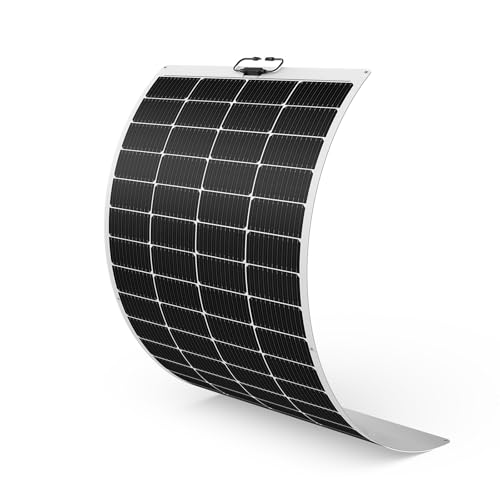
This 200W flexible Callsun panel is designed for sailboats and marine generators, featuring 11BB cells for enhanced flexibility and ETFE coating for saltwater resilience. The panel is lightweight and includes marine-grade protection against UV, corrosion, and wind exposure. It is a solid option for boats needing high power on curved surfaces like deck arches or railings.
Best for: sailors needing a high-output flexible option with good marine durability. Limitation: as with other flexible panels, edge protection and secure mounting are important to prevent delamination in rough seas.
Renogy ShadowFlux 120W N-Type Panel
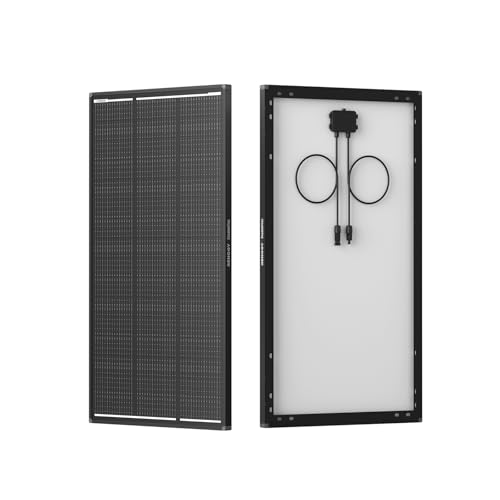
Renogy ShadowFlux integrates N-Type technology with anti-shading design. This 120W panel is compact, efficient, and resilient to shading caused by masts or deck structures. It’s a good fit for sailboats where shade from sails, antennas, or rigging can affect power. The anti-shading feature reduces hot spots and helps maintain steady output in mixed light conditions.
Best for: sailboats operating in variable shading conditions or with limited space. Limitation: lower total wattage compared to larger panels, so pairing with a secondary panel can help on longer passages.
Buying Guide: Key Considerations for Sailboat Solar Purchases
- Deck space and mounting: Flexible panels excel on curved or irregular decks, while rigid panels deliver higher wattage per panel but require flat mounting surfaces.
- Durability in marine conditions: Look for ETFE or anti-corrosion coatings, water resistance, and robust frames rated for salt spray and wind.
- Shading tolerance: Boats encounter sails and rigging that can cast shadows; panels with anti-shading tech or bifacial designs help maintain output.
- Electrical system compatibility: Ensure the panel’s voltage and current match your boat’s charge controller and battery bank (12V vs 24V systems).
- Weight and installation: Lighter, flexible panels reduce hull stress but require careful mounting to prevent flex-induced damage over time.
- Maintenance and cleaning: Salt and UV exposure demand easy-clean surfaces and sealed junctions to prolong life.
Frequently Asked Questions
- What panel type is best for a sailboat roof?
- Flexible panels are typically ideal for curved surfaces and limited space, while rigid panels offer higher wattage per square foot.
- Do I need a charge controller with boat solar panels?
- Yes. A charge controller protects batteries from overcharging and manages power flow from panels to the bank.
- Can solar panels withstand saltwater environments?
- Marine-grade panels with ETFE coatings and corrosion-resistant frames are designed for salt spray and UV exposure.
- Should I pair multiple panels?
- Pairing panels increases total wattage and allows more flexible shading options, especially on larger boats.
- What is anti-shading technology?
- Anti-shading designs minimize power loss when parts of the panel are shaded, improving reliability in variable lighting.