Finding the right small dinghy motor means balancing power, weight, fuel type, and maneuverability. This guide highlights five practical options for inflatable boats, kayaks, canoes, and small dinghies. Each pick is suitable for beginners or casual anglers, with clear reasons to choose or avoid each model. Read on to compare performance, best-use scenarios, and practical limits.
| Product | Best For | Key Benefit |
|---|---|---|
| YIYIBYUS 2.3HP 52CC Outboard | Small dinghies and inflatable boats | High RPM range for quick planing |
| CUKUSIN 4 Stroke 4 HP Outboard | Inflatable boats, kayaks, canoes | Four-stroke reliability and easy maintenance |
| Newport NV-Series 36lb Trolling Motor | Quiet trolling on calm waters | Low noise, long runtime with LED battery indicator |
| Watersnake T18 ASP 18lb Thrust | Lightweight small boats and kayaks | Ultra-lightweight, compact for portable use |
| Newport NV-Series 55lb Trolling Motor | Serious trolling on larger small boats | Stronger thrust with robust adjustability |
Note: This table summarizes the five selections chosen for this guide. Each product page contains detailed specifications, installation notes, and operating considerations. The list prioritizes small-draft dinghies and inflatable crafts commonly used for fishing and recreational boating.
YIYIBYUS 2.3HP 52CC Outboard Motor

- Brand: YIYIBYUS
- Power: 1.7 kW / 2.3 HP; Displacement: 52cc
- 2-stroke engine; Idle 2800–3200 rpm; Operating 4500–8500 rpm
- Fuel mix 25:1; Tank 850 ml; Shaft length 70 cm
- Materials: Aluminum and PP for corrosion resistance
Best for: Small dinghies and inflatable boats needing a compact, higher-rev motor for quicker maneuverability. This model is a good choice for anglers who want responsive throttle and easy start, though it uses a premix fuel and requires mix maintenance.
Caution: As a smaller displacement engine, keep to calm to moderate conditions and monitor fuel mix accuracy to avoid engine damage.
CUKUSIN 4 Stroke Outboard Motor 4 HP

- Brand: CUKUSIN
- Engine: 4-stroke, 4 HP; Weight: 15 KG
- Short shaft; Easy twist-grip throttle; Round-the-clock support
- Durable build with corrosion resistance; suitable for freshwater and saltwater
Best for: Inflatable boats, kayaks, and small dinghies that need reliable, quiet operation with lower maintenance compared to 2-stroke engines.
Caution: Heavier than some 2-stroke options; ensure mounting hardware compatibility with your dinghy transom.
Newport NV-Series 36lb Electric Trolling Motor

- Brand: Newport Vessels
- Thrust: 36 lb; Shaft: 30 inches; 12V system
- 5 forward / 3 reverse speeds; LED battery indicator
- Weedless 2-blade propeller; adjustable mount and tiller
Best for: Calm-water trolling with minimal noise impact; ideal for anglers who want precise positioning without exhaust fumes.
Caution: Battery not included; requires a suitable 12V marine battery and compatible mounting setup.
Watersnake T18 ASP – 18 lb Thrust Electric
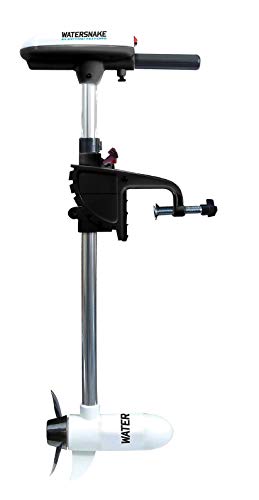
- Brand: Watersnake
- Thrust: 18 lb; 12V electric motor
- 24″ shaft; extendable hand tiller; forward/reverse; weedless prop
- Lightweight: about 4.85 lbs (2.2 kg)
Best for: Ultra-portable trolling on kayaks, canoes, and small dinghies where weight matters.
Caution: Battery not included; performance depends on battery capacity and boat weight.
Newport NV-Series 55lb Electric Trolling Motor
- Brand: Newport Vessels
- Thrust: 55 lb; Shaft: 30 inches; 12V
- 8 speeds (5 forward, 3 reverse); adjustable mount
- 3-blade prop; designed for trolling with strong low-end torque
Best for: Larger small boats or heavier loads where stronger low-end torque improves starting and steering control.
Caution: Higher thrust requires more power and heavier batteries; ensure your boat and battery setup can handle it.
Buying Guide
What motor type should I choose for a small dinghy?
- Gas 2-stroke vs. 4-stroke: 2-stroke engines are lighter and provide quick acceleration but require premix fuel and more maintenance. 4-stroke engines are heavier but typically quieter, cleaner, and easier to maintain.
- Electric trolling motors: Quiet, fuel-free operation with precise control. Best for calm waters and longer trips if you have a suitable battery setup.
- Thrust and shaft length: Longer shafts improve prop clearance in waves; higher thrust helps heavier boats or windy days. Match shaft length to transom height.
- Fuel capacity and range: Smaller dinghies benefit from engines with efficient fuel draws or reliable battery life for longer trips without frequent refuels.
- Maintenance and support: Consider availability of spare parts, service networks, and online support for the brand you choose.
Practical Buying Questions
- Is a gas engine better than electric for my small dinghy?
- How much thrust do I need for my boat size and typical load?
- Do I have the right batteries and mounting hardware for an electric motor?
- What is the weight and balance impact on a small inflatable or dinghy?
- Are there corrosion and saltwater considerations for my typical boating environment?
- Can I use a 3- or 4-year maintenance schedule with this motor?
FAQ
- Q: How do I choose between 36 lb and 55 lb trolling motors for a small dinghy?
A: Consider boat weight, typical load, and top speed. Choose the 55 lb model for heavier loads or stronger winds; the 36 lb model suffices for lighter setups and calm waters. - Q: Are 2-stroke engines suitable for small dinghies?
A: Yes, they are compact and powerful for their size, but require premixed fuel and more frequent maintenance compared with some 4-stroke options. - Q: What shaft length should I pick?
A: Match the shaft to transom height and typical water depth. A longer shaft improves prop clearance in waves. - Q: Do electric motors require maintenance?
A: They require battery care and occasional prop and mount checks but generally have fewer moving parts than gas engines. - Q: Can I use these motors in saltwater?
A: Some models are rated for saltwater with appropriate corrosion resistance; verify each product’s suitability for your environment. - Q: Do these motors include mounting hardware?
A: Many include basic mounting hardware, but confirm compatibility with your boat and transom before purchasing.