When choosing a shoot-through hull transducer, you want reliability, compatibility with your sonar system, and clarity in shallow-to-deep water. This guide highlights five top options suited for anglers and boaters who want clean, forward-facing sonar without drilling into the hull. Each product is analyzed for its ideal user, strengths, and any practical limitations to help you decide.
Summary of selected products
| Product | Best For | Key Benefit |
|---|---|---|
| Lowrance 9-Pin Shoot-Thru Hull M/H CHIRP | Lowrance systems; anglers seeking CHIRP clarity | Medium/High CHIRP frequencies for better target separation |
| Garmin Airmar P19 Plastic Thru-Hull | General use on various displays | Solid through-hull option with practical dimensions |
| Part Synergy 85–135 kHz CHIRP Thru-Hull | Depth-focused fishing and offshore boating | 600 W power; robust through-hull performance |
| Part Synergy 12 Degree Tilted Element | Deeper water with better down-imaging balance | Tilted element for improved bottom readings |
| Garmin Airmar B150M Thru-Hull | Marine electronics setups requiring tilt | 20-degree tilt for optimized scanning |
Lowrance 9-Pin Shoot-Thru Hull M/H CHIRP Transducer

Best For: Lowrance systems that rely on CHIRP to differentiate targets. The 83/200 kHz CHIRP frequencies provide better range and target separation in mid- to deeper-water scenarios. This pod-style thru-hull transducer is designed for boats where a traditional through-hull fit is preferred without onboard temperature sensing.
Why selected: It is a compact, 9-pin, shoot-through option that aligns with many Lowrance displays, offering reliable CHIRP performance for anglers who want crisp arch displays and more precise bottom discrimination.
Limitations: It lacks a temperature sensor, which could matter for some temperature-compensated sonar features. Installation requires a compatible Lowrance unit and hull penetration alignment.
Garmin Airmar P19 Plastic Thru-Hull Mount Transducer

Best For: General-purpose installation with compatibility across multiple Garmin and third-party displays. This plastic thru-hull transducer provides a sturdy through-hull option suitable for a wide range of boats.
Why selected: It offers a straightforward package size and weight, making it a practical choice for boats where a simple, reliable transducer is preferred over specialized features. It’s suited for boaters wanting solid performance with minimal fuss.
Limitations: Specific fish-finder performance depends on the connected display; may require calibration with your particular chartplotter setup.
Part Synergy Transducer Thru-Hull 85–135 kHz CHIRP
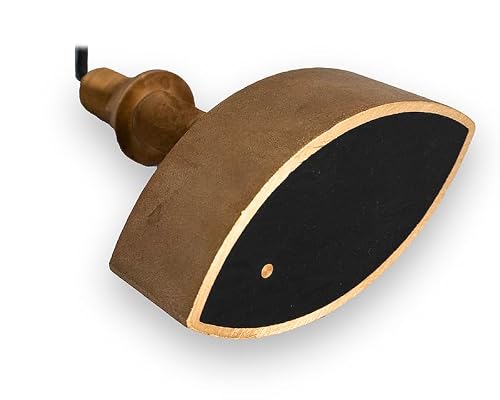
Best For: Offshore and depth-oriented anglers who need higher power and wide-frequency CHIRP to span greater depths. The 600 W power rating supports stronger signals in challenging water.
Why selected: This model emphasizes a robust power profile and a wide frequency range, which helps in consistent returns across varying water conditions and depths.
Limitations: Through-hull installation requires precise hull matching and sealing; ensure pin count and mounting location align with your boat’s setup.
Part Synergy Transducer with 12 Degree Tilted Element

Best For: Boaters needing improved bottom readings and longer effective depth due to the tilted element design. The tilt helps reduce shallow-water beam interference for more accurate depth perception.
Why selected: The 12-degree tilt is specifically chosen to optimize scanning angle and readability in variable water depths, making it a good fit for mixed-water use.
Limitations: Tilted-element transducers may require careful mounting alignment to achieve the expected beam shape and accuracy.
Garmin Airmar B150M Thru-Hull with 20 Degree Tilt

Best For: Boaters who want a mid-to-deep water scanning solution with a deliberate tilt for balanced forward coverage. The 20-degree tilt aids in cleaner bottom discrimination and target clarity.
Why selected: The B150M is designed for robust through-hull performance with a tilt that improves scanning efficiency, helpful for anglers who fish in varied depths and conditions.
Limitations: Tilt configuration requires precise mounting to ensure the tilt delivers the anticipated performance gains.
Buying Guide: Shoot-Through Hull Transducers
- Compatibility: Verify that the transducer is compatible with your fishfinder display and hull material. Through-hull models need to match your boat’s hull thickness and mounting options.
- Frequency and Power: CHIRP options at 83/200 kHz or 85–135 kHz provide different depth and target-detail profiles. Higher wattage translates to stronger signals in deeper water.
- Construction: Plastic vs. bronze or other housing materials affect durability and installation. Plastic housings are common on modern transducers and are often easier to install.
- Tilt and Element Design: A tilted element (e.g., 12 or 20 degrees) alters the beam pattern and can improve shallow-water bottom readings or forward-looking clarity in deeper water.
- Installation Considerations: Through-hull installation requires accurate hull penetration along with sealing and orientation. Ensure you have the right tools and sealing products for your boat.
- Temperature Sensing: Some models include temperature data; if temperature readings are important for your setup, choose a model with this feature or pair with compatible gear that supports it.
FAQ
- What is a shoot-through hull transducer?
It is a sonar transducer mounted through the hull to transmit and receive acoustic signals without needing a cavity or external transom installation.
- Do I need a specific hull material for shoot-through transducers?
Most transducers work with fiberglass hulls; some installations are compatible with other materials, but you should verify hull compatibility and sealing requirements for your boat.
- Is temperature data available with all shoot-through transducers?
No. Some models include temperature sensing as a feature, while others do not. If temperature data is essential, check the product features carefully.
- Which frequency range is best for shallow water?
Lower frequencies (e.g., 83/200 kHz) tend to perform well across a range of depths, while higher-frequency CHIRP can improve target separation in deeper water when condition permits.
- How do I choose between tilt angles?
A tilt angle can improve bottom reading and forward scan quality in certain conditions. Choose a tilt based on typical water depths you encounter and hull installation constraints.
- What should I consider for installation?
Consider hull material, mounting location, clarity of the beam path, seal integrity, and whether you need a transom or through-hull approach based on your boat design.