Answer: For saltwater boat fishing, choose rods that balance strength, sensitivity, and durability to handle big game. The top picks below are best for offshore trolling, big-tuna battles, and heavy jigging. They’re suited for anglers targeting marlin, tuna, and other pelagic species, with options for both 2-piece travel and 1-piece stability. Each section highlights who it’s best for and why it stands out, plus a practical caveat to consider.
Product Comparison Summary
| Product | Best For | Key Strength | Limitations |
|---|---|---|---|
| Fiblink 1-Piece/2-Piece Saltwater Offshore Trolling Rod (2-Piece, 6′ – 30-50lbs) | Big game offshore anglers needing versatile length | Solid E-glass graphite blend for strength and sensitivity | 2-piece option may slightly reduce feel vs 1-piece |
| Penn Squadron IV Boat Spinning Rod, 7′ | Nearshore to offshore spinning setups | Fiberglass-reinforced blanks with Dura-Guides | 1-piece design may be less portable |
| Penn Squadron IV Boat Conventional Casting Rod, 6’6″ | Conventional tackle for heavy-duty trolling | 9 Dura-Guides and strong graphite reel seat | Curved toward casting; may feel different from spinning rods |
| Fiblink Fishing Trolling Rod 2 Piece Saltwater Offshore (7′, 30-50lbs) | Travel-friendly big game trolling | Carbon and fiberglass blend with premium roller guides | 2-piece design may require careful transport |
| Fiblink 1-Piece Saltwater Offshore Trolling Rod (6′, 80-120lbs) | Heavy-duty trolling and live baiting | Heavy-duty construction with stainless steel rollers | Heavier weight; less flexible at lighter tackle |
Fiblink 1-Piece/2-Piece Saltwater Offshore Trolling Rod Big Game Rod (2-Piece, 6′ – 30-50lbs)

Best for anglers who want a balance of portability and power for mid-to-big game in saltwater. The blank combines solid E-glass graphite with sensitivity for bite detection during offshore trolling. Stainless steel roller guides protect lines from saltwater wear, and the aluminum reel seat is designed to withstand heavy fights without loosening. Choose this if you want a versatile 2-piece option that travels well and supports stand-up or conventional setups.
Who it’s best for: offshore anglers seeking a flexible 2-piece rod that can handle 30-50 lb trolling and nearshore battles. Why selected: strong construction and corrosion-resistant components help it endure saltwater duty while remaining portable.
Caution: The 2-piece design may feel less rigid than a true 1-piece under maximal load, potentially reducing line feel during long battles.
Penn Squadron IV Boat Spinning Rod, 7′

Best for line-control and smooth retrieval in offshore-to-nearshore scenarios using a spinning setup. This 7′ rod uses fiberglass-reinforced blanks to deliver strength for tough saltwater battles. The 9 Dura-Guides promote clean line flow, reducing friction, while the lightweight graphite reel seat adds stability during long fights. Use this if you prefer spinning reels and want dependable guides for durability.
Who it’s best for: spinners tackling offshore species with long retrieves. Why selected: the combination of durable guides and a robust blank suits demanding saltwater sessions.
Caution: One-piece construction offers less flexibility for travel than a multi-piece model.
Penn Squadron IV Boat Conventional Casting Rod, 6’6″

Best for traditional casting setups in offshore and nearshore waters. The 6’6″ length offers solid leverage for heavy lines and big lures. Dura-Guides on a one-piece blank reduce insert pop-outs, and the graphite reel seat provides a stable platform for reels during demanding battles. Choose this if you use conventional reels and need strong casting performance in rough conditions.
Who it’s best for: conventional caster anglers seeking reliable, strong construction. Why selected: the rod’s durability and guide quality support prolonged sessions in saltwater environments.
Caution: A casting-focused rod might be less versatile for certain vertical jigging techniques compared to a dedicated jig rod.
Fiblink Fishing Trolling Rod 2 Piece Saltwater Offshore Big Name Heavy Duty Conventional Boat Rod (7′,30-50lbs)
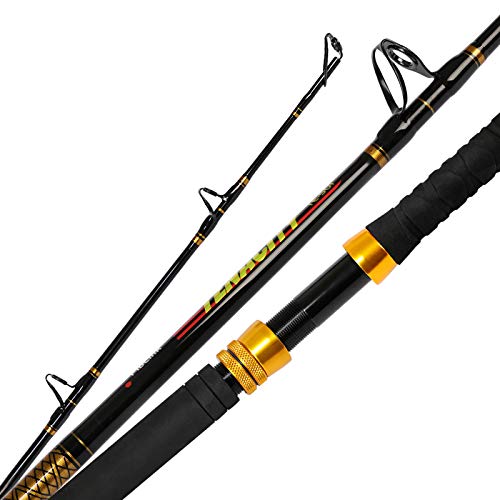
Best for travel-ready offshore trolling with strong capability for mid-sized big game. The rod blends carbon and fiberglass blanks for a balance of sensitivity and strength, delivering solid power for marlin or tuna battles. Premium stainless steel and ceramic roller guides help protect lines from wear, while the EVA handle remains comfortable when fishing all day. Choose this if you want a robust 2-piece trolling option for longer trips.
Who it’s best for: anglers who value a sturdy, travel-friendly trolling rod. Why selected: its roller guides and comfortable grip support extended sessions in saltwater conditions.
Caution: The 30-50 lb rating may be underpowered for larger target species in extreme offshore conditions.
Fiblink Trolling Fishing Rod 2-Piece Saltwater Big Game Offshore Conventional Boat Rod (6’6″ / 2pc / 80-120lbs)

Best for heavy offshore battles requiring high line ratings and leverage. The 6’6″ length and 80-120 lb class are designed to handle powerful predators and long fights. The rod uses carbon and glass blanks for a robust yet responsive feel. Stainless steel roller guides and an EVA handle improve durability and grip, even in wet conditions. Opt for this if your target species demand tougher equipment.
Who it’s best for: serious big-game anglers who regularly chase large offshore species. Why selected: resilient build and high line rating make it a strong choice for demanding sessions.
Caution: Heavier rods are less ideal for quick, light-tackle applications or short-duration trips.
Fiblink Trolling Rod Saltwater Deep Dropper Big Game Rod (2 Pieces – 5’6″ – 30-50lbs)

Best for deep-water trolling and drop-off battles where precision control matters. Carbon and glass reinforcement provide durability in extreme saltwater environments. The stainless steel roller guides reduce line friction, while the cross-tail and belt compatibility offer secure mounting on boats for deep-water drops. Choose this if deep dropping or marlin-trolling is your main goal.
Who it’s best for: anglers pursuing deep-water targets with a need for strong line control. Why selected: solid construction and corrosion resistance support sustained deep-water efforts.
Caution: Deep drop setups can be bulkier and heavier to handle during transit and setup.
Buying Guide: Key Considerations For Saltwater Boat Rods
- Target species and style: Offshore trolling, big-game, jigging, or nearshore casting each benefit from different blank blends and rod lengths.
- Material and build: Carbon/fiberglass blends balance sensitivity and strength; stainless steel roller guides resist corrosion in saltwater.
- Piece configuration: 1-piece rods maximize sensitivity; 2-piece rods enhance travel portability and storage.
- Reel seat and grip: Durable reel seats and high-density EVA grips improve control during long fights and wet conditions.
- Guide quality: Dura-Guides or ceramic rings reduce friction and line wear during retrieval.
- Maintenance and care: Rinse after use, inspect guides and seats for corrosion, and dry thoroughly to extend life.
- Weight and balance: Heavier rods provide leverage for big fish but may fatigue quickly; lighter, balanced models help long sessions.
Frequently Asked Questions
- What length is best for offshore trolling rods? – Lengths around 6′ to 7′ offer a balance of leverage, castability, and line control for big-game trolling.
- Are 2-piece rods as durable as 1-piece rods? – They are travel-friendly and strong, but some anglers feel a 1-piece rod offers slightly better sensitivity and stiffness.
- Which rod is best for spinning vs. conventional reels? – Spinning rods work well for nearshore and lighter tacks; conventional rods excel in heavy trolling and big-game scenarios.
- Why are roller guides important? – Roller guides reduce line friction, resist corrosion, and help protect lines during long fights.
- Should I prioritize carbon or glass blanks? – Carbon blends provide sensitivity and lighter weight; fiberglass is traditionally rugged and forgiving in harsh conditions.
- How do I choose the right line rating? – Align the rod’s line rating with the target species and typical tackle you plan to use, ensuring the rod can bend safely without maxing out.