Find the right wind direction indicator for your sailboat mast. This guide covers five reliable options that help sailors read wind direction on deck, whether you’re racing, cruising, or coastal hopping. Best for small dinghies, mid-size sailboats, or larger vessels, these indicators are chosen for visibility, durability, and ease of mounting. Read on to see who each product is best for, plus quick trade-offs to help you decide.
| Product | Best For | Key Benefit | Mounting Note |
|---|---|---|---|
| Five Oceans FO2080 | Small to mid-size sailboats | Night visibility and sturdy 8 mm stud | Through-bolt mounting |
| Hawk Wind Indicator MK2 | Dinghies up to 6 m | UV protected, bright colored for day/night | Gooseneck height mounting |
| Acouto Wind Vane Weather Vane | Any boat needing stainless steel durability | Marine-grade 304 stainless, high precision | Standard vane mounting |
| Blueshark 15.7 in (400 mm) 400-C | Medium boats, 6–9 m LOA | Carbon fiber vane, corrosion resistant | Fixed mast mount |
| Blueshark 18 in (460 mm) 460-D | Medium to larger sailboats | Longer vane for increased visibility | Fixed mast mount |
Five Oceans FO2080 Sailing Wind Indicator
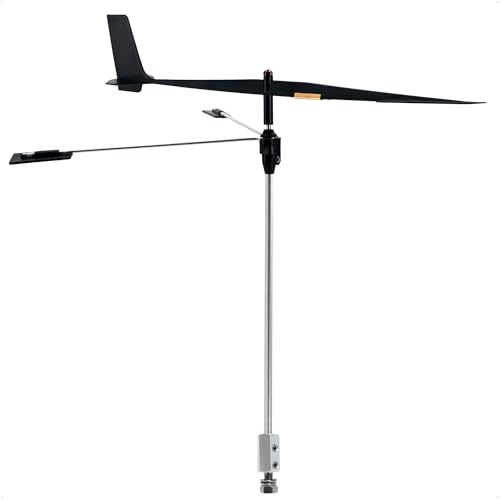
The Five Oceans FO2080 wind direction indicator is designed for vessels 15 feet and larger. It offers visibility in day and night thanks to reflector tape on the vane and tacking tabs, helping you read wind shifts quickly. The vane length is 14-1/4″ and the assembly stands about 13″ tall, with a stainless steel 5/16″ stud for mounting. This option is best for sailors seeking a budget-friendly, durable indicator with reliable sight lines in variable conditions.
Who it’s best for: small to mid-size sailboat crews that value clear day/night visibility and straightforward mounting. Why selected: balanced size and rugged hardware suit typical cruising setups. Caution: ensure your mast area accommodates the through-bolt and 8 mm stud; check for deck clearance before installation.
Davis Instruments – WindTrak 15 Suspension Bearing

The WindTrak 15 offers a suspension bearing design aimed at single-handed or small crew operations. It is structured for compact installations and quick responsiveness in lighter air. This model is best for dinghies and smaller boats where weight and simple mounting matter. A limitation is that product dimensions suggest attention to mounting fit and compatibility with existing hardware on very small masts.
Blue Shark Wind Indicator 15.7in (400mm) 400-C

This Blueshark model features a carbon fiber vane and corrosion resistance, with a 15.7″ (400 mm) vane length. Suitable for boats in the 6–9 m LOA range, it provides improved visibility and reduced weight. It’s a strong choice for sailors who sail in salt and spray, but note that longer booms or tall masts may require taller mounting or fittings beyond standard through-bolt setups.
Blueshark Wind Indicator 18 in (460 mm) 460-D

With an 18″ (460 mm) vane, this Blueshark indicator offers enhanced wind direction visibility for mid-sized boats (6–9 m LOA). The carbon vane and corrosion resistance make it suitable for demanding marine environments. Choose this if you want a longer vane for more pronounced wind readings, but be mindful of potential clearance issues on very compact masts.
Schaefer Little Hawk MK1 Wind Indicator

The Schaefer Little Hawk MK1 is a compact wind indicator designed for dinghies up to 6 meters. It is a straightforward option with a simple mounting approach suitable for smaller vessels. Best for: dinghy sailors who want a reliable, low-profile indicator. Caution: limited size may reduce visibility on larger, fast-moving boats or when mounted far aft.
Buying Guide
What should you consider when choosing a wind vane indicator?
- Boat size and LOA: Match vane length and mounting to your mast height and deck clearance. Longer vanes are more visible but require more room.
- Mounting method: Through-bolt versus fixed mast mounts affects ease of installation and compatibility with existing hardware.
- Reading clarity: Day/night visibility, color contrast, and reflective features improve readability in varying light.
- Material and durability: Marine-grade stainless steel and carbon fiber vanes offer corrosion resistance in saltwater environments.
- Maintenance: Some designs have fewer moving parts; others may need periodic lubrication or checks for bearing wear.
Practical purchasing questions
- Do I need a long vane for high-speed sailing? Longer vanes can be more visible at a distance, but may flex more in strong gusts.
- Is UV protection important for my indicator? Yes, UV resistance helps prolong color and readability in sunny conditions.
- Should I prioritize corrosion resistance? For saltwater use, stainless steel or carbon fiber components reduce rust risk.
- What mounting space is required on my mast? Measure the gooseneck height and available standoffs to ensure clearance.
FAQ
- What is a wind vane indicator used for on a sailboat? It shows wind direction relative to your boat, aiding sail trim and course decisions.
- Can these indicators be used on race boats? Yes, many are suitable for racing setups, with emphasis on visibility and quick readings.
- Are there indicators suitable for dinghies? Yes, several models are designed for small craft with compact mounting.
- Do indicators require power or electronics? No, they are mechanical devices that rely on wind movement.
- Will a carbon vane last longer than a metal one? Generally, carbon fiber vanes resist corrosion and may be lighter, but proper mounting is essential for durability.