Answering the question for boaters seeking reliable rock-friendly anchors, these selections emphasize grips in rocky, pebbled, or mixed-bottom conditions. Each product below suits different boat sizes and usage styles, from small craft to mid-size vessels navigating rocky shores or strong currents. The list highlights which anchor is best for rough bottoms, which offers easy handling, and where to avoid each option.
Summary table of selected products:
| Product | Best For | Bottom Type | Why It Stands Out |
|---|---|---|---|
| Greenfield Richter Boat Anchor Kit | Serious boaters needing all-in-one reliability | Rock, sand, mud, weeds | Includes coated chain, rope, and shackles for strong holding and quick setup |
| SajoSolid Heavy Duty Danforth Anchor Kit | Vessels that encounter varied bottoms | Sand, mud, rocky seabeds | Galvanized for corrosion resistance and complete equipment |
| Anchor-Man Vinyl Coated Richter Boat Anchor | Rivers and lakes with mixed bottoms | Sand, mud, rocks, weeds | Vinyl coating reduces deck wear and handles well in varied bottoms |
| SeaSense Navy Boat Anchor | Smaller boats and pontoons in mixed-bottom areas | Rocky, sandy, muddy, weedy | Compact yet capable for compact craft; coated for protection |
| MARINE SYSTEM Fluke Anchor Kit | Deck, pontoon, and small-to-mid size boats | Sand, mud, rocks | Compact 8 lb kit with chain and rope for easy setup |
Greenfield Richter Boat Anchor Kit

Brand: GREENFIELD PRODUCTS
Features include an all-in-one setup with USA-coated Richter Anchor, hand-dipped PVC chain, 100 feet of nylon anchor line, and three shackles. This kit is designed for serious boaters who need dependable anchoring in rivers, lakes, sand, mud, and rocky bottoms. The anchor’s design aims to optimize setting and retrieval when conditions vary. Best for boats up to 24 feet in robust environments; however, the full kit is heavier and may require more storage space on smaller craft.
Who it’s best for: boaters needing a complete, ready-to-use anchoring solution for mixed-bottom conditions. Why selected: the all-in-one nature, coated chain, and long rope provide a versatile setup for frequent anchoring in challenging spots. Limitation: bulkier package; requires adequate storage and handling space.
SajoSolid Heavy Duty Danforth Anchor Kit
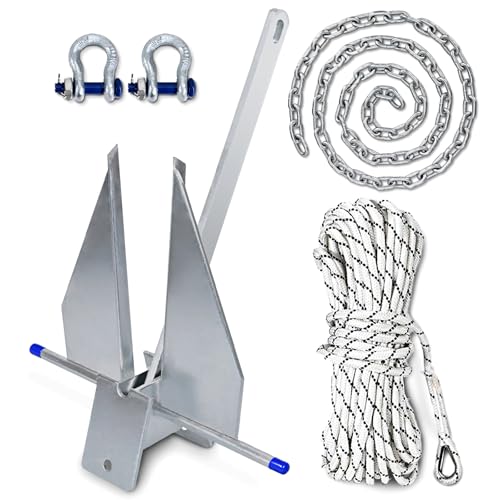
Brand: SajoSolid
Features include a complete 18 lb Danforth anchor kit with 6.5 ft chain, 100 ft rope, and two shackles. The hot-dip galvanized fluke anchor is built to resist seawater corrosion, and the stern design facilitates rapid penetration into riverbeds or seabeds, providing secure holds in sandy or muddy bottoms and stability during storms. Best for: boats that encounter varied bottom types and require a robust, ready-to-deploy package. Limitation: heavier Danforth style may require more setting effort in very soft mud.
Anchor-Man Vinyl Coated Richter Boat Anchor

Brand: Anchor-Man
Features highlight a spike-style Richter anchor with vinyl coating for marine protection. It offers dependable holding across lakes and rivers, including sand, mud, weeds, and rocky bottoms. The vinyl coating reduces surface abrasion and eases handling during deployment and retrieval. Best for: river and lake users who want a versatile spike anchor with surface protection. Caution: spike anchors can be sensitive to extremely soft mud conditions where penetration is slower.
SeaSense Navy Boat Anchor

Brand: SeaSense
Designed for smaller boats, pontoons, and kayaks, this 28-pound anchor is suitable for rocky, sandy, muddy, or weedy bottoms. It features a black vinyl coating for surface protection. Best for: small to mid-size craft needing a reliable anchor in mixed-bottom conditions. Limitation: heavier than some portable options, which may affect storage and handling on very small vessels.
MARINE SYSTEM Fluke Anchor Kit
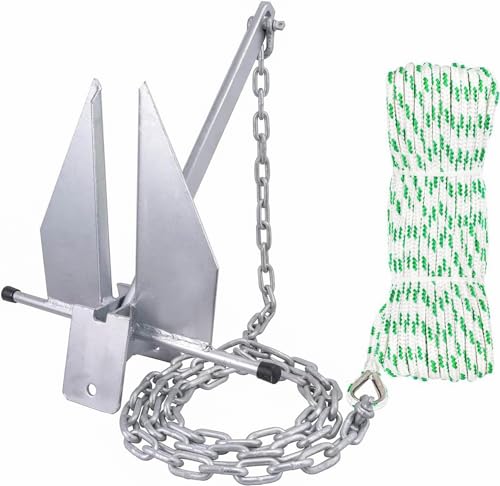
Brand: MARINE SYSTEM
Includes an 8 lb hot-dipped galvanized fluke anchor with 6.5 feet of chain and a 75-foot nylon rope. Sized for boats around 12-22 feet, this kit provides a compact, easy-to-handle solution for deck, pontoon, or small fishing boats. Best for: users who want a lightweight, ready-to-use kit for casual boating. Caution: lighter anchors may struggle in strong current or very rocky bottoms without additional weight or a longer rope.
Buying Guide: Rock Anchors For Boats
- Bottom type matters: If you frequently anchor in rocky or mixed bottoms, consider a spike or Danforth-style anchor with strong penetration and a robust protective coating to reduce wear on hardware.
- Weight vs. handling: Heavier anchors provide better bite in heavy current or coarse bottoms, but require more storage and effort to deploy. Lighter kits suit smaller craft or casual use.
- Coating and corrosion resistance: Vinyl coatings and galvanized finishes extend life in saltwater and reduce deck wear during handling.
- Complete kits save time: All-in-one kits with chain, rope, and shackles improve setup speed and reliability in varied conditions.
- Scalability: For bigger boats or frequent use in rough environments, opt for anchors with longer rope and better-rated chain combinations.
Practical Considerations For Choosing Your Rock Anchor
- Boat size and weight: Match anchor weight and kit components to vessel length and typical loads.
- Storage space: Consider the footprint of the anchor kit and whether it fits on your bow or stern storage area.
- Deployment ease: Some kits offer quicker setups with coated lines and ready-to-use shackles, reducing time spent securing your vessel.
- Maintenance: Look for galvanized or vinyl-coated options to minimize corrosion and surface damage after use in rocky environments.
FAQ
- What anchor is best for rocky bottoms? A spike or Danforth-style anchor with strong penetration and a protective coating is typically best for rocky or mixed bottoms.
- Should I buy a kit or separate parts? A complete kit with chain and rope offers easier handling and faster setup, especially for beginners or casual users.
- Is galvanized steel sufficient for saltwater use? Yes, hot-dip galvanized or coated anchors resist corrosion well in saltwater when properly maintained.
- Can lightweight anchors hold in strong currents? Lightweight anchors may struggle in strong currents; consider upgrading to a heavier anchor or adding longer chain for improved stability.
- How important is the coating on a marine anchor? Coatings reduce deck wear during handling and protect the anchor from abrasion in rocky environments.
- Do I need a long rope with my anchor? A longer rope provides more scope, improves holding power, and helps accommodate larger tidal ranges or deeper water.