The top picks below are ideal for hobbyists seeking gas-powered RC boat engines that balance power, durability, and ease of installation. This guide highlights engines suited for competition boats, sport cruisers, and DIY project builds. Readers will see who each engine is best for, plus practical considerations to avoid common pitfalls.
Summary of chosen products:
| Product | Brand | Engine Type | Key Strength |
|---|---|---|---|
| FLMLF 29cc 2-Stroke RC Boat Marine Motor | FLMLF | 2-Stroke, 29cc | Easy installation, racing-ready |
| FLMLF 58cc Twin-Cylinder Engine | FLMLF | Twin-Cylinder, 58cc | Upgraded CNC components, high displacement |
| Rc Marine 26cc Engine for Racing Boat | FLMLF | 2-Stroke, 26cc | Balanced power and durability |
| 32CC 2-Stroke Gasoline Engine | Futchoy | Gasoline, 32cc | Small size with high power |
| Ssccgym | Gas-powered RC boat kit | Beginner-friendly, versatile |
FLMLF 29cc 2-Stroke RC Boat Motor

Engine Type and Suitability: A compact 29cc 2-stroke engine designed for remote-controlled racing boats. Best for mid-sized boats that require a balance of weight and power. Suitable for hobbyists upgrading existing powerplants to a race-capable setup.
Why it was selected: Its straightforward installation and compatibility with Zenoah RCMK QJ engine configurations provide a practical upgrade path for racers who want reliable, repeatable performance without heavy modification.
Best for: Builders seeking an affordable, easy-to-install race engine for mid-size RC boats; ideal for learning quick maintenance routines and field tuning.
Caution: As a 2-stroke design, fuel/oil mixture must be precise, and proper cooling is essential in longer, high-speed sessions.
FLMLF 58cc Twin-Cylinder Engine

Engine Type and Suitability: A dual-cylinder, 58cc marine engine with water cooling and CNC-upgraded components. Best for larger, high-performance racing boats that demand sustained power and robust cooling performance.
Why it was selected: The upgraded CNC sleeve, frame, carburetor base, and intake port enhancements indicate strong durability and better throttle response under demanding race conditions.
Best for: Enthusiasts building or upgrading to a competitive, high-durability marine powerplant that emphasizes reliability at speed.
Caution: More complex installation and tuning may require intermediate mechanical skills and careful handling of cooling systems.
Rc Marine 26cc Engine for Racing Boat

Engine Type and Suitability: A compact 26cc 2-stroke engine designed for racing boats in the Zenoah RCMK QJ family. Suitable for medium-sized crafts requiring a balance of weight and throttle response.
Why it was selected: Its targeted fit for Zenoah-based setups helps racers optimize weight distribution and fuel efficiency for consistent lap times.
Best for: Builders focused on mid-range power with predictable performance and straightforward maintenance.
Caution: Fuel mixture and break-in procedures are important to ensure longevity; follow recommended ratios for initial runs.
32CC 2-Stroke Gasoline Engine by Futchoy

Engine Type and Suitability: A small, high-powered 32cc gasoline engine designed for compact RC boats, compatible with popular chassis such as BAJA, Losi, and MCD lines. Best for small to mid-sized boats needing strong power in a compact footprint.
Why it was selected: Its compact size with high power makes it a versatile option for racers prioritizing lightweight setups without sacrificing speed.
Best for: Controllers upgrading tiny racers or experimenting with aggressive power-to-weight ratios in compact shells.
Caution: Smaller engines can overheat if cooling and ventilation are not properly managed in extended races.
Ssccgym 25-Inch RC Boat Kit
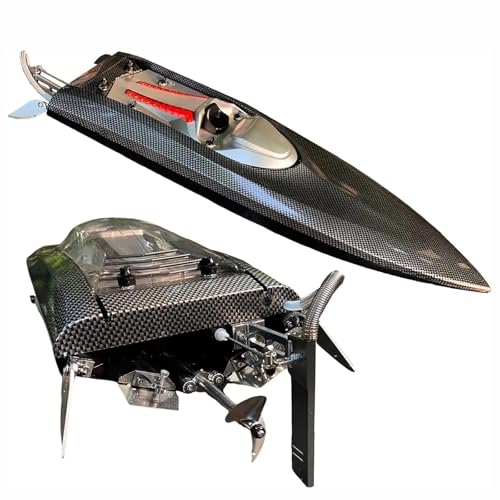
Engine Type and Suitability: A large remote-controlled boat kit with alloy tail, brushless options, and 50 km/h top speeds. Best for enthusiasts building a high-performance, visually striking watercraft from a kit.
Why it was selected: This model is a robust foundation for a race-ready hull, especially for builders who prefer integrated control systems and potential range upgrades.
Best for: Intermediate to advanced builders who want a complete kit with potential for high-speed, brushless configurations.
Caution: Assembly complexity is higher than simpler plug-and-play options; follow the manual closely for best results.
ZYHOBBY Outboard Drive System
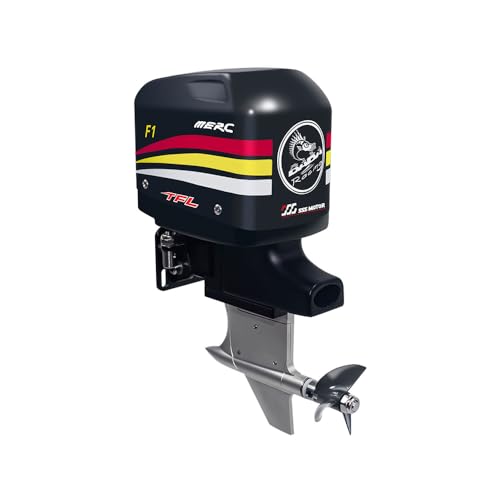
Outboard Drive System Overview: A metal drive system with a motor shaft hatch for RC boat models. Best for builders seeking reliable propulsion components and straightforward installation within TFL-style hulls.
Why it was selected: The metal construction and compatibility with common motor and propeller specs offer solid performance and resilience in racing conditions.
Best for: Projects needing a durable propulsion upgrade or a ready-to-install outboard system for light-to-moderate force applications.
Caution: This component is part of a larger assembly; ensure correct alignment and mounting to prevent vibrational issues.
Buying Guide: Key Considerations for RC Boat Gas Engines
What size and power should you choose? Balance hull size, weight, and intended racing class. Larger boats benefit from bigger displacement engines for sustained speeds, while smaller shells require compact engines to maintain agility.
What fuel and mixture work best? Most two-stroke RC engines require a precise fuel-oil mix. Use the recommended ratio and avoid ad-lib fuel blends to prevent scoring engine performance or shortening life.
How important is cooling? Gas engines generate substantial heat during racing. Ensure adequate water-cooling or air-cooling when applicable, with proper airflow around the engine bay and exhaust routing to prevent overheating during long runs.
What maintenance should you perform regularly? Regular oil changes, air-filter checks, spark plug inspection (where applicable), and belt or clutch inspection help preserve performance and prevent race-day failures.
Which setup yields easier maintenance vs. peak performance? Simpler engines with fewer moving parts are easier to service, while high-displacement, multi-cylinder engines may deliver more top-end speed but demand careful tuning and maintenance discipline.
Compatibility and parts availability: Confirm chassis compatibility (Zenoah, CY, G260, etc.) and verify that replacement parts (carburetors, sleeves, and bearings) are readily available in your region to minimize downtime.
FAQ
- What type of RC boat engine is best for beginners? A smaller, single-cylinder 2-stroke engine with straightforward maintenance and widely available parts is usually best for beginners due to simplicity and repairability.
- How do I know if a 58cc twin-cylinder engine is right for my boat? It’s suitable for larger hulls that require more power and stable high-speed performance over longer runs, provided cooling and mounting space are adequate.
- Are fuel mixtures critical for two-stroke RC engines? Yes. Use the manufacturer-recommended oil-to-fuel ratio to protect the exhaust system and engine internals during break-in and racing.
- Can I upgrade any RC boat to a gas engine? Upgrading depends on hull strength, mounting points, and cooling capacity. Some kits are designed specifically for gas engines, while others may require custom fabrication.
- What maintenance frequency is typical for gas engines? Regular checks after every few sessions, with more thorough service after every race weekend, are common to ensure consistent performance.
- Is a single-cylinder engine adequate for racing? For smaller boats or entry-level racing, yes. For higher speeds and endurance in larger boats, multi-cylinder engines may offer better performance and cooling balance.