Answer: For boat owners who need reliable filtration of intake water or seawater, these five raw water strainers offer durable materials, mesh options, and versatile connections to fit common marine plumbing. Best for keeping pumps and engines safe from debris, marine growth, and particulates, each option suits different boat sizes, hose sizes, and maintenance preferences.
Summary of selected products
| Product | Brand | Best For |
|---|---|---|
| 3/4″ Female NPT Inline Strainer | SAFBY | Compact systems, easy cleaning, 100 mesh |
| ARG-750 Series 3/4″ Raw Water Strainer | Groco | Rugged service with stainless basket |
| SEAFLO Raw Sea Water Filter/Intake Strainer | SEAFLO | Flexible hose sizes and saltwater use |
| ARG-1000 Series 1″ Raw Water Strainer | Groco | Higher flow, plastic basket option |
| Sherwood Seawater Strainers 1″ | Sherwood | Simple, compact stainless solution |
3/4″ Female NPT In-Line Strainer With 100 Mesh Screen

Best for compact spaces and systems where a tight filter is needed without sacrificing flow. This SAFBY model uses a 100 mesh stainless steel screen to capture fine debris, supported by a mass flow design for steady intake. The top is made of nylon, and the bowl is a clear nylon for quick visual checks. Suitable for small boats or auxiliary systems where a quick disassembly for cleaning is helpful.
- Best for: small to mid-size boats needing easy maintenance and a clear view of filter status.
- Why chosen: 100 mesh screen delivers effective filtration without high pressure drop.
- Caution: May require more frequent cleaning in heavily sedimented intakes.
ARG-750 Series 3/4″ Raw Water Strainer
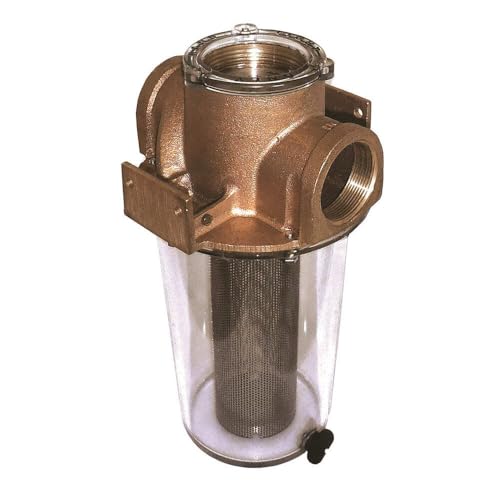
Best for: boats requiring a durable stainless steel basket and robust construction. The ARG-750 is designed for steady raw water filtration with a corrosion-resistant profile. Its 3/4″ size fits many standard marine plumbing setups while offering reliable debris capture.
- Why chosen: Sturdy build with a stainless basket minimizes wear in saltwater applications.
- Caution: Availability of replacement baskets varies by model year; verify basket compatibility before service.
SEAFLO Raw Sea Water Filter/Intake Strainer

Best for: flexible installations across different hose sizes and marine configurations. SEAFLO’s model supports 1″, 1-1/4″, and 1-1/2″ hoses, making it adaptable to various boat systems while providing raw water protection to pumps and engines.
- Why chosen: Marine-grade construction resists corrosion; designed for harsh sea water exposure.
- Caution: Larger hose options may require additional mounting space or adapters.
ARG-1000 Series 1″ Raw Water Strainer

Best for: larger vessels or systems requiring higher flow with a non-metallic, lightweight basket option. The ARG-1000 series supports a 1″ inlet and provides robust filtration while maintaining ease of maintenance.
- Why chosen: Non-metallic plastic basket reduces weight and may ease handling during service.
- Caution: Plastic baskets can be less abrasion-resistant than stainless options; inspect for wear in sandy intakes.
Sherwood Seawater Strainers 1″ 20 Mesh

Best for: straightforward, compact seawater intake filtration where a simple 1″ connection is sufficient. The 20 mesh stainless screen provides reliable protection against larger debris and marine growth.
- Why chosen: Simple, compact solution with stainless construction for saltwater environments.
- Caution: Mesh size is coarser than 100 mesh options; may require pre-filtration in sandy intakes.
Buying Guide
What should you consider when choosing a raw water strainer for a boat?
- Hose and connection size: Match the strainer inlet/outlet to your boat’s hose sizes (1″, 3/4″, etc.) to avoid adapters that create leak paths.
- Mesh size and filtration needs: Finer mesh captures smaller particles but may restrict flow; balance filtration with pump efficiency. Common options include 20 mesh, 100 mesh, and finer screens.
- Material compatibility: Stainless steel baskets resist corrosion in saltwater; plastic baskets are lighter and easier to handle but may wear in abrasive environments.
- Maintenance access: Models with a clear bowl or simple twist-off design simplify inspection and cleaning. Consider how quickly you can disassemble and reassemble in rough weather.
- Environmental exposure: For saltwater systems, choose marine-grade construction and corrosion-resistant materials. For freshwater systems, material requirements may be less stringent but still require sturdy builds.
- Installation space: Some strainers require extra mounting space or longer plumbing runs. Measure space before purchasing.
- Reliability and serviceability: Look for strainers with readily available baskets and replacement parts to minimize downtime on the water.
Quick comparison by key traits
- Best for easy cleaning: 3/4″ SAFBY inline strainer with twist-off bowl
- Best for rugged saltwater use: GROCO ARG-750 with stainless basket
- Best for flexible hose options: SEAFLO raw water filter with multiple hose sizes
- Best for higher flow and plastic basket: GROCO ARG-1000 Series
- Best for simple, compact setup: Sherwood 1″ 20 Mesh
Maintenance checklist
- Inspect mesh for tears or clogging before each voyage.
- Clean the filter by disassembling and rinsing with fresh water after exposure to debris-rich intakes.
- Check seals and gaskets for signs of wear; replace as needed to maintain watertight connections.
- Verify that mounting hardware remains secure after rough seas or engine vibrations.
FAQ
- What is the difference between 3/4″ and 1″ strainers?
Answer: The size reflects flow capacity and compatibility with your boat’s plumbing. Larger sizes handle higher flow but require more space. - How often should I clean a raw water strainer on a voyage?
Answer: Check and clean as needed based on water clarity and debris load; heavy use may require mid-voyage inspection. - Are stainless baskets better than plastic?
Answer: Stainless baskets resist corrosion longer in saltwater, while plastic baskets are lighter and easier to handle. - Can I install a strainer on any hull type?
Answer: Most strainers fit standard plumbing, but confirm inlet/outlet sizes and mounting space for your vessel. - Do strainers prevent all debris from reaching the pump?
Answer: They reduce debris, but pre-filtration and proper maintenance are still essential for protecting downstream equipment. - What is the typical mesh size for marine seawater strainers?
Answer: Mesh sizes range commonly from 20 to 100; finer meshes capture smaller particles but may reduce flow.