When selecting a primer for fiberglass boats, choose products designed for above-waterline surfaces, compatibility with polyurethane or enamel topcoats, and easy application. This guide highlights five proven options and explains who each is best for, plus practical cautions. Ideal buyers include DIY hull restorers, weekend sailors applying new topside paint, and boat owners seeking a durable, simple-to-apply undercoat that supports lasting finishes.
Summary table of selected products:
| Product | Best For | Notes |
|---|---|---|
| TotalBoat Marine Topside Boat Paint Primer (White, Quart) | Fiberglass and wood above waterline | One-part primer; easy brush/roller/spray; chromate- and lead-free |
| Rust-Oleum Marine Coatings Wood and Fiberglass Primer (Quart, White) | Base coat to improve topcoat adhesion | Dries in 1 hour; covers ~100 sq ft |
| TotalBoat Marine Topside Boat Paint Primer (White, Gallon) | Higher build or larger projects | Same formulation as quart; higher volume |
| STF ShangTianFeng Marine Wood and Fiberglass Primer (32 Oz, White) | Harsh sea environments | Includes thinner; oil-based; strong adhesion |
| TotalBoat Marine Topside Boat Paint Primer (Gray, Gallon) | Neutral base for varied topcoats | Same one-part primer; flexible undercoat |
TotalBoat Marine Topside Primer, White (Quart)
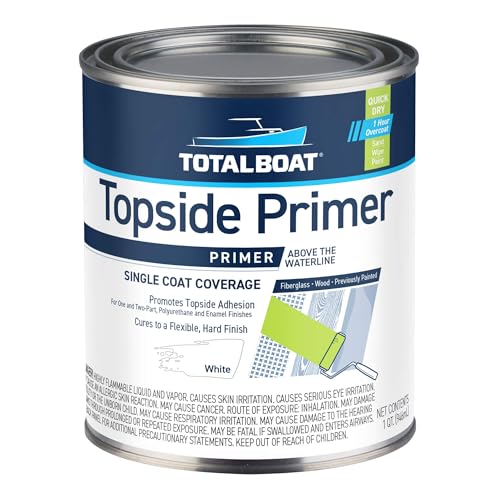
Product overview: A one-part marine primer for boats that works with 1-part and 2-part polyurethane and enamel topside paints. It’s intended for above-waterline use on fiberglass, wood, gelcoat, and previously painted surfaces in good condition. Key advantage is complete single-coat coverage when used as directed, with a second coat only if you need extra build. Best for owners seeking a straightforward undercoat that adapts to multiple topcoats. Limitation: ensure surfaces are clean and in good condition to maximize single-coat coverage.
Who it’s best for and why: Ideal for DIYers tackling fiberglass or wood hulls who want a reliable, easy-to-apply primer that tolerates brushing, rolling, or spraying. The chromate-free, lead-free formula enhances safety and environmental considerations when preparing a fresh topside finish.
Cautions: Work in a well-ventilated area and wear PPE. For large imperfections, fill first with TotalBoat TotalFair epoxy fairing compound before priming to achieve smoother results.
Rust-Oleum Marine Coatings Wood and Fiberglass Primer, Quart

Product overview: This primer is designed for both wood and fiberglass above the waterline and acts as a base coat to improve adhesion of topcoats and extend finish life. It dries to the touch in about an hour and covers up to 100 sq ft per quart, making it a practical option for mid-sized boats.
Who it’s best for and why: Best for owners who want a dedicated adhesion base before applying color or clear coats. It’s a straightforward base coat that can help prevent topcoat peeling on aged or porous substrates.
Cautions: Performance depends on surface preparation. Avoid applying in very hot or humid conditions, and allow adequate drying time before applying topcoats for best adhesion.
TotalBoat Marine Topside Primer, White (Gallon)

Product overview: This is the same one-part marine primer formula as the quart version, but offered in a gallon container for larger jobs or multiple coats. It provides durable, flexible undercoating for topside paints above the waterline on fiberglass, wood, and gelcoat in good condition.
Who it’s best for and why: Choose this if you’re covering a larger area or applying multiple coats and want consistent results across a bigger project. It remains suitable for brush, roller, or spray application.
Cautions: Follow ventilation and safety guidelines. If you need a thicker buildup, apply a second coat after the first cures to the manufacturer’s recommended time.
STF ShangTianFeng Marine Wood and Fiberglass Primer, 32 Oz White

Product overview: An oil-based primer designed for fiberglass, wood, or metal surfaces above the waterline. This product includes thinner within the packaging, and the on-site use ratio is typically 1:0.3/0.4 of thinner. It emphasizes strong adhesion, hardness, and long duration, making it a robust option for harsher marine environments.
Who it’s best for and why: Best for boat owners facing challenging seawater conditions or surfaces that demand high hardness and adhesion. The integrated thinner saves an extra purchase and simplifies on-site preparation.
Cautions: Oil-based formulations require good ventilation and longer cure times between primer and topcoat applications. Follow the suggested thinner ratio for optimal results.
TotalBoat Wet Edge Topside Primer (White, Quart)

Product overview: While primarily known for its topcoat line, Wet Edge coatings offer a durable, high-gloss base that can function with certain primer undercoats. This option is best used where a very smooth, glossy finish is desired after priming and painting above the waterline on boats and other fiberglass surfaces.
Who it’s best for and why: Choose this when you want a cohesive system with a high-gloss final look and strong chemical resistance in the topcoat layer. It is better for projects aiming for long-term cosmetic durability and easy cleaning.
Cautions: Verify compatibility with your chosen topcoat system to ensure optimal adhesion and finish. Do not rely on Wet Edge primer alone for structural repairs or severe surface imperfections.
Buying Guide: Primer For Fiberglass Boats
- Surface compatibility: Ensure the primer is suitable for fiberglass, wood, or gelcoat above the waterline and compatible with your intended topcoat (polyurethane or enamel).
- One-part vs two-part: One-part primers like TotalBoat basic primers are easier to use and faster, but two-part options can offer higher build and adhesion in challenging environments.
- Coverage and build: For small repairs, a quart is typically enough; for larger hull areas, a gallon may reduce refill frequency. Consider whether you need a single-coat finish or a second coat for added build.
- Application method: Most primers support brushing, rolling, or spraying. If spraying, use the recommended tip size and practice to avoid runs or orange peel finish.
- Safety and prep: Work in a ventilated area, wear PPE, and prep surfaces by cleaning, drying, and removing all wax or old coatings that are not in good condition.
- Environmental and regulatory notes: Choose chromate-free and lead-free formulations when possible and follow local disposal guidelines for solvents and waste.
Frequently Asked Questions
- Is a primer required over fiberglass? Yes, a dedicated marine primer improves adhesion of topcoats and helps seal minor imperfections before applying color coats.
- Can I use Home-Deck or household primer on a boat hull? No, marine primers are formulated for exposure to saltwater, sunlight, and flexibility requirements of boats; use products labeled for marine use.
- How many coats of primer are needed? Typically one coat is enough, but apply a second coat if the surface is uneven or you need higher build as per product directions.
- What surfaces can be primed with these products? Fiberglass, wood, gelcoat, and previously painted surfaces in good condition above the waterline are suitable for these primers.
- How long should primer dry before topcoating? Follow label guidance; most marine primers cure to handle recoats within a few hours to a day, depending on temperature and humidity.
- Are these primers safe around food-contact areas on boats? These primers are designed for marine use and not intended for surfaces that contact food; use appropriate surface coatings for such zones.