Answering the search for reliable, portable boat gas tanks for American boaters. This guide focuses on models suited for outboard motors, small boats, and spare fuel needs. It highlights best-for scenarios, durability, and practical limits. The top picks cover varying capacities, from compact 3-gallon tanks to larger 12-gallon options, with clear guidance on when to choose each.
| Product | Best For | Capacity | Key Benefit |
|---|---|---|---|
| AloneGoer 3 Gallon | Compact setups or spare fuel on inflatables | 3 gal / 12 L | Low evaporation with multi-layer barrier |
| Scepter 12 Gallon | Long runs on mid-size boats | 12 gal / 45 L | Built-in gauge and vented cap |
| Scepter 6 Gallon | Under-seat storage and quick refuel | 6 gal / 22.7 L | 2-way vented cap and built-in gauge |
| VEVOR 12L | Durable, UV-stable transfers | 12 L / 3.17 gal | 9.8 ft hose and Yamaha-compatible fittings |
| PeakPursuit 3 Gal | Under-seat or dockside fill | 3 gal | Dual venting and long hose option |
AloneGoer 3 Gallon Portable Boat Fuel Tank
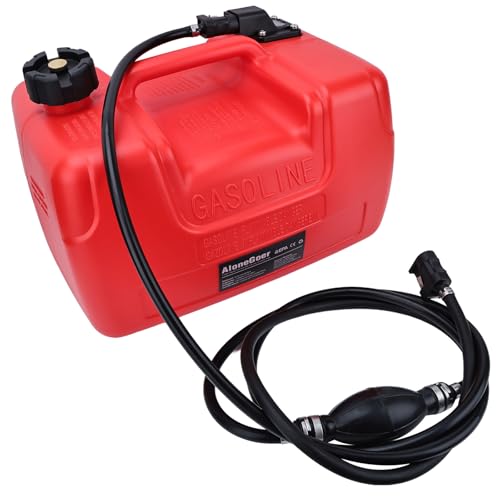
Best for compact boats and inflatable craft. This 12 L/3 gallon tank uses a multi-layer barrier (HDPE-EVOH-HDPE) to significantly reduce fuel evaporation and maintain fuel quality in humid, salt-prone environments. It includes a marine fuel line connector compatible with Yamaha 6YL-24201-24-00 setups, making it a practical spare or primary tank for small outboards.
Who it’s for: boaters needing a small, durable tank without sacrificing fuel integrity. Why selected: the multi-layer barrier technology and UV/salt spray resistance enhance longevity in marine settings. Caution: detailed compatibility depends on your current connector configuration; verify the hose and fittings before use.
Scepter 12 Gallon Portable Marine Gas Can

Best for longer boating sessions on mid-size to large boats. This 45-liter tank offers ample capacity while remaining relatively space-efficient. Features a built-in fuel gauge and a 2-way vented cap to manage vapor pressure during refueling. The design accommodates ethanol blends and diesel fuels, though the gauge visibility aids quick checks during trips.
Who it’s for: boaters prioritizing longer runtime with a gauge for quick level checks. Why selected: built-in gauge and vented cap simplify operations on longer crossings. Caution: fuel line must be purchased separately and fittings to standard marine lines should be confirmed for your installation.
Scepter 6 Gallon Portable Marine Gas Can

Better for under-seat storage on smaller boats, this 22.7-liter tank balances capacity with a slim profile. It includes a 2-way vented cap and a built-in gauge for quick checks, with compatibility for diesel and ethanol-blended fuels. The container’s molded feet promote stability on deck floors.
Who it’s for: boaters needing a compact, stowable tank with visibility to fuel levels. Why selected: under-seat design saves space while retaining essential safety features. Caution: the fuel line is sold separately; plan for compatible fittings when purchasing.
VEVOR Boat Fuel Tank 12L

Best for Yamaha-compatible setups and easy transfer. This 12-liter tank comes with a 9.8-foot hose and a gauge to monitor fuel. It’s built from HDPE and designed to resist aging and corrosion, making it suitable for regular use on boats facing sun and spray exposure. The hose and connector length support flexible fueling on dock or water.
Who it’s for: boaters who want a robust transfer tank with a long hose for flexible fueling. Why selected: combination of gauge-enabled monitoring and long hose. Caution: avoid prolonged direct sun exposure to prevent aging and expansion of the tank material.
PeakPursuit Portable Boat Tank 3 Gal

Best for quick refuels and small craft use, this 3-gallon tank emphasizes portability with a long 9.8-foot hose and a dual venting system. It is designed for universal compatibility and features an impact-resistant HDPE construction. The design supports easy transport from dock to boat with a secure fill workflow.
Who it’s for: boaters needing a lightweight, easy-to-carry option with flexible hose length. Why selected: dual venting helps manage flow and pressure while refueling. Caution: ensure secure sealing when venting to avoid spills in rough seas.
Buying Guide
What capacity do you need? Choose 3–6 gallons for small inflatables or under-seat storage; 9–12 gallons works for longer trips on mid-size boats. Consider space on deck or under seats to ensure a proper fit.
How important are venting and gauges? Vented caps reduce vapor pressure during refueling, improving safety. Built-in gauges help monitor fuel level at a glance and simplify planning for refueling.
What materials and durability matter? Multi-layer barriers (like HDPE-EVOH-HDPE) lower evaporation and improve chemical resistance. UV stabilization and salt spray resistance extend life in harsh marine environments.
What about fittings and hoses? Check compatibility with your engine’s fuel line, and confirm hose length. Some tanks list compatibility with Yamaha connectors or standard 1/4 NPT marine fittings; plan to buy any missing adapters.
Where should you store the tank? Keep tanks out of direct sunlight when possible and store in a stable, ventilated area to prevent deformation or aging. For under-seat storage, ensure a snug fit with proper securing straps.
FAQ
- Q: Which portable boat gas tank is best for small inflatables? A: The 3–4 gallon options (like the AloneGoer 3 Gallon or PeakPursuit 3 Gal) offer compact size and light carrying weight for small inflatables and compact inflow setups.
- Q: Do these tanks support ethanol-blended fuels? A: Several models are specified as compatible with diesel or ethanol-blended fuels, but always verify the exact fuel compatibility for your engine and local fuel supply.
- Q: Is a built-in gauge essential? A: A built-in gauge makes refueling planning easier by showing current fuel levels, which is helpful on longer outings or when docking for fuel stops.
- Q: How important is a vented cap? A: A vented cap prevents dangerous vapor buildup during refueling and reduces pressure-related issues, especially in hot or humid environments.
- Q: Do these tanks require extra hoses or fittings? A: Some models list hoses or fittings as separate purchases. Confirm compatibility with your engine and purchase any needed adapters in advance.