Answer: For boats, the best portable options combine reliable jump-start capability with onboard charging and battery maintenance features. The top picks below are suited for boaters who need quick engine starts, secure 12V power, and dependable battery care in remote spots. The list targets boaters, anglers, marina-docked owners, and portable watercraft operators who want safety, ease of use, and compact design on board.
Summary table of the chosen products:
- NOCO Boost GB40: 1000A jump starter with 12V power bank – ideal for boats with gas engines up to 6.0L or diesel up to 3.0L.
- BOOKOO A9 Jump Starter: 4000A jump start with USB power bank and LED light – best for larger boats or needs beyond starting a car engine.
- Povasee Jump Starter A30: 5000A jump starter with dual USB outputs and high-output LED light – strong jumper with built-in power bank.
- NOCO GENIUS10: 10A smart charger and maintainer – great for regular battery upkeep on boats with 6V/12V systems.
- YONHAN 20A Charger: 12V/24V multi-chemistry maintainer – ideal for servicing a wide range of boat battery types during off-season.
NOCO Boost GB40: 1000A UltraSafe Jump Starter
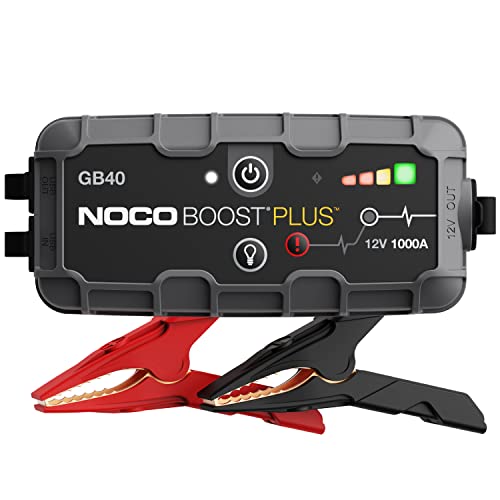
Best for: Boat owners who need a compact, high-crest jump starter for small to mid-size boats with gasoline engines up to 6.0L or diesel up to 3.0L. The GB40 provides rapid starts and a built-in power bank to charge devices after docking or provisioning.
Why selected: It combines 1000 amps of peak lithium power with spark-proof and reverse-polarity protection, reducing connection concerns in rough environments. Its emergency power bank supports smartphones and tablets, recharging in about three hours for ready use on the water.
Caution: Not designed to jump heavy commercial vessels; best for recreational boats within the engine size limits. Ensure proper connection to the correct terminal and avoid using near water spray during operation.
BOOKOO A9 Jump Starter 4000A
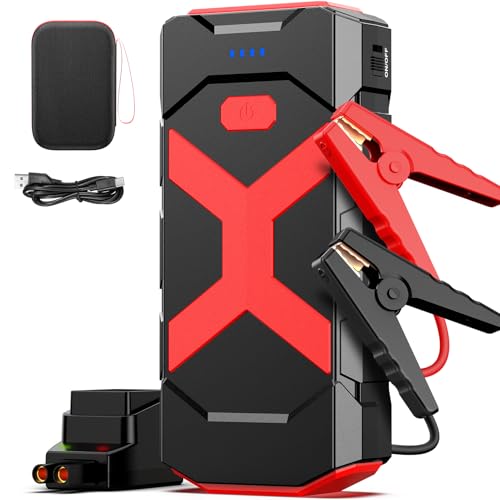
Best for: Larger boats or vessels with larger starting power needs, where a 12V system must handle diesel engines and bigger gas engines. The 4000A capability covers a wide range of boats and engines.
Why selected: It doubles as a portable power bank with USB outputs and includes a compact storage case, offering quick jumps and device charging in one unit. The device supports USB Quick Charge and USB-C, helpful for on-board electronics and navigation gear.
Caution: The size is a bit bulkier than ultra-light models; ensure secure storage in a dry area to prevent movement during rough seas.
Povasee Jump Starter A30 5000A

Best for: Boats requiring a robust, high-output jump starter capable of 10L gasoline or 8L diesel engines, with strong cold-weather performance and multiple safety features.
Why selected: The A30 provides up to 60 quick jump starts on a single charge and includes a 74Wh power bank plus dual USB outputs and a 400-lumen LED light for emergencies on the water.
Caution: It is a powerful unit; ensure secure stowage and follow heat and ventilation guidelines when charging in tight spaces or enclosed compartments.
NOCO GENIUS10: 10A Smart Charger
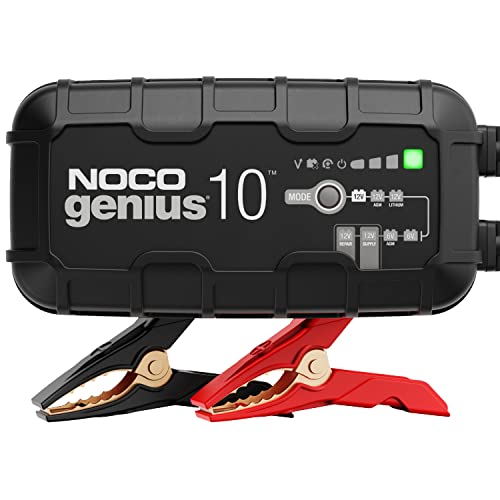
Best for: Boats with 6V/12V battery systems that require regular maintainer and desulfator performance, especially in marinas or storage yards where batteries sit idle for extended periods.
Why selected: A robust maintainer that handles lead-acid and lithium batteries with temperature-compensated charging, ensuring long battery life and reliable recharges when you’re away from the boat.
Caution: Not a jump starter; it must be plugged in to an outlet to operate. Use appropriate settings for the battery type and size to avoid mischarging.
NOCO GENIUS5: 5A Smart Charger
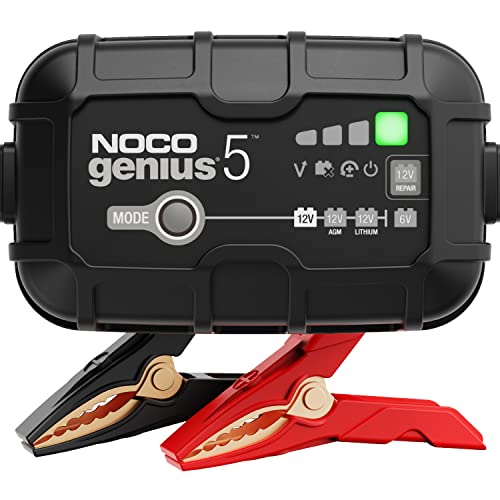
Best for: Boats with smaller or multiple battery configurations needing a compact, efficient trickle and maintenance charger with desulfator features.
Why selected: It’s a compact, capable option for regular maintenance across a range of lead-acid and lithium batteries, helping prevent sulfation and extending battery life.
Caution: For larger deep-cycle or high-demand systems, pairing with a higher-current charger may be more efficient than relying on GENIUS5 alone.
NOCO GENIUS2: 2A Smart Charger

Best for: Boats with modest charging needs or secondary batteries that require a compact, energy-efficient charger with force mode for low-voltage recovery.
Why selected: The GENIUS2 balances efficiency with versatility, supporting lead-acid and lithium batteries and offering features like Force Mode to recharge deeply discharged packs.
Caution: Lower current means longer charging times for larger batteries; consider a higher-current model if you frequently charge bigger packs on board.
Buying Guide: How to Choose the Right Portable Boat Battery Charger
- Engine size and battery type: Match the charger or jump starter to your boat’s engine displacement and battery chemistry (lead-acid, AGM, Gel, LiFePO4). Larger engines may need higher amperage jump starters or multiple devices for backup.
- Portability vs power: Balance the need for compact storage with the required jump-start strength and power outputs. Smaller units fit tight compartments; larger units handle bigger engines and longer outages.
- Safety features: Look for reverse polarity protection, spark-proof design, overload protection, and temperature-aware charging. These features improve reliability in unpredictable marine environments.
- Maintenance vs jump-start capability: If you store batteries for long periods, a dedicated smart charger/maintainer plus a separate jump starter provides comprehensive coverage.
- Power bank usefulness: A model with integrated USB outputs and a reliable battery bank is valuable for on-board devices, radios, GPS, and phones during trips or storms.
- Water and temperature considerations: Choose devices with rugged housings and thermal management. Cold-weather or high-heat environments on boats can affect performance.
Frequently Asked Questions
- What is the main difference between a jump starter and a battery charger for boats?
Answer: A jump starter provides high-amperage power to start a dead engine, while a charger/maintainer keeps batteries topped off and healthy to prevent future issues. - Can I use a passenger car jump starter on a boat engine?
Answer: Yes, if the unit is rated for the boat’s engine size and correct battery type. Always follow the manufacturer’s guidelines for safe use on marine batteries. - Should I use a maintainer when the boat is idle for weeks?
Answer: Yes. A battery maintainer helps prevent sulfation and maintains charge, extending battery life during storage or long idle periods. - Is lithium-based jump starters safer for marine use?
Answer: They are generally safe when used per instructions, offering higher energy density and compact form factors. Ensure proper charging and secure storage to avoid damage from movement. - Do these devices work in cold weather on boats?
Answer: Many units include temperature compensation or are designed to operate in a broad temperature range, but performance can drop in extreme cold; store and charge according to product guidelines. - Can I replace a boat battery with multiple smaller packs?
Answer: It’s possible to use multiple units, but ensure each system is properly integrated and able to handle the boat’s electrical load and safety requirements.