Answering the common buyer question, these pontoon boat transom savers provide controlled weight transfer, reduce engine strain, and help prevent damage during transport. They’re ideal for boaters with trailers, bunk or roller setups, and outboard motors up to 100–150 HP. This guide highlights five well-rounded choices, noting who each is best for and why. A quick comparison table follows to aid quick decision-making.
| Product | Best For | Key Benefit |
|---|---|---|
| JY PERFORMANCE Adjustable Boat Transom Saver | Smaller to mid-range Outboards | Adjustable from 23″ to 35″; aluminum construction |
| TENGBASE Boat Transom Saver | Versatile trailers (rollers or bunks) | Adjustable 23″–35″; corrosion-resistant |
| PUIOCO Adjustable Boat Transom Saver | Trailer use with 100 HP motors | Five adjustable points; composite head |
| Sebnux Boat Transom Saver | Rugged outdoor use; 100 HP motors | Premium aluminum with composite head |
| JY PERFORMANCE Universal Transom Saver | Wide range up to 150 HP | Longer reach 28″–59″; rubber V-block |
JY PERFORMANCE Adjustable Boat Transom Saver

- Adjustable length from 23″ to 35″ to fit many motor sizes up to 100 HP.
- Aluminum construction provides strong, durable support.
- Designed to optimize weight distribution when clearance is limited.
Best for: Boat owners with mid-range outboard motors seeking a simple, sturdy, adjustable transom saver. Limitation: May require precise mounting alignment on some trailers.
TENGBASE Boat Transom Saver

- Fully adjustable 23″–35″ length for a tailored fit on most trailers.
- Universal compatibility for outboards up to 100 HP.
- Built for corrosion resistance to withstand marine environments.
Best for: Trailer users needing reliable compatibility across multiple trailer setups; choose this if you want strong corrosion resistance and flexible fit.
PUIOCO Adjustable Boat Transom Saver

- Five adjustable points from 23″ to 35″ for motors up to 100 HP.
- Composite head holds engine securely with a roller or trailer mount.
- Flexible mounting options for various configurations.
Best for: Boat owners who need precise, multi-point adjustment and a composite head for gentle engine contact; avoid if your trailer lacks suitable mounting options.
Sebnux Boat Transom Saver
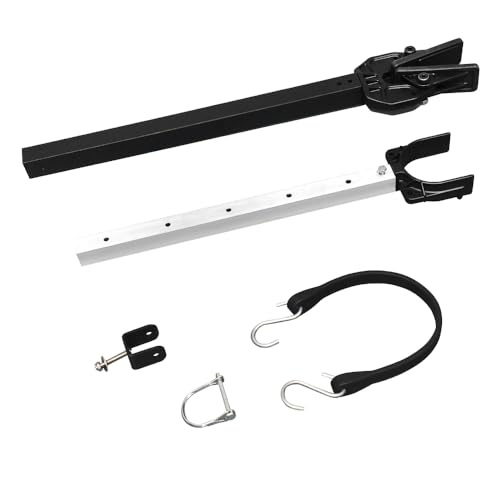
- Premium aluminum with a composite head to reduce engine contact wear.
- Supports motors up to 100 HP on roller or trailer mounts.
- Designed to minimize stress on the transom during transport.
Best for: Those needing a robust, all-aluminum build with a protective composite head; limitation: may be heavier than some budget options.
JY PERFORMANCE Universal Transom Saver

- Adjustable from 28″ to 59″ for motors up to 150 HP.
- Steel construction with strong corrosion resistance.
- Rubber V-block protects the outboard during transport.
Best for: Users with larger, higher-horsepower outboards who need a longer reach and upgraded shock protection; caution: heavier unit may require stronger mounting hardware.
Buying Guide: Key Considerations For Pontoon Transom Savers
What size outboard do you have? Confirm the transom saver’s reach and maximum horsepower rating to match your motor. If you trailer on both rollers and bunks, choose a model with dual mounting options for compatibility.
What mounting style do you prefer? Consider both roller and trailer brackets, plus the ability to remove the saver easily for launching. A rubber or V-block contact surface can reduce vibration and protect the engine.
Materials and corrosion resistance matter on saltwater trips. Aluminum is lightweight and sturdy, while steel saves cost but may require more care in harsh environments.
Weight distribution and installation. A good transom saver should transfer motor weight away from the transom to the trailer, minimizing bounce and fatigue. Ensure the saver aligns with the boat’s transom height and the trailer’s ground clearance.
Maintenance and longevity. Look for a solid head design (composite or reinforced) and protective finishes that resist road spray, salt, and freshwater exposure for longer service life.
FAQ
- What is a transom saver used for? It transfers the motor’s weight to the trailer, reducing transom stress during towing and preventing damage from road vibrations.
- Can I use any transom saver on any boat? Most savers are designed for a range of motors up to specific horsepower. Check compatibility with your outboard’s weight, mounting points, and trailer type.
- Should I choose a longer transom saver? Longer savers provide more adjustable range and can fit larger outboards, but ensure mounting space on your trailer and transom is sufficient.
- Is a composite head better than aluminum for the transom? Composite heads can reduce scratching and provide stable contact, while aluminum heads offer durability and lower weight. The best choice depends on usage and budget.
- How do I know if I installed it correctly? The saver should hold the motor securely with minimal movement, evenly distribute weight, and not interfere with launching or trailer operation.
- Are transom savers suitable for saltwater use? Yes, but prioritize corrosion-resistant materials and protective coatings to maximize lifespan in saltwater environments.