Answering the question of which pontoon boat trailer rollers deliver smoother loading and safer transport, this guide highlights five well-suited options. Each product is evaluated for who it’s best for, installation notes, and any limitations. This helps buyers choose rollers that align with their boat size, trailer type, and loading preferences. The table below summarizes key choices to compare at a glance.
| Product | Best For | Notes |
|---|---|---|
| COLOFULWAY 9″ Side Guide Roller | Standard trailer setups; mid-size pontoon trailers | Resists oil, fuel, and salt; fits standard brackets |
| Colinktool Adjustable Side-Mount Roller Guide-Ons | Pontoon trailers needing easy loading and scratch protection | Includes hardware; two rollers per pair |
| VELPAX Heavy Duty Boat Trailer Roller | Heavy-duty needs; larger or multiple boats | 2000 lb capacity; carbon steel with powder coat |
| CE Smith Pontoon Roller Guide-On | Pontoon boat trailer guides; easy setup | U-bolt mounting; galvanized steel |
| Desunqin Pontoon Trailer Guides Poles | Night-time visibility and secure loading | Reflective strip; steel + UPVC sleeve |
COLOFULWAY 9″ Black Molded Rubber Side Guide Roller

The COLOFULWAY 9″ Side Guide Roller is a molded rubber unit designed to resist oil, fuel, and salt corrosion. It measures 9 inches long and 2 inches in diameter with a 0.6 inch hole, making it compatible with standard brackets and shafts. Best for buyers with common trailer setups seeking durable, low-maintenance side guidance for mid-size pontoon trailers. A potential limitation is if your bracket or shaft size differs from standard configurations, requiring alternative mounting adjustments.
Colinktool Adjustable Side-Mount Roller Guide-Ons

Colinktool offers a heavy-duty steel side-mount roller guide-on system with two rubber rollers per pair, designed to protect finishes while guiding a pontoon boat onto the trailer. This setup is best for trailers that require firm, scratch-free contact and a straightforward installation. Choose this if you want a ready-to-install pair with included hardware; it may be heavier than molded rubber options and could require more care during mounting on lightweight brackets.
VELPAX Heavy Duty Boat Trailer Roller

VELPAX presents a robust roller with a 2000 lb load capacity. The bunk is 47 inches long and 2 inches tall, with carbon steel construction and a powder-coated finish to resist rust. This option is best for larger boats or families who require sturdy performance and longer support along the trailer bunk. A potential limitation is the added weight and longer install footprint, which may affect trailer balance on smaller setups.
COLOFULWAY 12″ Side Guide Roller
This COLOFULWAY 12″ Side Guide Roller uses a molded rubber body for durability and corrosion resistance. It measures 12 inches long with a 2-1/2 inch diameter and a 0.75 inch mounting hole, making it suitable for standard brackets and longer contact surfaces on pontoon trailers. Best for users needing extended guide coverage; be mindful of space constraints on compact trailer configurations.
CE Smith Pontoon Roller Guide-On
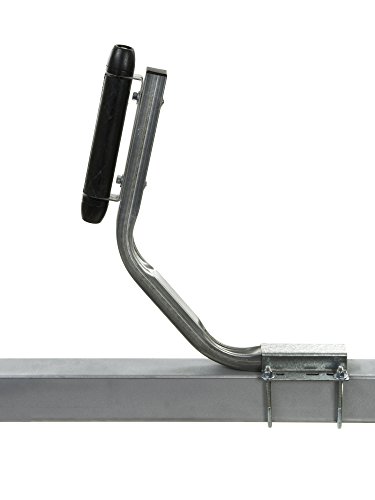
The CE Smith Pontoon Roller Guide-On offers smooth loading with a secure fit up to 3 inches wide by 4-1/4 inches tall. Galvanized steel and simple U-bolt mounting facilitate quick installation for pontoon trailers. This option is best for buyers prioritizing a dependable, metal guide-on that resists corrosion, though it may be less flexible for unusual hull shapes.
Desunqin 2-Pack Pontoon Trailer Guides Poles

Desunqin provides a 2-pack of pontoon trailer guide poles featuring a high-visibility reflective strip for nighttime or low-light loading. The kit emphasizes precise positioning and anti-tip protection, with steel poles complemented by a UPVC sleeve for durability. This choice is best for trailers used in low-visibility conditions; be aware of the kit’s height and width to ensure it fits your trailer design.
Buying Guide
- Trailer type compatibility: Confirm that the roller size and mounting style fit your bracket, shaft, and bunk length. Standard brackets suit many options, but some boats require longer rollers or heavier-duty materials.
- Material and durability: Molded rubber rollers resist oils and salt but may wear differently than steel guide-ons. Steel or powder-coated steel offers maximum rigidity for larger boats but can be heavier.
- Loading assistance: Roller-guide designs vary from simple end caps to full guide-ons with multiple rollers. Consider whether you want easy loading, better hull protection, or reduced risk of scratches.
- Visibility and safety: Reflective strips or high-visibility poles help during night loading or in bad weather. This is especially important for pontoon trailers used in low-light environments.
- Installation and maintenance: Look for packages that include hardware and clear mounting instructions. Regular inspection of rollers for cracking or corrosion extends the life of the system.
FAQ
- What is the main difference between molded rubber side rollers and steel guide-ons?
– Molded rubber rollers provide flexible contact and corrosion resistance, while steel guide-ons offer greater rigidity and load-bearing strength for larger craft. - Are adjustable guide-ons worth it for pontoon trailers?
– Yes, adjustable guide-ons accommodate different hull widths and can simplify loading by aligning the pontoon more precisely on the trailer. - Do I need reflective features on trailer guides?
– Reflective strips improve visibility at night and in poor weather, reducing loading mistakes and increasing safety. - Can I install these parts myself, or do I need a professional?
– Most products include hardware and are designed for basic DIY installation, but some setups may benefit from professional mounting if brackets require modification. - Which roller should I choose for a small to mid-size pontoon trailer?
– A molded rubber side guide roller or a compact guide-on system typically provides adequate guidance without adding excessive weight. - What should I check before purchasing?
– Verify compatibility with your trailer’s bracket size, the required mounting hole, and whether you need more coverage along the side or on the end caps.