When choosing pontoon boat jack stands, look for high lift capacity, sturdy construction, and easy mounting to your trailer tongue. This guide highlights practical options for mid-to-heavy duty trailer setups, with a focus on stability, corrosion resistance, and ease of use. The top picks below are suitable for boat trailers, RV trailers, and other utility applications, helping you keep your pontoon steady on the road or at the marina. This article targets buyers who want reliable jacks that are simple to install and durable in harsh outdoor conditions.
Product overview table:
| Product | Lift Capacity | Lift Range | Mount | Best For |
|---|---|---|---|---|
| YOMILINK 2000 lbs Trailer Jack (Silver) | 2000 lbs | 25.5″–37.8″ | Bolt-on or weld-on | Medium boats and RV trailers |
| VEVOR Heavy Duty Swivel Trailer Jack | 8000 lbs static; 5600 lbs dynamic | 7.6″–39.5″ | Bolts to tongue | Large trailers and higher profiles |
| YOMILINK 2000 lbs Trailer Jack (Black) | 2000 lbs | 25.5″–37.8″ | Bolt-on or weld-on | Similar to silver model, value option |
| FZZD 8000 lbs Heavy Duty Trailer Jack | 8000 lbs | 4.7″–33.3″ | Bolt-on or weld-on | Tall or low-profile trailers |
| Nilight 2000LBS Trailer Jack | 2000 lbs | 10″–20″ | Bolt-on | General purpose trailers |
YOMILINK 2000 lbs Trailer Jack (Silver)

The YOMILINK silver trailer jack offers a 2000 lb lifting capacity with a 25.5 to 37.8 inch height range, designed for trailer tongues from 3″ to 5″ wide. It supports easy mounting by bolting or welding, and includes a wind handle for quick cranking. Best for mid-sized boats and RV trailers that require a balance of strength and maneuverability.
Who it’s best for: boat owners and trailer owners needing a reliable bolt-on/weld-on jack that fits medium-long tongues and offers straightforward operation. Why selected: robust steel construction with galvanized tubes and a powder-coated finish for corrosion resistance.
Caution: Ensure mounting on a flat or reinforced tongue area; improper installation can affect stability under load.
VEVOR Heavy Duty Swivel Trailer Jack

This swivel jack stands out with a static lift capacity of 8000 lbs and a dynamic rating of 5600 lbs, plus a lifting range from 7.6 to 39.5 inches. It’s designed to bolt onto the trailer tongue and features a rust-resistant galvanized finish. It’s best for larger, higher-profile trailers needing substantial lifting power.
Who it’s best for: owners of larger boats or utility/yacht trailers that require strong, durable jacks with wide lift range. Why selected: high capacity and corrosion resistance address demanding trailer environments.
Caution: Heavier units require careful mounting and may need additional hardware or assistance during installation.
YOMILINK 2000 lbs Trailer Jack (Black)
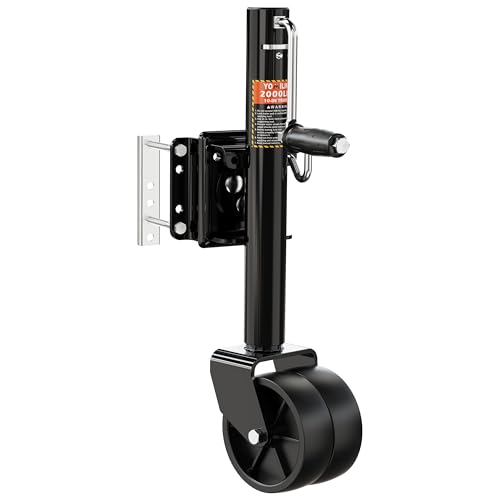
The black variant mirrors the silver model with a 2000 lb rating and the same 25.5–37.8 inch lift range. It emphasizes easy mounting options and corrosion resistance from galvanized tubes and a powder finish. Best for owners who prefer a black aesthetic on their trailer setup.
Who it’s best for: users seeking a reliable mid-range jack with consistent performance and a color option to match their trailer. Why selected: same core capability as the silver model at a favorable price point.
Caution: Verify tongue width compatibility before purchase to avoid fitment issues on narrow or oversized tongues.
FZZD 8000 lbs Heavy Duty Trailer Jack

FZZD offers a robust 8000 lb lifting capacity with a 4.7 to 33.3 inch range. It’s a side-mounted jack that can be bolted or welded, and includes an ergonomic grip for easier control. Best for tall or low-profile trailers needing precise height adjustment.
Who it’s best for: users with challenging trailer heights or heavy equipment that require consistent, high-capacity lifting. Why selected: wide lifting range and sturdy side-mounted design provide versatile fit.
Caution: Installation requires careful alignment; improper mounting can affect stability and load distribution.
TOWKING 2000 lbs Upgraded Boat Trailer Jack

The TOWKING jack is a 2000 lb lifting unit with a 10″ lift range (12″ retracted, 22″ extended). It features an upgraded wheel structure with a durable PP wheel and reinforced axle, supporting smooth movement under heavy loads. Best for mid-to-large boats needing reliable, straightforward operation.
Who it’s best for: owners who want a compact, easy-to-mount jack with good wheel performance for frequent repositioning. Why selected: clear lift range and improved wheel design aid mobility on trailers.
Caution: Wheel assembly should be checked regularly to ensure no wear or wobble develops during use.
Aukayne Boat Trailer Jack With Wheel Swivel

Aukayne’s 2000 lb capacity jack provides 12″ lift with mounting options suitable for multiple trailer tongues. It emphasizes heavy-duty steel construction with black powder coating and galvanizing for rust resistance. Best for budget-friendly, reliable performance on a variety of trailers.
Who it’s best for: budget-conscious buyers needing a solid 2,000 lb jack with good corrosion protection. Why selected: strong value proposition and straightforward mounting.
Caution: Ensure compatibility with the tongue width (2″ to 5.5″) to avoid mounting conflicts.
Buying Guide
What capacity do I need?
Choose a jack with a lift capacity comfortably above your trailer’s tongue weight. For pontoon trailers, common needs range from 2000 lbs for mid-sized boats to 8000 lbs for larger setups. Higher capacity improves safety and reduces the risk of bending or instability.
What lift range should I consider?
Look for a wide range to handle varied trailer heights and dock levels. A lower minimum helps on short tongues, while a tall maximum accommodates high-clearance boats and uneven terrain.
What mounting method is best?
Bolted-on jacks are straightforward and removable for maintenance. Weld-on jacks offer permanent, robust mounting. Ensure the tongue area is flat, reinforced, and free of corrosion before installation.
Material and durability considerations
Chromed or galvanized steel resists rust in marine environments. Powder-coated finishes extend life in salt air and water exposure. Carbon steel is common; check for corrosion protection and seam integrity.
What about mobility and usability?
Swivel heads and wheel upgrades reduce repositioning effort on trailers and docks. An ergonomic grip and smooth-crank operation minimize effort during lifting and lowering tasks.
Installation and safety tips
- Follow manufacturer mounting instructions precisely.
- Ensure load is stabilized before lifting and use wheel chocks.
- Regularly inspect fasteners, joints, and coatings for wear or damage.
Summary of buying considerations
- Capacity vs. tongue weight
- Mounting method compatibility
- Lift range flexibility for terrain and trailer height
- Corrosion resistance for marine use
- Ease of installation and maintenance
Frequently Asked Questions
- Q: Do pontoon trailers require heavier jacks than typical boat trailers?
A: Not necessarily; it depends on tongue weight and trailer height. Larger pontoons may require higher capacity jacks with longer lift ranges. - Q: Can I bolt or weld a jack to my trailer tongue?
A: Yes, many jacks support both methods. Ensure tongue material and thickness are compatible. - Q: Is a higher lift range always better?
A: Not always. Choose a range that fits your typical trailer-to-ground differences and docking conditions. - Q: How do I prevent rust on trailer jacks?
A: Choose galvanized or powder-coated models and rinse with fresh water after exposure to saltwater. - Q: Should I hire a professional for installation?
A: If mounting requires welding or structural modifications, consult a professional. - Q: How often should I inspect trailer jacks?
A: Inspect before each season and after heavy use or impact to ensure safe operation.