Answering the need for durable, non-slip, and weather-resistant coatings, this guide highlights top boat floor paints that protect decks, cabin soles, hatches, and other high-traffic areas. The selections below are best for boat owners who want a reliable, maintenance-friendly finish that resists wear, water exposure, and UV damage. Each product is evaluated for its best-suited user, longevity, and any practical limitations. Use the quick-reference table to compare core traits at a glance.
| Product | Best For | Finish Type | Surface Compatibility |
|---|---|---|---|
| TotalBoat TotalTread Non-Skid Deck Paint (White, Quart) | Owners needing a proven non-skid deck coating for boats and outdoor spaces | Non-skid textured polyurethane | Wood, fiberglass, metal above the waterline |
| TotalBoat TotalTread Non-Skid Deck Paint (Gray, Gallon) | Medium-to-large boat decks and high-traffic areas | Non-skid textured polyurethane | Wood, fiberglass, aluminum, metals |
| Rust-Oleum Marine Coatings Topside Paint (White, Quart) | Above-waterline topside surfaces on fiberglass, wood, or metal | Oil-based polyurethane | Fiberglass, wood, metal |
| TotalBoat Wet Edge Topside Marine Paint (White, Gallon) | High-gloss, durable topside areas on boats and exteriors | One-part polyurethane | Fiberglass, metal, wood, RV exterior trim |
| TotalBoat Aluminum Boat Paint (Light Gray, Quart) | Aluminum canoes, dinghies, trailers, and aluminum surfaces | One-part polyurethane | Aluminum and galvanized metals |
TotalBoat TotalTread Non-Skid Deck Paint, White (Quart)

This coating provides a durable, textured surface with low glare and high traction. The rubberized texture is designed to be less abrasive than traditional silica mixes, which helps reduce foot fatigue on long passages. The polyurethane system resists fading or peeling and cleans easily, preserving the finish through multiple seasons. Best for smaller decks or cabin soles where a white, non-slip surface is desired. Choose this if you need a reliable white deck finish that’s quick to apply and easy to maintain. A potential limitation is that white finishes can show staining more readily than darker shades.
TotalBoat TotalTread Non-Skid Deck Paint, Gray (Gallon)

This gray variant shares the same durable, textured surface and long-lasting polyurethane finish as the white version. It’s well-suited for larger decks or areas prone to scuffing, offering a less conspicuous but still highly functional non-slip surface. Best for boat decks, docks, and cabin stairs where a mid-tone finish helps conceal grime. Caution: ensure color matches your existing scheme to avoid stark contrasts on visible surfaces.
TotalBoat TotalTread Non-Skid Deck Paint, White (Quart) – Alternate Finish

This white quart offers the same non-slip texture and durable finish as the larger options, but in a smaller package. It’s ideal for touch-ups or specialty areas where a high-grip surface is required without committing to a larger volume. Better for small boats or incremental projects. A limitation is the smaller container may require more frequent purchases for larger areas.
Rust-Oleum Marine Coatings Topside Paint, White (Quart)

This oil-based topside coating is flexible and easy to apply with good leveling. It dries quickly and can cover sizable areas, making it a solid option for above-waterline surfaces on fiberglass, wood, or metal. Best for owners seeking a simple, fast-drying solution with a smooth finish. Caution: oil-based formulas require proper ventilation and cleanup with mineral spirits or appropriate solvents; follow safety guidelines.
TotalBoat Wet Edge Topside Marine Paint (White, Gallon)

This high-gloss, durable topside paint is designed to resist fading, cracking, and peeling, with a finish that remains easy to clean. It’s a versatile choice for powerboat hulls, sailboat topsides, and exterior trim. Best for long-lasting beauty and gloss retention. A limitation is the one-part formula, which may require careful thinning or application for larger jobs to maintain even coverage.
TotalBoat Aluminum Boat Paint (Light Gray, Quart)
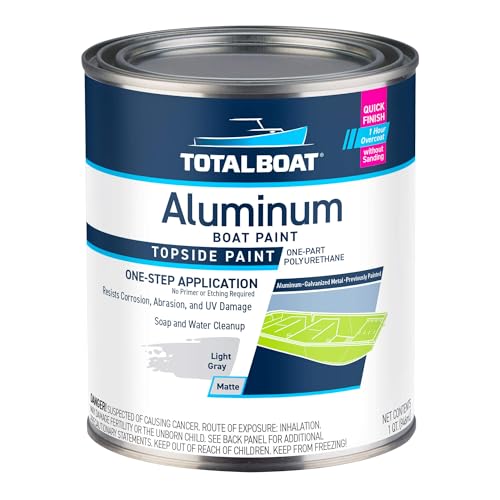
Designed specifically for aluminum and galvanized surfaces, this paint offers enhanced adhesion and resistance to chipping, scratching, and UV damage. The low-sheen finish is attractive and prints well for camo or utility patterns. Best for aluminum boats, canoes, trailers, and hunting blinds where surface durability matters. Choose this if you need a dedicated aluminum coating with quick overcoating and no priming required. Limitation: primarily for aluminum and similar metals; not ideal for wood or fiberglass above the waterline without testing compatibility.
Buying Guide
What surfaces are you painting?
Boat floors and decks are usually made of wood, fiberglass, or metal. Surface prep is crucial: clean and dry the area, repair any damage, and remove loose coatings. Non-skid deck paints are ideal for high-traffic zones, while topside paints excel on exterior surfaces above the waterline. For aluminum boats, consider a paint formulated for metal adhesion to avoid peeling.
Do you need non-slip grip?
Non-skid finishes provide traction on wet surfaces, reducing the risk of slips. They’re especially important on decks near the stern, hatch entries, and swim platforms. If slip resistance is the top priority, TotalBoat TotalTread variants are strong candidates due to their textured polyurethane finish.
Oil-based versus water-based or 1-part formulas?
Oil-based topside paints typically offer excellent leveling and durability, with faster cure times in some climates. Water-based and 1-part polyurethane options tend to be easier cleanup and safer in marinas with limited VOC rules. Choose based on local environmental guidelines and the level of odor you can tolerate during application.
Finish and color considerations
Light colors like white reflect heat and help keep decks cooler in sun exposure, while gray tones can hide dirt better. High-gloss finishes look attractive and are easier to clean, but may highlight imperfections. Align color with your boat’s aesthetic and maintenance habits.
Application and maintenance
Most products are applicable by brushing, rolling, or spraying. Follow manufacturer directions for surface prep, multiple coats, drying times, and overcoat windows. Non-skid products usually require the addition of grip-enhancing texture through the factory’s recommended method for best results. Regular cleaning with mild cleaners extends the life of the coating and maintains traction.
Environmental and marina considerations
Low-VOC or water-based options are preferred in marinas with stricter environmental rules. Some antifouling bottom paints are designed for underwater use only and should not be applied above the waterline. Always observe local regulations for paint disposal and cleanup.
Test areas and long-term planning
Test a small area to confirm adhesion, texture, and appearance before committing to a full deck. For larger projects, plan spray or roller coverage in favorable conditions to avoid lap marks and uneven textures. Consider a maintenance plan that anticipates re-coats every few seasons based on wear and exposure.
FAQ
Q: Is non-skid paint necessary on a small pontoon deck?
A: Non-skid finishes improve safety on any deck with water exposure and foot traffic. If you regularly move around wet surfaces, non-skid is recommended.
Q: Can I apply deck paint over an old, peeling coating?
A: Most paints require removal of peeling sections and a clean, stable substrate. Check product guidelines for proper prep or consult an expert before repainting.
Q: How many coats are typically needed?
A: Most deck paints require 2 coats for durable coverage, with an optional third coat in high-traffic zones or new substrates. Follow the product’s overcoat timing guidelines.
Q: Are these paints safe for marinas with strict VOC rules?
A: Yes, there are low-VOC or water-based options available. Always verify local marina rules and choose compliant products accordingly.
Q: Do these paints require priming on aluminum surfaces?
A: Aluminum-specific paints, like TotalBoat Aluminum Boat Paint, are designed for direct application with no priming required in most cases. Always prep the surface per manufacturer directions for best results.