Answering what to use when painting the bottom of a boat, this guide highlights top antifouling options that defend against barnacles, weeds, and slime. Each pick is suited to different boat types and usage patterns, from frequent sailors to occasional trailerers. The list includes ablative and hard-wearing formulas for fiberglass, wood, steel, aluminum, and even inflatable hulls. Use this quick reference to choose a paint that aligns with your boat material, water type, and maintenance preferences.
| Product | Best For | Key Benefit |
|---|---|---|
| TotalBoat Underdog Marine Antifouling Bottom Paint | Saltwater sailboats and work boats | Single-season protection with copper biocide |
| Rust-Oleum Marine Flat Boat Bottom Antifouling Paint | Fiberglass, wood, or steel boats | Slow copper release for antifouling |
| TotalBoat JD Select Ablative Antifouling (Blue, Gallon) | Power and sailboats in varied waters | Ablative, low odor, easy cleanup |
| INTERLUX YBB379G Fiberglass Bottomkote NT | Fiberglass boats | Fiberglass-specific Bottomkote NT |
| TotalBoat Spartan Boat Bottom Paint | High fouling conditions | High copper content with ablative protection |
TotalBoat Underdog Marine Antifouling Bottom Paint
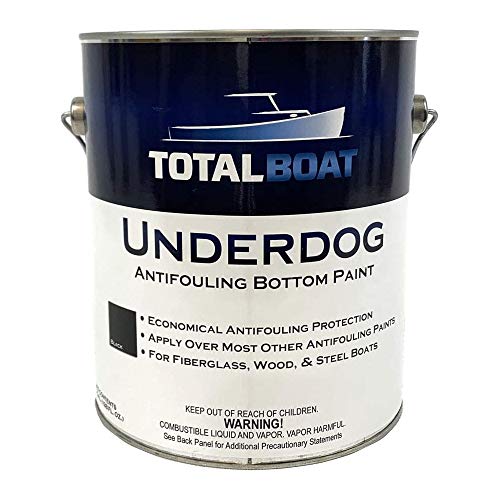
Best for boats that operate regularly in saltwater, Underdog provides economical, single-season protection with copper biocide to deter barnacles and mussels. It is suitable for properly prepared fiberglass, wood, steel, and iron hulls, and its ablative-like behavior minimizes paint buildup as the season progresses. Choose this if you use your boat frequently and want straightforward maintenance without long dry-season prep.
Limitations: The coating wears away over a season, so reapplication is necessary for ongoing protection. Best used on boats that can tolerate annual repainting and hull prep.
Rust-Oleum Marine Flat Boat Bottom Antifouling Paint

Best for fiberglass, wood, or steel hulls seeking a reliable antifouling solution with predictable, slow copper release. It’s formulated to prevent fouling and can be recoated in about four hours, with a launch window around 16 hours, covering up to 110 square feet. Pick this for straightforward, adjustable re-coating schedules and flexibility in marina environments.
Caution: It requires proper surface prep and adequate ventilation during application and curing.
TotalBoat JD Select Ablative Antifouling (Black, Quart)

Best for boats in mixed water types needing a low-odor, low-VOC option with easy cleanup. This ablative paint self-polishes as you move, reducing future buildup and allowing a smoother finish. It remains suitable for fiberglass, wood, and steel in salt or fresh water, and can be burnished for a faster, more efficient finish. Ideal when environmental restrictions favor water-based coatings.
Limitation: As with ablatives, expect wear during the season and plan for reapplication to maintain protection.
TotalBoat JD Select Ablative Antifouling (Blue, Gallon)

Best for sailors needing reliable antifouling in both salt and fresh water, this ablatable coating wears away to keep exposing fresh biocide. It minimizes bottom paint buildup, supports smoothness and speed, and reduces sanding next season. Choose this if you want a consistent, low-odor option with easy cleanup.
Note: Maintain proper ventilation and marina guidelines when applying in restricted spaces.
INTERLUX YBB379G BottomKote NT (Fiberglass)

Best for fiberglass hulls requiring a dedicated bottom coating, this Bottomkote NT formulation targets fiberglass surfaces with compatibility and performance designed for that material. It provides a stable antifouling layer that supports longer intervals between maintenance cycles. Choose when fiberglass is the primary hull material and you favor material-specific compatibility.
Caution: For non-fiberglass hulls, ensure the product is appropriate for the substrate to avoid adhesion issues.
TotalBoat Spartan Boat Bottom Paint

Best for high fouling conditions, Spartan uses a high copper content to provide robust protection against barnacles and slime in varied waters. The coating is smooth and abrasion-resistant for better speed and fuel efficiency, with an ablative formula that reduces buildup. It remains burnishable to achieve a racing-style finish. Use when frequent anchoring or long stays in high fouling zones are expected.
Limitation: Higher copper content may require more careful environmental considerations in sensitive waters or marinas.
TotalBoat Alumipaint AF (Aluminum Pontoon)

Best for pontoon and aluminum hulls, Alumipaint AF is a copper-free antifouling option designed for aluminum boats. It uses ablative principles to continually expose fresh biocide, reducing fouling without copper-based biocide. Choose this if your hull is aluminum or a pontoon structure where copper damage is a concern and you prefer a non-metal biocide approach.
Limitation: Copper-free formulas may offer different long-term protection profiles in heavy fouling situations compared to copper-rich paints.
Buying Guide: Key Purchase Considerations
What hull material do you have? Choose coatings formulated for fiberglass, wood, steel, or aluminum to ensure proper adhesion and performance.
How often do you repaint? Ablative paints wear away with use and require reapplication, while hard or quasi-static coatings may last longer between coats.
What water type do you sail in most? Saltwater bays, brackish water, or freshwater can influence antifouling efficacy and maintenance cycles.
Are environmental or marina restrictions a factor? Low-VOC and low-odor formulas help with compliance in many marinas and restricted areas.
How important is ease of cleanup and odor? Low-VOC, water-based paints are easier to clean and handle, often at the cost of longer drying times.
Do you need a copper-based or copper-free option? Copper-based products typically provide strong protection but may raise environmental considerations in sensitive waters.
Frequently Asked Questions
- What is the difference between ablative and hard antifouling paints?
Ablative paints wear away as the boat moves, exposing fresh biocide and reducing buildup, while hard coatings stay and require either scrubbing or sanding to maintain smoothness.
- How often should I repaint the hull?
Repainting frequency depends on use, water type, paint type, and hull material; ablatives often require annual or seasonal reapplication, while some hard coatings last longer.
- Can I apply antifouling paint over an old layer?
Generally yes, but surface preparation is essential. Follow manufacturer guidelines to ensure proper adhesion and performance.
- Is copper-free antifouling paint as effective as copper-based options?
Copper-free formulas can provide good antifouling performance, especially in sensitive waters, but efficacy varies with water conditions and boat usage.
- Do marine environmental rules affect coating choices?
Yes. Some marinas require low-VOC or water-based paints; always verify local regulations before painting.