Answering the common buyer question: which outboard mounted trolling motor fits my boat and fishing style? This guide compares five top options to help boaters choose based on thrust, shaft length, durability, and use case. Ideal for fresh or saltwater anglers, small jon boats, kayaks, and larger boats needing more power, these picks cover a range from compact 30 lb thrust to heavy-duty 86 lb thrust. Below, you’ll find clear, comparison-friendly details and a concise buying guide to aid quick decisions.
Overview at a glance:
| Product | Best For | Thrust | ||
|---|---|---|---|---|
| Newport NV-Series 55 Lb | Budget-friendly all-day trolling | 55 lb | 30 in | LED battery indicator |
| Newport NV-Series 36 Lb | Compact, lightweight setups | 36 lb | 30 in | Weed-friendly 2-blade prop |
| Minn Kota Endura C2 30 Lb | Reliable freshwater trolling | 30 lb | 30 in | 10-position lever lock |
| Newport Kayak Series 55 Lb | Kayak or compact craft | 55 lb | 24 in | Durable kayak shaft |
| Newport NV-Series 86 Lb | Heavy boats and tougher conditions | 86 lb | 36 in | Strong 3-blade prop |
Newport NV-Series 55 Lb Transom Trolling Motor

Best for budget-conscious anglers who need all‑day trolling without overheating or excess noise. This 55 lb thrust electric motor features a 30-inch shaft, a 6-inch telescoping tiller, and a 3-blade prop for solid low-end torque. It includes a 5-LED battery meter and adjustable mount height and angle. With eight speeds (five forward, three reverse) and a top speed around 4 mph, it suits small to mid-sized boats in calm to moderate conditions. A caution: performance varies with boat weight and water current, so choose this if your craft is not heavily loaded.
Newport NV-Series 36 Lb Transom Trolling Motor
Best for light-to-moderate loads where quiet operation is valued. This 36 lb thrust motor uses a 30-inch shaft, a 5-LED battery meter, and a 2-blade propeller, with an 8-speed control (five forward, three reverse). The 6-inch tiller provides solid control, and the mount can be adjusted and locked. It’s a solid choice for anglers fishing in shallow waters or smaller craft where minimal draft and noise are priorities. Limitation: less thrust than higher-powered models, so not ideal for larger boats or windy conditions.
Minn Kota Endura C2 Transom-Mount 30 Lb

Best for freshwater trolling where durability and ease of use matter. The Endura C2 offers a 30 lb thrust, a 30-inch shaft, and a telescoping 6-inch tiller for comfortable control. It includes a push-to-test battery meter and a 10-position lever lock bracket for quick angle adjustments. The reinforced composite construction provides resistance to flexing and UV exposure. Note: built primarily for freshwater; saltwater use may require corrosion-resistant accessories when applicable.
Newport Kayak Series 55 Lb Transom Motor
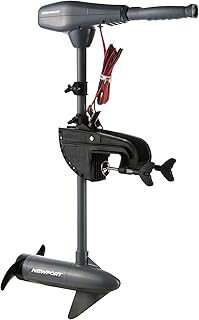
Best for kayaks or compact craft needing more power without a long shaft. This model uses a 24-inch fiberglass kayak shaft for flexible depth placement, with eight speeds (five forward, three reverse) and a six-inch telescoping handle for precise steering. It’s designed with saltwater-ready hardware and a lead-acid 12V system for dependable operation. Choose this if stability and depth flexibility are crucial on a small platform, but be aware the shorter shaft may limit use on deeper bow configurations.
Newport NV-Series 86 Lb Transom Trolling Motor
Best for power-demanding boats in challenging water conditions. This 86 lb thrust motor delivers strong performance with a 36-inch shaft, a five-LED battery indicator, and a 6-inch telescoping tiller. It has a 3-blade propeller optimized for low-end torque to move heavier craft effectively. Top speed is around 4 mph, depending on boat weight and environmental factors. Limitations include higher weight and potential handling considerations on smaller boats.
Buying Guide: Key Considerations for Outboard Mounted Trolling Motors
What boat size and weight will the motor move effectively? Thrust should match hull weight plus gear. Heavier boats require more thrust to reach planing or trolling speeds without strain.
How long should the battery last? Look for motor models with battery indicators and efficient duty cycles to minimize runtime uncertainty on long trips.
What shaft length do you need? Shallow-water boats and kayaks benefit from shorter shafts; larger vessels often require 30-36 inch shafts for proper clearance and steering leverage.
Is the motor suited for saltwater or freshwater? Saltwater-ready hardware, corrosion resistance, and zinc or stainless components extend lifespans in brackish or marine environments.
How will you control the motor? Tillers provide direct control; 8-speed models offer more precision. Consider ease of mounting, tilt, and lock features for stability during trolling.
Practical Buying Tips
- Match thrust to your boat’s displacement and typical load to avoid underpowered performance.
- Prefer models with adjustable mount height and angle for flexible trolling positions.
- Check for weed resistance and prop design suitable for your typical water vegetation.
- Evaluate shaft length against your boat’s transom height and trolling depth needs.
- Consider the reliability of the battery meter and overall build quality for long seasons.
FAQ
- What is a good thrust range for a small boat? For small boats under 16 feet, 30-55 lb thrust is typically sufficient for trolling and calm conditions.
- Can I use a saltwater trolling motor in freshwater? Yes, but ensure corrosion protection is suitable for freshwater conditions and check warranty terms.
- How long does a trolling motor battery last? Battery life depends on thrust level, boat weight, water current, and wind; higher thrust drains the battery faster, so plan for mixed speeds.
- Is a longer shaft always better? Not always. Longer shafts help with water clearance on larger boats or deeper transoms, but may be harder to mount on compact boats.
- What maintenance is required? Rinse with fresh water after saltwater use, check prop bolts, and inspect electrical connections for corrosion-free operation.
- Should I choose one with a 3-blade prop? A 3-blade propws provides good low-end torque for moving through weeds and heavy cover; 2-blade props may be more efficient in open water.