Protecting your outboard and related equipment from rust, corrosion, and salt damage is essential for reliability and longevity. This guide highlights five top products designed to shield engines during storage, flushing, and regular maintenance. Ideal buyers include boat owners preparing for off-season storage, coastal anglers needing ongoing corrosion control, and gear enthusiasts who value long-term engine health. Compare options below to choose the best fit for your setup and climate.
| Product | Best For |
|---|---|
| STAR BRITE Deep Penetrating Fogging Oil | Seasonal storage and internal engine protection |
| Concentrated Salt Remover Flush Kit + Corrosion Protection | Salt removal and corrosion prevention for boats and trailers |
| STAR BRITE Star Tron Low-Viscosity Gear Lube 80W90 | Lower units and stern drives; anti-wear and anti-corrosion |
| Salty Captain Marine Engine Flush | Anti-corrosion protection and salt removal for engines |
| Salt Shift Marine Engine Flush | Fast salt removal with corrosion protection for marine engines |
STAR BRITE Deep Penetrating Fogging Oil

Features: Maximum rust and corrosion protection for internal engine parts during long-term storage; quick startup aid after inactivity; versatile application across marine engines, lawn care equipment, snowmobiles, ATVs, motorcycles, and more. This product is best for seasonal storage where rust prevention is critical and startups after storage are a priority. Limitation: may require thorough application and coverage for best results in very humid environments.
Concentrated Salt Remover Flush Kit + Corrosion Protection
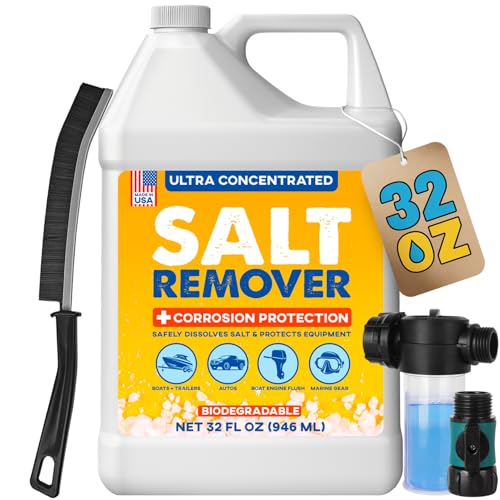
Features: 2X the active cleaning ingredients for reliable salt-dissolving results; includes a mixing applicator with four dilution settings and a detail brush; doubles as an engine flush kit; corrosion-inhibiting formula to guard equipment between uses. Best for boat owners and trailers needing both salt removal and corrosion protection. Limitation: concentration requires correct dilution for effective coverage, or use as directed with the included applicator.
STAR BRITE Star Tron High Viscosity Lower Unit Gear Lube 80W90
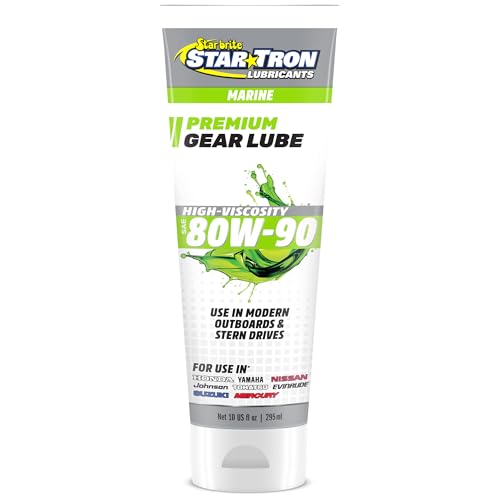
Features: Anti-wear and rust/corrosion inhibitors; designed for lower units and stern drives; compatible with a wide range of outboard motors. Best for protecting gearcase internals and reducing wear in harsh saltwater or freshwater conditions. Limitation: specific to lower unit lubrication; not a full engine storage solution alone.
Salty Captain Marine Engine Flush
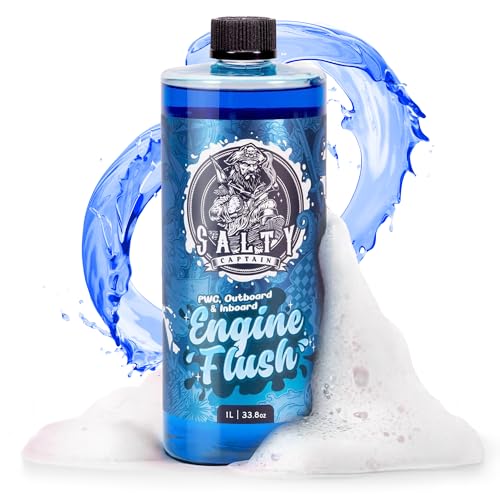
Features: Removes salt, sand, and oil buildup to optimize engine performance; anti-rust and corrosion inhibitors protect the motor between uses; designed for quick and effective flushing with easy use. Best for regular maintenance to prevent corrosion in saltwater environments. Limitation: formulation is flush-based, so it complements a broader protection plan rather than serving as a single storage solution.
Salt Shift Marine Engine Flush

Features: Fast-acting salt removal (about 30 seconds) with an advanced corrosion barrier; eco-friendly, pH-neutral formula safe on gaskets and rubbers; suitable for engines in saltwater or freshwater. Best for quick maintenance cycles and protecting critical seals. Limitation: some users may prefer additional external protection for prolonged storage in extremely saline conditions.
Buying Guide
What should you consider when choosing corrosion protection for outboard motors?
- Storage needs: If you winterize or store seasonally, opt for fogging oils or internal corrosion inhibitors designed to protect bare metal and internal components during inactivity.
- Saltwater exposure: For coastal conditions, prioritize products with salt-removal capability and corrosion inhibitors to guard against salt carries and rust formation.
- Maintenance routine: Use engine flush products to remove salt and deposits before applying a protective layer; pair flushing with lubricants to minimize friction and wear.
- Compatibility: Ensure the product is suitable for your engine type and lower unit materials; some formulas are specifically designed for lower units, others for full engines or storage.
- Application ease: Consider kits that include hoses, brushes, or applicators, making the process quicker and more thorough in hard-to-reach areas.
Practical Purchase Considerations
- Choose a multi-use option if you own multiple engines or equipment beyond boats (e.g., lawn equipment, ATVs).
- Assess whether you need an immediate flush solution or a lasting barrier against corrosion during storage.
- Factor in your maintenance schedule and climate to decide how often you should apply protection.
Frequently Asked Questions
- What is the best protection for an outboard stored for the winter?
Answer: A fogging oil or internal storage protective product helps prevent internal corrosion and eases startup after storage. - Can I use engine flush daily to protect against corrosion?
Answer: Flushing is generally for removing buildup and salt; follow with a protective lubricant or corrosion inhibitor as appropriate for your engine. - Is salt remover enough to prevent corrosion on its own?
Answer: No; salt removal is important, but adding corrosion inhibitors or oil-based protection completes the protection plan. - Are these products safe for all engine seals and gaskets?
Answer: Most are designed to be safe for common seals, but always check the product’s suitability for your specific seals and material compatibility. - Should I combine a gasoline-storage additive with corrosion protection?
Answer: In some cases, yes; use storage-specific products as directed and maintain a routine that addresses both fuel and metal protection. - How often should I apply corrosion protection in saltwater environments?
Answer: Frequency depends on usage and exposure; coastal environments may require more frequent applications, especially after heavy usage or long idle periods.