If you need a dependable outboard motor bracket for a sailboat, this guide highlights five solid, proven options suitable for 7.5–20 HP engines. Each pick balances durability, adjustability, and ease of use, helping you choose based on motor weight, mounting space, and sailing conditions. Ideal buyers include weekend sailors requiring simple, reliable auxiliary power, small yacht owners needing quick-height adjustments, and ferry or tender operators seeking sturdy, corrosion-resistant brackets. The table below compares the five best-sellers to help you compare at a glance.
| Product | Brand | Mounting Range | Material | |
|---|---|---|---|---|
| Marinebaby Boat Outboard Bracket | Marinebaby | 7.5–20 HP | Aluminum with stainless springs | Heavy-duty saltwater use, wider range |
| Outboard Motor Bracket Auxiliary Stainless Steel | Mojiate | 7.5–20 HP | 304 stainless steel | Rugged, corrosion resistance |
| Panther 55-0410 Auxiliary Outboard Bracket | Marinetech | 10″ to 5 positions | Anodized aluminum | Best for four-stroke, long/short shaft |
| FUTURUP Boat Outboard Bracket | FUTURUP | 7.5–20 HP | Aluminum with plastic base | Retractable, wide base stability |
| Haida 2 Stroke Outboard Bracket | Haida | 7.5–20 HP | 304 stainless steel | Solid mounting after corrosion protection |
The following sections present concise product details to help you pick quickly. Each entry notes who it’s best for, why it was selected, and a practical limitation to consider.
Marinebaby Heavy Duty Aluminum Motor Bracket
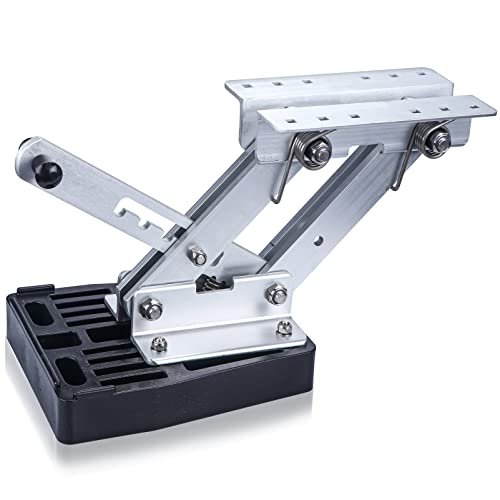
Best for: Sailors needing a robust bracket for saltwater use with broad motor compatibility. The Marinebaby model supports 7.5–20 HP two-stroke engines and includes a stainless steel spring counterbalance and a solid polypropylene mounting board. Height Adjustment ranges from 195mm to 320mm across five fixed positions, enabling quick changes for different load and wave conditions. Limitation: heavier aluminum build may require secure mounting and heavier lifting during installation.
Mojiate Outboard Bracket Stainless Steel

Best for: Boats requiring rugged stainless steel construction for long-term exposure. The Mojiate bracket is designed for 7.5–20 HP two-stroke engines, featuring a heavy-duty welded frame, reinforced stainless components, and a 4-position vertical adjustment. The base is plastic, which may simplify installation. Limitation: overall weight and size should be checked against deck space and mounting area to avoid crowding anchors or lines.
Marinetech Panther 55-0410 Auxiliary Bracket

Best for: Trolling motors or auxiliary 4-stroke setups. The Panther bracket supports five vertical running positions and uses an anodized aluminum frame with a 2-inch thick mounting board. It’s designed to handle heavier torque and features stainless steel hardware for durability. Limitation: taller profiles may affect cockpit or deck clearance on smaller sailboats.
FUTURUP Aluminum Boat Outboard Bracket

Best for: Sailors seeking retractable ease with stable mounting. FUTURUP’s bracket is all-aluminum with a plastic base and supports 7.5–20 HP. Features include a four-position height lock and a wide track body for added stability, plus reinforced welded frame and stainless steel parts. Limitation: base plastic may be more susceptible to wear in very rough saltwater conditions; ensure proper maintenance and cleaning.
Haida 2 Stroke Outboard Bracket Kicker

Best for: Boats prioritizing stainless steel construction for corrosion resistance. Haida’s bracket handles 7.5–20 HP 2-stroke motors with a 304 stainless steel build and a plastic base. Lifting is manually operated, and the lift range is sufficient for most shallow-water runabouts. Limitation: manual lift requires effort, which can be challenging under sailboat motion or rough seas.
Buying Guide: Key Purchase Considerations
- Motor compatibility: Confirm the bracket supports your engine’s HP and shaft type (two-stroke vs four-stroke). Look for 7.5–20 HP coverage as a common standard in these brackets.
- Material and corrosion resistance: Stainless steel or anodized aluminum offer better saltwater durability. Consider environmental exposure and maintenance needs.
- Mounting footprint: Check mounting size and base dimensions to ensure a fit on your transom or docking location. Wider bases often offer stability but require deck space.
- Height and tilt options: Five- or four-position height adjustments help adapt to varying load, water conditions, and propeller clearance.
- Weight handling: Ensure the bracket can support the motor’s weight, plus any accessories like a tiller, controls, or mounting hardware.
- Ease of maintenance: Retractable or easily adjustable designs save effort during frequent sail changes or trolling scenarios.
Frequently Asked Questions
- What is the typical HP range for these brackets?
Most brackets in this category support 7.5 to 20 HP engines, suitable for small sailboats and tenders. - Are stainless steel brackets better than aluminum?
Stainless steel offers excellent corrosion resistance, especially in harsh saltwater. Aluminum brackets are lighter and can be rigid but may require more care against corrosion if not alloyed well. - Do these brackets adjust in height easily?
Yes. Many models provide multiple vertical positions and quick-release or hand-turn adjustments to adapt to changing conditions. - Is a retractable bracket beneficial?
Retractable designs help when maneuvering in tight spaces or when sailing with low clearances, but may add weight and cost. - Which bracket is best for four-stroke motors?
Brackets designed for higher torque and heavier duty, such as the Marinetech Panther and similar models, tend to perform well with four-stroke motors due to stability and mounting strength. - What should I check before buying?
Confirm mounting footprint, weight capacity, lift range, and compatibility with your shaft length (short/long) to avoid clearance issues.