Whether you’re building a performance RC boat or upgrading an existing hull, choosing the right motor matters. This guide highlights five motors that balance power, durability, and value for American hobbyists and students alike. Each pick fits different project goals—from budget-friendly builds to high-torque racers—so you can match the motor to your boat size and driving style.
Summary of selected products:
| Product | Best For | Key Benefit | Limitations |
|---|---|---|---|
| COKOLATIA 2.4G 4-Channel RC Boat Kit | Starter to mid-range builds | Complete kit with motors, drive shaft, and propeller | Requires additional components for full setup |
| Surpass Hobby 1250KV Brushless Motor | High speed and efficiency | Excellent cooling and torque | Higher price vs brushed options |
| INJORA 550 Brushed Waterproof Motor | Budget builds and rugged use | Cost-effective, weatherproof, strong torque | Brushed design may wear faster than brushless |
| Surpass Hobby 3660 Brushless Motor | Mid-to-large boats with power needs | Excellent torque and cooling | Requires proper cooling setup |
| Surpass Hobby 3670 2280KV Brushless Motor | High-performance boats | High efficiency and power for bigger hulls | Premium option; careful matching to boat size |
COKOLATIA 2.4G 4-Channel RC Boat Kit

Best for hobbyists starting with a complete, DIY boat project. This kit includes a 2.4G 4-channel remote, a 180 motor set, motor mount, drive shaft, and propeller, enabling straightforward assembly and control. The setup supports forward, backward, and turning maneuvers, making it a solid entry point for schools or clubs building class projects or weekend racer builds.
Who it’s for: beginners and students who want a ready-to-assemble platform with expandability. Why selected: a cohesive kit reduces part hunting and ensures compatibility among core components. Limitation: it does not function as an airplane model and may require additional batteries and radios for extended sessions.
Surpass Hobby 1250KV Brushless Motor

Best for boats sized around 650–800 mm, where higher speed and efficient power delivery matter. This 1250KV brushless motor is designed for maximum power and cooling, with a four-pole design for strong torque and rapid acceleration. It uses high-quality aluminum and copper with a cooling set to support longer runs. Caution: matching with an appropriate ESC and battery is essential to prevent overheating and to ensure safe operation.
INJORA 550 Brushed Waterproof Motor
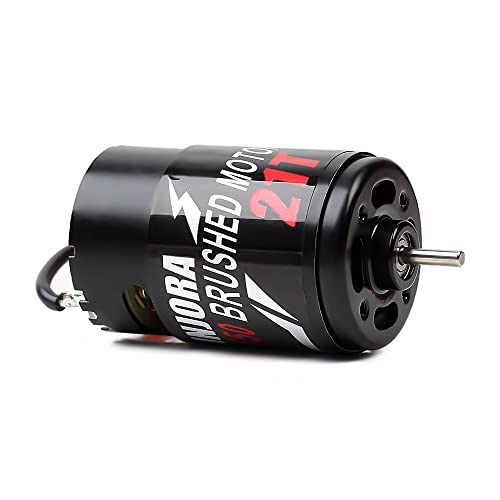
Best for budget builds or rugged, dirty-water experiments. The 550 brushed waterproof motor offers significant torque and is designed for off-road or shoreline use where exposure to moisture is a concern. It’s a cost-effective option with built-in cooling, helping to extend life. Limitation: brushed motors generally wear faster than brushless variants, and performance can decline without regular maintenance.
Surpass Hobby 3660 Brushless Motor

Best for mid-to-large RC boats needing robust thrust and efficient operation. The 3660 brushless motor is designed for 650–800 mm hulls with a cooling set to maintain performance under load. With a four-pole design and high overall efficiency, it delivers fast acceleration and reliable power. Caution: Ensure proper mounting and cooling to avoid heat buildup during prolonged runs.
Surpass Hobby 3670 2280KV Brushless Motor

Best for high-performance applications where maximum power is required in larger hulls. The 3670 2280KV motor provides strong torque and rapid throttle response, supported by cooling features to sustain output. Choose this if your boat size and gearing align with higher KV for speed. Limitation: higher KV motors demand matching with appropriate propeller size and ESC to avoid overpowering the hull or battery drain.
Buying Guide: Key Considerations For RC Boat Motors
- Motor Type: Brushless vs Brushed. Brushless motors deliver higher efficiency, cooler operation, and longer life, at a higher upfront cost. Brushed motors are budget-friendly but wear faster and require more maintenance.
- Boat Size And Weight: Larger hulls benefit from higher torque and power with suitable gearing. Smaller boats favor lighter, smaller motors to prevent battering the hull or water spray.
- KV Rating: Higher KV means higher RPM and potential speed, but may reduce torque. Lower KV offers more torque for pulling through turns or rough water. Match KV to propeller size and ESC limits.
- Cooling: Effective cooling is essential for continuous runs. Look for motors with cooling jackets or integrated fans, especially brushless designs.
- Waterproofing And Durability: Water exposure is common; choose motors rated for waterproof operation or designed for RC boats to minimize corrosion and failures.
- ESC Compatibility: Ensure the electronic speed controller supports the motor’s voltage, current, and startup characteristics. Incompatibility can cause overheating or failure.
- Propeller Matching: Prop size and pitch should align with motor KV and boat weight. Incorrect matches can reduce efficiency or stall the motor.
- Installation Space: Verify motor dimensions fit your hull’s motor mount and shaft alignment to avoid fit issues.
FAQs
- What is the main difference between brushed and brushless RC boat motors?
Brushless motors offer higher efficiency, more torque, and longer life; brushed motors are cheaper but require more maintenance and can wear faster.
- How do I choose the right KV for my boat?
Higher KV suits lighter boats for speed, while lower KV provides more torque for heavier hulls or larger propellers. Align KV with your ESC, battery, and propeller setup.
- Is cooling important for RC boat motors?
Yes. Motors generate heat, and proper cooling helps maintain performance and extends motor life, especially for high-power brushless setups.
- What should I consider when upgrading from brushed to brushless?
Check compatibility with the existing ESC and battery, ensure adequate cooling, and verify that the hull can handle the higher thrust without instability.
- Can I mix different brands of motors with one RC boat?
Mixing motors can cause imbalanced thrust and control issues. Use matched motors or consult a propulsion balance plan for the boat.
- How do I prevent overheating during runs?
Use appropriate propeller sizes, ensure proper cooling, monitor current draw, and avoid prolonged full-throttle operation in hot weather.