Find the best motor for your boat lift by matching motor power, frame size, and mounting style to your hoist. This guide highlights five reliable options with direct-drive setups suitable for waterfront applications. The ideal buyer is a marina owner, dock user, or DIY waterfront enthusiast seeking durable, easy-to-wire motors that fit common 56C C-face configurations and dual voltage operations. Below is a quick summary to compare key choices.
| Product | Best For | Notes |
|---|---|---|
| SMC YCN5654BX | Direct-drive lifts needing sturdy stainless steel construction | 1 HP, 56C frame, TEFC |
| EMZ 1 HP Boat Lift Motor | Versatile, durable waterfront lifts | Stainless steel, dual voltage 115/230V |
| EMZ 1.5 HP Boat Lift Motor | Higher lifting capacity without extra frame changes | 56C C-Face, 115/230V |
| EMZ 3/4 HP Boat Lift Motor | Compact, budget-friendly direct-drive systems | Stainless steel, 56 frame, TENV |
| Extreme Max 3012.4509 | Fast, easy install for universal lifts | Generation 5 Boss Direct Drive |
SMC YCN5654BX 1 HP Stainless Boat Lift Motor

The SMC YCN5654BX is designed for direct mounting with a 56C face and provides TEFC construction. This motor is a practical choice for mid-sized boat lifts with straightforward wiring access. It suits buyers seeking a robust, corrosion-resistant option for dockside operation.
Best for: Lifts that require a compact, high-quality stainless steel motor with easy wiring access. Choose this if you need a reliable 1 HP option that fits standard 56C mounting patterns.
Caution: Ensure your hoist’s wiring setup and voltage match 115/230V dual-voltage capability before purchase.
EMZ 1 HP Boat Lift Motor
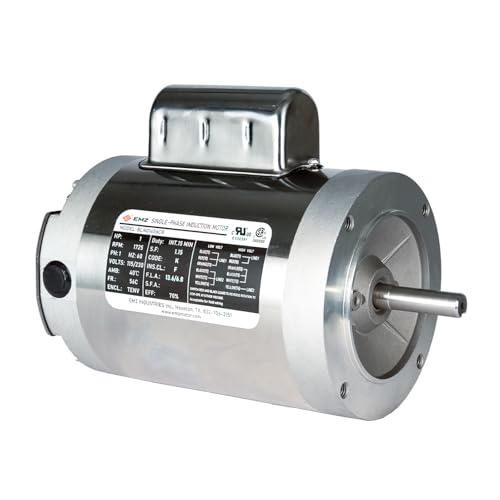
The EMZ 1 HP motor is built around a 56C frame with a C-Face mounting design and dual voltage (115/230V) operation at 1725 RPM. This stainless steel motor is suitable for direct-drive hoists in coastal environments and offers dependable replacement performance for waterfront lifts.
Best for: Buyers seeking a versatile, mid-range motor that balances durability and compatibility with common direct-drive hoists. It’s a solid general-purpose upgrade for many dockside systems.
Caution: Confirm your hoist’s exact frame, mounting pattern, and voltage before ordering to ensure compatibility.
EMZ 1.5 HP Boat Lift Motor

The EMZ 1.5 HP option shares the same 56C C-Face design and dual-voltage capability, but with higher horsepower for lifts requiring more vertical reach or heavier boats. It maintains stainless steel construction and 1725 RPM for consistent performance in waterfront settings.
Best for: Lifts that need extra lifting power without changing mounting hardware. Opt for this when a 1 HP unit doesn’t meet your load requirements.
Caution: Check that your hoist’s drive ratio and weight load align with the 1.5 HP class to avoid overworking the motor.
EMZ 3/4 HP Boat Lift Motor

This 3/4 HP EMZ motor is UL Listed and CSA Approved, designed for direct-drive boat hoists with a stainless steel shell and a totally enclosed non-venting design. It’s built to handle humid, marine environments while maintaining reliable electrical compliance.
Best for: Buyers with smaller or lighter boats who need a compliant, durable motor that fits tight marine spaces. Choose this if cost is a priority and the load demands are modest.
Caution: Verify the mounting style and voltage compatibility for your specific hoist model to ensure proper fitment.
Extreme Max 3012.4509 Generation 5 Boss Direct Drive

The Extreme Max Boss Direct Drive system emphasizes speed and ease of installation with a 120-volt setup. It’s designed to maximize lift capacity while keeping installation straightforward, with all-weather protected electronics and quiet operation for dockside use.
Best for: Users who want a fast-install, all-in-one direct-drive solution that supports quick lifting without extensive wiring. It’s a good fit for larger lifts needing quick deployment.
Caution: This system may require a designated GFI-protected outlet; ensure shore power availability aligns with the installation site.
Buying Guide
Key considerations when choosing a boat lift motor:
- Power needs: Match motor horsepower to boat weight and lift height. Higher horsepower provides faster lifting but requires appropriate frame compatibility.
- Mounting and frame: Most motors here use a 56C frame with C-Face mounting. Confirm your hoist’s mounting pattern and shaft alignment.
- Voltage options: Dual voltage (115/230V) lets you adapt to available power sources. Verify wiring and circuit requirements.
- Corrosion resistance: Stainless steel housings improve durability in saltwater or humid environments. Consider TEFC vs. open designs.
- Direct-drive vs. gear-driven: Direct-drive motors offer simpler installation; gear-driven systems can provide better torque at lifting heights but may be more complex.
- Compliance and safety: UL and CSA listings indicate electrical safety compliance—beneficial for marine installations.
- Maintenance and access: Look for motors with easy wiring access and straightforward serviceability in dockside conditions.
Practical comparison questions
- Which motor is best for a small, lightweight boat? The 3/4 HP EMZ is a cost-effective, compact choice.
- What if I need more lifting power? The EMZ 1.5 HP or the SMC 1 HP may suit heavier boats without changing mounting hardware.
- Is dual voltage important? Yes, dual voltage (115/230V) provides flexibility for varied shore power setups.
- Do I prefer a quick-install system? Extreme Max 3012.4509 offers a straightforward, all-in-one direct-drive option.
FAQ
- What frame size should I look for on a boat lift motor? Look for 56C frame with C-Face mounting to fit common hoists.
- Do I need UL or CSA listings? For marina or dock installations, listings can enhance safety and compliance.
- Can I mix manufacturers for a repair? It’s best to match mounting pattern, voltage, and RPM to avoid misfit or performance issues.
- Is stainless steel housing necessary? In saltwater environments, stainless steel improves corrosion resistance and longevity.
- What maintenance is required? Regular inspection of wiring connections, mounting bolts, and motor seals helps prevent failures in harsh conditions.
- Is 1725 RPM standard for these motors? Yes, 1725 RPM is a common speed for direct-drive marine lift motors to balance torque and efficiency.