Minding the watercraft’s safety starts with choosing the right mooring lines. This guide highlights five reliable options ideal for pontoon boats, focusing on durability, stretch, and ease of use. The top picks suit different boats and situations—from casual lakeside docking to heavier loads in choppy conditions. Read on to compare each product’s strengths and limiters, then pick the best match for your needs.
Summary of chosen products:
| Product | Best For | Key Benefit |
|---|---|---|
| dbRopes Pontoon Mooring Lines | All-around pontoon docking | High-quality nylon with stainless thimbles for durability |
| PropelTech 4 Pack 3/8″ x 15’ Dock Lines | Boats up to 21 ft | Double-braided nylon, pre-spliced, four-pack |
| Iririi 4 Feet Bungee Dock Line 2-Pack | Shock-absorbing quick-dock | Built-in snubber with quick-connect fittings |
| PACTHSD 1/2″ x 15′ Dock Lines | Heavy-duty all-weather docking | Low-stretch, high-strength nylon, double-braided |
| AIRHEAD Bungee Dock Line 6-Feet | Lightweight quick docking | Hidden bungee snubber reduces shock |
dbRopes Pontoon Mooring Lines — 5/8″ x 12′

Best for: Pontoon owners seeking high durability and long life. Why: Made from 100% nylon with stainless steel thimbles on each end, these mooring lines emphasize abrasion resistance and shock load handling. They suit frequent docking in varied conditions and maintain boat finishes thanks to sturdy construction.
Key considerations: The 5/8″ diameter supports heavier loads, but may be stiffer to manage in tight docking spaces. Use caution on sleek, polished rails to prevent paint wear if a line slides along during rough seas.
Best-use note: Choose this if you want long-lasting lines with corrosion-resistant hardware and strong abrasion resistance, especially for larger pontoon setups.
PropelTech 4 Pack 3/8″ x 15′ Dock Lines

Best for: Boats up to 21 feet needing flexible, reliable lines. Why: These pre-spliced, double-braided nylon lines deliver good stretch to absorb shocks and prevent cable misalignment during tows, while resisting UV, oil, salt, and corrosion. The four-pack simplifies stocking multiple docking stations.
Limitations: The suggested length and density fit mid-sized craft; for larger pontoons, you might need longer lines or a higher pound-breaking strength. Also, pre-spliced eyes require proper inspection to ensure loops remain secure with heavy use.
4 Feet Bungee Dock Line Mooring Rope — Iririi (2-Pack)
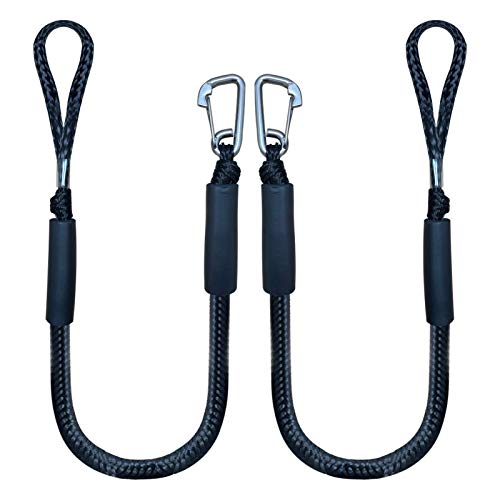
Best for: Shallow-water or quick-docking scenarios where shock absorption is a priority. Why: Built-in hidden rubber bands act as snubbers, with a stainless steel snap and foam floats to minimize boat chafing. Suitable for PWC, small motorboats, and pontoons up to moderate weights.
Limitation: The 4-foot length may be too short for typical wide pontoon tie-ups; ensure your docking setup allows comfortable reach without over-tensioning the line.
PACTHSD 1/2″ x 15′ Dock Lines

Best for: Docking in challenging conditions where higher strength is needed. Why: The double-braided nylon provides high durability, low stretch, and strong shock-load absorption, ideal for lakes, rivers, and marinas. The 12″ eyelet pre-splice helps quick attachment to cleats and posts.
Caution: While strong, the heavier diameter reduces flexibility in tight spaces. Verify your cleat sizes and dock hardware before purchase to ensure secure fits.
Botepon Bungee Dock Lines for Boats
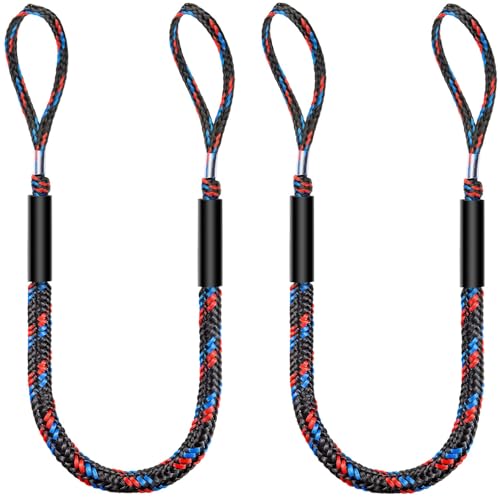
Best for: Pontoon and small boats seeking quick-connect docking without knotting. Why: These bungee lines combine quick-connect no-knots docking with built-in shock-absorption. They can protect against wave action and ease tying to cleats or posts during social outings.
Limitation: Not ideal for long-term, all-weather mooring in harsh saltwater environments without maintenance, as the bungee mechanism benefits from regular inspection for wear.
PropelTech 4 Pack 1/2″ x 15’ Dock Lines

Best for: Heavier boats requiring robust binding and high breaking force. Why: The 1/2″ diameter with double-braided nylon provides substantial strength (up to 7500 lbs breaking force) and resilience against UV, salt, and oil exposure. The set includes four lines with pre-spliced loops for quick use.
Keep-in-mind: The higher strength comes with reduced flexibility; ensure you have space to maneuver lines during tying and docking operations to prevent over-tensioning.
Buying Guide: How To Choose Mooring Lines For Pontoon Boats
What size and strength do I need?
Choose diameter and length based on boat size and typical docking conditions. Larger pontoons benefit from thicker lines with higher break strength. Measure cleat size and consider a line with a comfortable length to reach without excess slack or tension.
What about material and construction?
Double-braided nylon offers a balance of strength, stretch, and abrasion resistance. Nylon handles shock loads well, reducing hull stress during waves or wakes. Look for lines with stainless hardware to resist corrosion in marine environments.
Shock absorption vs. adjustability
Line options with built-in snubbers or bungee components help absorb shock and protect the boat and dock equipment. These are ideal for active docks or boats with sensitive finishes.
How many lines should I stock?
Having a mix is practical: at least one heavy-duty line for main docking, plus a few lighter lines for quick tie-ups and different dock configurations. Spliced eyes are convenient, but check they are intact before use.
Maintenance and inspection
Regularly inspect for wear, fraying, or chemical damage from fuel, salt, or sun exposure. Replace lines showing signs of wear to prevent sudden failure during docking.
Installation tips
- Store lines neatly to avoid tangling and kinking.
- Keep separate lines for different docking stations to minimize cross-use wear.
- Test the line in safe conditions before relying on it in rough water.
FAQ
- Q: What docking line diameter is best for a 24-foot pontoon? A: A 1/2″ to 5/8″ line is commonly suitable, depending on the load and dock setup.
- Q: Should I choose a braided or twisted line? A: Braided lines resist kinking and abrasion; they perform better under load. Braided lines are usually preferred for pontoon boats.
- Q: Are pre-spliced lines better than loose ends? A: Pre-spliced lines save time and reduce knotting, but inspect the splice regularly for security.
- Q: How important is UV resistance? A: Very important; UV damage weakens synthetic fibers and reduces life span, especially in sunny climates.
- Q: Can I mix bungee lines with standard dock lines? A: Yes, for shock absorption and quick docking, but ensure the lengths and tensions are appropriate for safe docking.
- Q: How many lines should I keep as backups? A: It’s prudent to have at least two extra lines of similar strength for contingency docking.