Answering the question “which marine strainers and filters are best for my boat?” this guide highlights reliable options for different setups. The top picks cover raw sea-water intake, inline strainers for pumps, and mesh screens that protect critical equipment. Ideal buyers include boaters seeking durable, easy-to-clean filtration, RV or marine enthusiasts needing compact inline strainers, and systems where clear bowls aid maintenance reminders. Below is a quick, decision-focused snapshot of the five highlighted products.
| Product | Brand | Mesh/Screen | Best For |
|---|---|---|---|
| SEAFLO Raw Sea Water Filter/Intake Strainer | SEAFLO | Multiple sizes (1″, 1-1/4″, 1-1/2″) | Harsh saltwater intake protection |
| Groco Intake Strainer with Filter Basket | Groco | 2 mm holes | Durable, serviceable basket design |
| 3/4″ Female NPT In-Line Strainer 100 Mesh | SAFBY | 100 mesh | High-flow inline protection |
| SAFBY In-Line Strainer 100 Mesh (1″) | SAFBY | 100 mesh | Compact inline protection for smaller lines |
| Twist-On RV Water Pump Strainer 80 Mesh (2 Pack) | LDCRE | 80 mesh | RV/marine pump protection, value pack |
SEAFLO Raw Sea Water Filter/Intake Strainer

The SEAFLO raw sea-water intake strainer is designed for flexible hose connections, including 1 inch, 1-1/4 inch, and 1-1/2 inch diameters. It’s best for boaters who need an adaptable, corrosion-resistant intake filter that protects pumps and engines from debris and marine growth in saltwater environments. The durable marine-grade construction supports constant exposure to sea water while maintaining filtration performance. A potential limitation is the need to verify hose compatibility for certain plumbing layouts.
Who it’s best for: Cruisers and anglers upgrading a raw sea-water intake with a versatile, corrosion-resistant strainer.
Why selected: Multi-size compatibility reduces parts variety, while raw-water protection helps prevent pump damage in challenging marine conditions.
Caution: Confirm the hose size before purchasing to ensure a proper fit in your system.
Key considerations
- Material: corrosion-resistant, marine-grade components
- Compatibility: check hose diameters and mounting options
- Maintenance: inspect for clogs and clean as needed
Groco Intake Strainer With Filter Basket

The Groco intake strainer features a 304 stainless steel basket with 2 mm holes and o-rings on mating surfaces for a tight seal. The screw-on cap design makes maintenance straightforward and predictable. It’s best for boat systems that require a rugged, serviceable filtration solution in both fresh and saltwater contexts. A limitation is that the basket size may not suit very small-diameter lines, so confirm compatibility with existing piping.
Who it’s best for: Boats needing a robust, easily-maintained strainer with a resealable basket.
Why selected: Stainless basket and sealed interfaces reduce leakage risks and simplify routine cleaning.
Caution: Verify clearances around the cap to allow full access during service.
Key considerations
- Basket material and hole size
- Sealing surfaces and O-rings
- Maintenance accessibility
SAFBY 3/4″ In-Line Strainer 100 Mesh

This inline strainer uses a 100-mesh stainless steel filter with a mass-flow design and a twist-off bowl for easy cleaning. The nylon top and clear nylon bowl provide visibility during maintenance. It’s best for moderate to high-flow lines where debris protection is essential. A limitation is the potential need for a larger clear bowl on systems with high debris loads.
Who it’s best for: Boat owners needing reliable inline filtration without frequent disassembly.
Why selected: Easy cleaning and visible bowl make maintenance efficient on busy boats or vessels with regular debris exposure.
Caution: Ensure the 3/4″ line matches your hose fittings before purchase.
Key considerations
- Mesh size suitability for debris load
- Observation-friendly design
- Secure bowl sealing during operation
SAFBY 1-Inch Inline Strainer 100 Mesh
This inline strainer uses a 100-mesh stainless steel filter for 1″ lines and includes a twist-off bowl for quick cleaning. The nylon top with a clear nylon bowl helps identify when maintenance is needed. Best for small to mid-size marine plumbing where debris protection is essential without adding significant bulk. Limitation: the 100-mesh screen can clog faster in heavily sediment-laden water.
Who it’s best for: Small boats or stern-drive configurations needing compact inline filtration.
Why selected: Clear bowl provides quick status checks, while the 100-mesh screen balances filtration and flow.
Caution: Expect more frequent cleaning in debris-rich environments.
Key considerations
- Flow versus filtration efficiency
- Bowl visibility for maintenance
- fittings compatibility with existing plumbing
Twist-On RV Water Pump Strainer 80 Mesh (2 Pack)
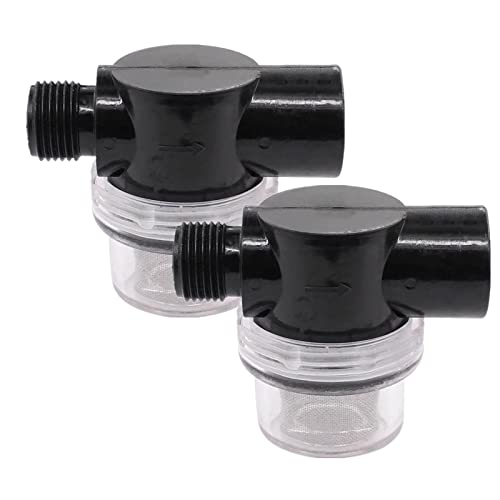
This two-pack twist-on strainer uses an 80-mesh stainless steel screen, compatible with 1/2″ NPSM inlet and outlet fittings. It’s designed to connect directly to pump inlets and is transparent for easy visual checks. Best for RVs and smaller marine applications where quick maintenance and straightforward installation matter most. A drawback is that it is intended for inlet-side use and may require additional fittings for other configurations.
Who it’s best for: RV owners and small boats needing a budget-friendly, easy-to-install pump protection solution.
Why selected: Value pack and simple twist-on design suit frequent travelers and seasonal boaters.
Caution: Use on the input side only and confirm compatible fittings for your pump model.
Key considerations
- Inlet/outlet thread compatibility
- Debris load handling at lower flow rates
- Ease of installation in limited spaces
Buying Guide: Marine Strainers And Filters
What size mesh do I need?
Mesh size should match your debris risk. Higher mesh (e.g., 100) catches smaller particles but can clog faster in dirty water. Lower mesh (e.g., 80) offers higher flow with larger debris tolerance but may allow finer particles through.
Inline vs. basket strainers—what’s the difference?
Inline strainers are compact, useful for protecting pumps along small-diameter lines. Basket strainers (like the Groco model) provide a larger debris capacity and easy access for cleaning. Choose inline for space constraints; choose basket types for heavier debris and easier maintenance.
Material and corrosion resistance
Marine-grade stainless steel and sealed O-rings reduce corrosion in saltwater. Ensure all exposed components are stainless and that seals are designed for wet, salty conditions.
Maintenance practicalities
Systems with visible bowls or transparent housings simplify maintenance decisions. Twist-off bowls speed up cleaning, so look for models with easy access. Consider how often you expect to service the filter in your typical boating environment.
Compatibility and installation considerations
Verify fitting sizes (NPT, NPSM, inlet/outlet diameters) and sleeve or cap designs. Check hose compatibility and whether adapters are needed for your current hoses.
Which should you avoid for certain setups?
Avoid very fine meshes (overly restrictive) in high-flow primary lines unless flow is maintained. Also avoid strainers with inaccessible bowls in cramped engine rooms unless you have sufficient clearance for service.
Frequently Asked Questions
- What is a marine strainer used for?
Marine strainers filter debris and particulates from intake water, protecting pumps, engines, and plumbing from damage.
- How do I know which mesh size to pick?
Consider debris type and flow; high debris loads benefit from coarser meshes, while fine filtration uses finer meshes with potential cleaning frequency.
- Are inline strainers suitable for all boats?
Inline strainers are ideal where space is limited and quick maintenance is desired. Larger boats may benefit from basket-type strainers for easier cleaning.
- Can these strainers be used with saltwater systems?
Yes, most marine-grade strainers are designed for saltwater, but confirm material compatibility with your specific system and hoses.
- Do I need a dedicated strainer for every water line?
Not always; assess the risk of debris in each line. Critical pumps often benefit from dedicated strainers on intake lines.
- How often should I service a marine strainer?
Regular checks depend on usage and water quality; inspect for clogs and clean as needed to maintain optimal flow.