Answering the need for dependable shaft packing glands, this guide highlights top options that balance chemical resistance, temperature tolerance, and ease of use. Best for boaters seeking long-lasting seals, offshore hobbyists, and maintenance crews needing reliable replacements. The table below summarizes the selected products to help you compare at a glance.
| Product | Brand | Type | Key Benefit |
|---|---|---|---|
| Gore GFO Marine Shaft Packing – 1/4″ Square | Zigzagmars | GFO Packing, square cross section | High-temperature tolerance and broad pH range |
| Gore GFO Marine Shaft Packing – 3/16″ Square | Equalseal | GFO Packing, square cross section | Compact size with same rugged chemistry |
| Minseal 1200 Graphitized PTFE Braided Packing | Minseal | Graphitized PTFE braided packing | Chemical resistance and wide temperature range |
| Western Pacific Shaft Packing, 2 ft x 3/8 in | Western Pacific Trading Inc | Flax packing | Simple, proven material for classic stuffing boxes |
| Graphite Gland Packing Rope Seals | VFQZ | Graphite rope pack | High temperature and corrosion resistance |
Gore GFO Marine Shaft Packing – 1/4″ Square

Best for: Boat owners needing a robust, high-temperature packing with broad chemical tolerance. The GFO material supports service temperatures up to 550 F (290 C) and a pH range from 0 to 14, excluding strong oxidizers. The 1/4″ square size is common for mid-size shafts. This makes it a solid all-around choice for saltwater engines and demanding environments.
Why selected: GFO packing chemistry provides reliable sealing with minimal extrusion under heat. The 1/4″ cross section is versatile for many standard gland sizes, reducing the chance of leaks when properly installed.
Limitation: Performance can depend on proper gland adjustment and shaft alignment; improper fitting may lead to leaks despite material strength.
Gore GFO Marine Shaft Packing – 3/16″ Square

Best for: Small or compact glands where space is limited but a metal-free packing is desired. The 3/16″ square size shares the same GFO chemistry as the 1/4″ variant, delivering strong heat resistance and wide pH tolerance.
Why selected: It aligns with tighter gland housings while maintaining excellent sealing performance under elevated temperatures.
Limitation: Slightly less material per length than larger cross sections, which may affect packing life in high-stress applications if not adequately re-packed.
Minseal 1200 Graphitized PTFE Braided Packing

Best for: Industrial or marine systems needing chemical resistance and a broad temperature envelope. The product is designed for pump glands, valve stems, and mechanical seals with extended service life due to self-lubricating properties.
Why selected: Graphitized PTFE braided packing offers stable sealing under challenging chemical environments and high temperatures, which is ideal for more demanding engine rooms and pump systems.
Limitation: Availability and installation practices vary; ensure correct sizing and gland compatibility to maximize benefits.
Western Pacific Shaft Packing, 2 ft x 3/8 in
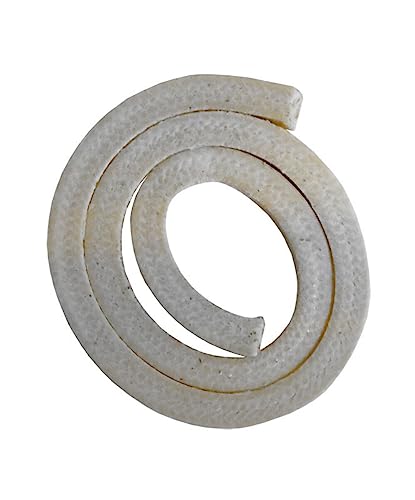
Best for: Traditional stuffing-box setups where flax packing remains the standard. The 3/8″ diameter and 2 ft length suit mid-size shafts and straightforward maintenance routines.
Why selected: Flax packing is known for ease of packing and ease of sourcing, making it a reliable option for classic systems and older boats.
Limitation: May require more frequent adjustment or replacement in high-vibration or high-leakage systems compared to modern synthetic options.
Graphite Gland Packing Rope Seals

Best for: High-temperature or steam-related applications where graphite’s sealing properties excel. Suitable for boat valves, pumps, and radiator valves that require resilience against heat and corrosion.
Why selected: Graphite rope packing provides excellent heat tolerance and corrosion resistance, reducing the risk of leaks in extreme conditions.
Limitation: Graphite rope may be stiffer to install in very tight glands and can require careful handling to achieve a proper seal.
Buying Guide: How To Choose Marine Shaft Packing Glands
- Material compatibility: Match packing material to fluids and environment (saltwater, oil, coolants) to prevent chemical degradation.
- Temperature range: Consider the engine room’s hottest zones. Choose packing rated for the upper end of expected temperatures.
- Gland size and cross section: Verify shaft diameter and gland clearance to select the correct cross-section (e.g., 1/4″ or 3/16″).
- Maintenance frequency: Some materials resist wear better, potentially reducing maintenance intervals; others are easier to repack.
- Installation ease: Some packings are braided and easier to cut or fit, while others require precise compression and alignment.
- Chemical resistance: For systems exposed to oxidizers or chlorinated water, choose packing with wide pH tolerance.
- Durability vs. cost: Higher performance packings may last longer but cost more upfront; balance against maintenance budgets.
Practical Tips For Installation and Longevity
- Prepare the shaft and gland: Clean surfaces, inspect for grooves or scoring before packing.
- Pack evenly: Avoid air gaps; distribute packing material in uniform layers.
- Test with gradual pressure: After packing, run the system slowly to observe leaks before full operation.
- Adjust gland tightness: Too tight increases friction; too loose causes leaks. Aim for a slight drip only under pressure.
Frequently Asked Questions
- What is shaft packing gland material best for saltwater boats? – Materials with high chemical resistance and good temperature tolerance, such as GFO-based packing, are strong all-around choices for saltwater environments.
- Can I use flax packing in modern boats? – Yes, for classic stuffing-box systems or where traditional maintenance is preferred, flax packing remains a viable option.
- How do I know which cross-section size to buy? – Measure the shaft diameter and gland bore; choose a packing with cross-section that fits snugly but can compress to seal properly.
- Is graphite packing suitable for high-temperature exhaust areas? – Graphite packing performs well at elevated temperatures and can resist heat-related degradation better than some synthetics.
- What maintenance schedule should I expect? – More chemically resistant packings may last longer but still require periodic inspection and re-packing based on leakage and vibration levels.
- Do I need professional installation? – Basic installations can be done by boat owners; complex engines or difficult glands may benefit from professional service.