Finding the right marine outboard gas tank depends on capacity, compatibility, and durability. This guide highlights five reliable options to match popular outboard motors and deck setups. Each option is evaluated for best use cases, with practical cautions to help you avoid common issues on the water. The selected tanks cover compact under-seat designs, larger capacity cans, and multi-layer construction for durability in salt spray environments. If you need portability, long-range fueling, or a gauge-ready tank, these picks aim to simplify choosing the right tank for your boat.
Buyer summary – chosen products
- VEVOR Boat Fuel Tank, 3.17-Gallon: Best for small boats and anglers needing a compact, ready-to-use transfer tank with a long hose.
- AloneGoer 3 Gallon Portable Tank: Best for Yamaha outboards and travelers seeking multi-layer durability with reduced fuel evaporation.
- Scepter 9 Gallon Portable Marine Gas Can: Best for longer runtimes and larger boats needing ample capacity with a built-in gauge.
- VEVOR Marine Tank, 6.34-Gallon: Best for storage under seats with a clear gauge and robust HDPE body.
- DEF Portable Boat Fuel Tank, 6 Gal: Best for corrosion resistance and two sealing/venting modes for flexible fueling.
VEVOR Boat Fuel Tank 3.17-Gallon

Best for compact setups on smaller fishing boats or decks where space is tight. This 3.17-gallon tank uses high-density polyethylene for durability and includes a 9.8 ft/3 m hose with a 0.24″/6 mm inner diameter, compatible with Yamaha connectors. It’s lightweight and easy to transport with a molded top handle. A limitation is exposure to direct sunlight, which can accelerate aging and expansion over time. Choose this if you need a portable transfer tank that fits under seats and needs simple, quick fueling.
AloneGoer 3 Gallon Portable Tank
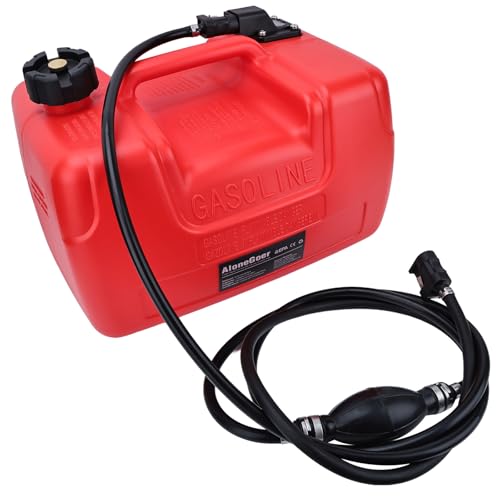
Best for Yamaha outboard users and boats needing a reliable, corrosion-resistant spare fuel tank. It features a 12L capacity with a multi-layer HDPE-EVOH-HDPE construction to minimize fuel permeation and reduce evaporation by up to 98% compared with standard tanks. UV stabilization and salt spray resistance support durability in harsh marine environments. A caution is that replacement parts for older connectors may be required if your motor uses a non-standard hose. Choose this if you prioritize fuel preservation and long-term durability at sea.
Scepter 9 Gallon Portable Marine Gas Can

Best for boats needing longer running time and ample capacity. This 9-gallon tank offers space efficiency with a compact profile and a built-in fuel gauge. It features a 2-way vent cap that allows air flow during refueling and pressure relief to prevent vapor buildup. It supports diesel and ethanol-blended fuels and accepts standard 1/4 NPT marine fittings. A limitation is that the fuel line must be purchased separately. Choose this if you require high capacity and a built-in gauge for quick level checks.
VEVOR Marine Tank 6.34-Gallon

Best for under-seat storage and boats needing a larger yet portable tank. It features a gauge for fuel level, a 9.8 ft hose for flexible reach, and a robust HDPE body with resistance to aging and corrosion. The tank advises filling up to about 80% to minimize evaporation and security risks. A caveat is avoiding prolonged direct sunlight to prevent expansion. Choose this for a mid-to-large capacity option with good visibility of fuel levels.
DEF Portable Boat Fuel Tank 6 Gal

Best for flexible sealing and venting with dual cap modes. The 6.3-gallon design uses high-density polyethylene for durability and includes an oil volume indicator to track remaining fuel. It supports a secure, airtight seal or venting as needed, minimizing leaks and ensuring smooth fuel flow. A potential limitation is that the included hose may not fit all engine adapters, so check compatibility before use. Choose this if you want versatile venting options and an integrated fuel indicator for easy monitoring.
Buying Guide
- Capacity needs: Match tank size to your boat length, average trip distance, and engine size. Small boats benefit from 3–6 gallon tanks; larger boats may need 9 gallons or more.
- Hose length and connectors: Ensure hoses reach the outboard without stretching. Check compatibility with your motor’s fuel connectors (Yamaha and other brands have specific fittings).
- Material and durability: HDPE is common for weather resistance and impact durability. Consider UV stabilizers if you operate in sunny conditions and salt spray environments.
- Vent system and sealing: Vented caps prevent pressure buildup; non-vented can be safer in some locations but may impede flow. Two-seal designs can offer flexibility.
- Built-in gauges and convenience: A sight gauge or built-in fuel indicator helps monitor levels on deck, reducing spill risk during fueling.
- Portability vs. permanence: Under-seat designs save space, while larger tanks maximize range. Transport handles and compact profiles matter for frequent movers.
- Fuel compatibility: Some tanks handle diesel or ethanol blends; verify fuel compatibility with your engine and fuel lines.
FAQ
- What capacity should I choose for a small fishing boat?
– For compact boats, 3–6 gallons is typically sufficient for short trips and reserve fuel. - Do all tanks come with hoses and fittings?
– Most tanks include hoses; however, some models require separate purchase of fuel lines or adapters. Check the listing before buying. - Are vented caps necessary?
– Vented caps prevent vapor buildup during refueling, which can improve safety and performance. If you refuel in tight spaces, venting helps manage pressure. - Can I use these tanks for diesel or ethanol blends?
– Some tanks are designed to handle diesel or ethanol-blended fuels. Verify compatibility with your fuel type and engine requirements. - How should I store a tank to extend its life?
– Store away from direct sunlight and extreme temperatures; avoid prolonged exposure to sun to prevent aging and expansion. - Is a built-in gauge worth it?
– A gauge simplifies monitoring and reduces the risk of running out unexpectedly. It’s especially useful for longer trips.