When choosing a marine inline fuel pump, you need reliability, compatibility, and appropriate pressure and flow for your engine setup. This guide highlights five top options that balance performance and value for boaters, lawn care, generators, and other 12V systems. Each product targets specific needs—whether you’re building a standby pump, replacing a worn unit, or equipping a carbureted or EFI marine engine. The table below provides quick comparisons to help you sift options quickly.
| Product | Best For | Notable Feature | Typical Use |
|---|---|---|---|
| ENGINEMAN Universal Electric Fuel Pump 12V 2.5-4.5 PSI | General 12V carbureted systems | 2.5-4.5 PSI, 25-30 GPH | Booster or standby pump |
| EVIL ENERGY External Inline Fuel Pump 300LPH | 12V EFI systems | High flow 300 LPH, 75 PSI | EFI and race setups |
| SOLLON Electric Fuel Pump 12V 2.5-4psi | Universal 12V transfer | 2.5-4 PSI, compact | General transfer and standby |
| Megaflint Inline Fuel Pump 12V 5–9 PSI | Vintage and marine engines | 5–9 PSI steady output | Reliable carbureted systems |
| ENGINEMAN 12D Micro Diesel Fuel Pump | Diesel + carbureted dual-use | 35 GPH at 4-7 PSI | Diesel-focused applications |
ENGINEMAN Universal Electric Fuel Pump 12V 2.5-4.5 PSI

This pump targets versatile 12V carbureted systems with moderate fuel flow. It supports gasoline, diesel, and similar fuels, making it suitable for boats, trucks, lawnmowers, and generators with carburetor engines. The unit maintains a stable 2.5-4.5 PSI output at 25-30 GPH, supporting steady fuel delivery for standby or booster roles.
Best for: boaters and small vehicle owners who need a reliable, low-pressure inline pump that doubles as a backup option. It is a practical fit where space and simple installation matter. A built-in check valve reduces backflow, improving efficiency and longevity.
Caution: While designed for tough conditions, very high ambient temperatures or extreme vibration environments may challenge long-term stability. Ensure mounting is solid and within recommended proximity to the tank.
EVIL ENERGY External Inline Fuel Pump 300LPH
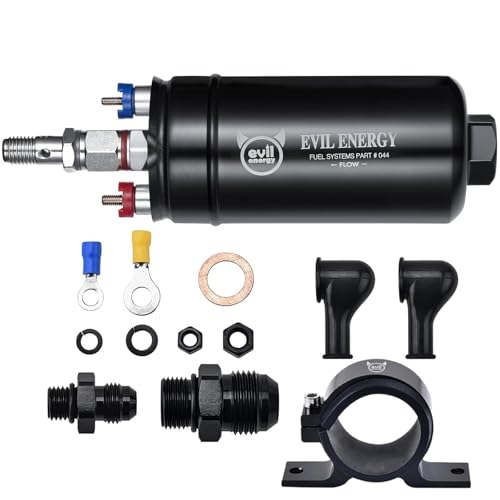
Designed for 12V EFI systems, this pump delivers high flow at up to 300 LPH with 75 PSI. It’s engineered to handle gasoline, pump gas, race gas, and even diesel in appropriate installations. The elevated pressure makes it a strong choice for EFI marine engines or high-demand setups.
Best for: owners upgrading to EFI or requiring higher pressure for faster fuel delivery. It’s better for systems that need robust performance rather than ultra-quiet operation. A potential limitation is its higher pressure requirement, which may not be ideal for very low-pressure carbureted configurations.
SOLLON Electric Fuel Pump 12V 2.5-4psi

This 2.5-4 PSI pump is marketed as a universal low-pressure transfer pump suitable for lawn mowers, crafts, boats, and other 12V systems. It features a 30 GPH output, 8 mm (5/16 inch) hose compatibility, and a built-in check valve to prevent backflow. It can function as a booster, standby, or independent pump.
Best for: budget-conscious buyers needing a compact, universal solution for carbureted engines or small marine setups. Choose this if you want a straightforward install without specialized mounting hardware. Limitation: flow at upper end could be marginal for larger or high-demand engines.
Megaflint Inline Fuel Pump 12V 5–9 PSI
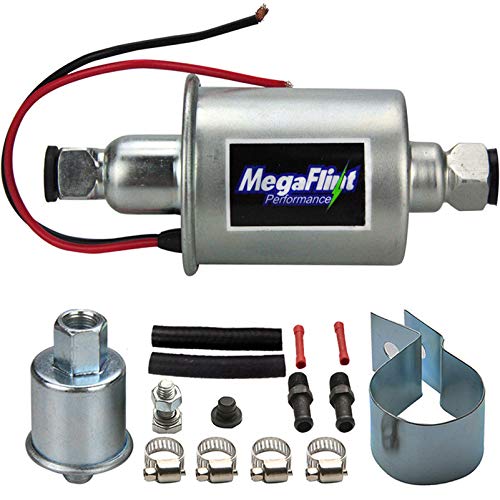
Megaflint delivers a steadier 5–9 PSI output with 30 GPH flow, designed to prevent carburetor flooding or starvation. It features a forged copper coil for reliable starts, even after storage. The unit is tested before shipment to ensure consistent sealing and performance in demanding conditions.
Best for: vintage and classic engine enthusiasts who need steady pressure without flooding risk. It’s better for smaller carbureted engines and marine applications where consistent flow is key. Limitation: higher pressure may not suit very low-pressure carburetors without adjustments.
ENGINEMAN 12D Micro Electric Diesel Fuel Pump
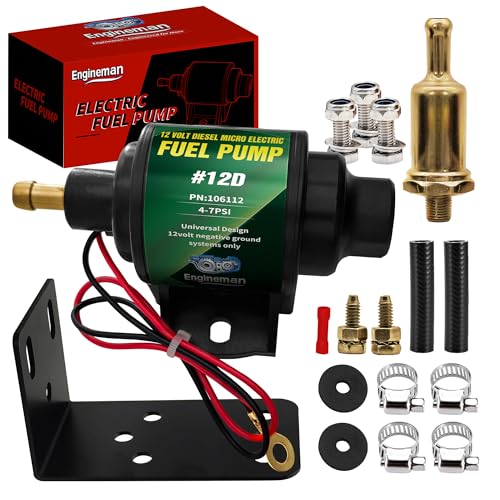
This diesel-focused pump provides 35 GPH at 4-7 PSI and ships with a complete installation kit. It’s designed for diesel engines in trucks, tractors, and marine vessels where reliable transfer is essential. The included hardware supports quick DIY installation, though it’s wise to verify compatibility with your exact diesel variant.
Best for: diesel-specific applications requiring a compact, easy-install unit. It’s better for users who want a complete kit with hoses and brackets. Caution: primarily diesel-oriented, so check compatibility if you’re running gasoline in a multi-fuel system.
ENGINEMAN Universal Electric Fuel Pump 12V 5-9 PSI
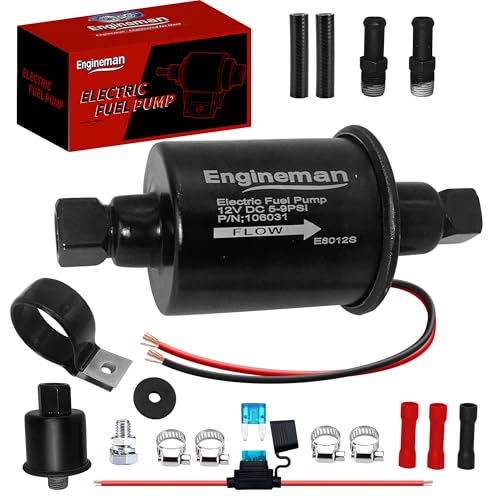
This unit offers a higher pressure range of 5-9 PSI with up to 30 GPH flow, suitable for a variety of 12V engines, including marine carburetors and diesel systems. It emphasizes wide compatibility and a robust copper windings design to boost longevity and stable operation.
Best for: users needing a dual-use inline pump for gasoline or diesel with higher pressure for quicker fuel delivery. Choose this if your system benefits from a higher PSI while maintaining moderate flow. Limitation: not ideal for very low-pressure carburetors that require minimal pressure to prevent flooding.
Universal Electric Fuel Pump Kit 12V 3-6 PSI

This kit targets universal use, including carburetors in lawnmowers and small vehicles. It includes a 6.56 ft fuel line and a simple 3-6 PSI output. The design facilitates straightforward DIY installation for general transfer tasks.
Best for: buyers seeking a complete kit that includes hoses and simple wiring for a quick setup. Limitation: the integrated kit may lack advanced mounting flexibility found in higher-end options.
Buying Guide: Practical Considerations For Marine Inline Fuel Pumps
- What pressure do I need? If your engine is carbureted, 2.5-4 PSI is common. EFI systems typically require higher pressure around 75 PSI in some configurations.
- What is the flow requirement? Match GPH or LPH to your engine’s fuel consumption and desired prime speed. Higher flow is beneficial for larger engines or rapid priming but can cause flooding in sensitive carts.
- Compatibility: Ensure the pump supports your fuel type (gasoline or diesel) and 12V electrical system. Some models are universal; others are diesel-specific.
- Installation: Look for included mounting hardware, hoses, and filters. A compact design helps in cramped engine bays, while a built-in check valve prevents backflow.
- Durability: Copper windings and temperature tolerance contribute to longevity. Marine-grade units often meet strict ISO or USCG standards for ignition protection.
- Sound and vibration: Some users prefer quieter pumps for in-boat installation. Vibration and noise can vary by design and mounting method.
- Maintenance: Check valve integrity and hose connections regularly. Look for units with straightforward DIY installation.
FAQ
- What is the difference between 2.5-4 PSI and 5-9 PSI pumps?
– Lower PSI pumps are typically used for carbureted engines with moderate flow needs, while higher PSI units suit EFI or high-demand carburetors. - Can a high-pressure pump be used with a carburetor?
– Yes, but system tuning is needed to prevent flooding. Some setups require regulators or inline adjustments. - Do inline pumps require a separate filter?
– Often yes; many kits include a filter, but adding an inline filter improves longevity and dirt protection in dirty fuel. - Is a built-in check valve essential?
– It helps prevent backflow and reduces risk of fuel dilution or siphoning when the pump is off. - Are marine inline pumps interchangeable between diesel and gasoline?
– Some are universal, but always confirm fuel compatibility to avoid damage or improper operation. - What mounting considerations maximize pump life?
– Mount within close proximity to the fuel tank, secure with brackets, and minimize exposure to heat or excessive vibration.